Understanding the Distinctions Between Paskibra and Paskibraka: A Comprehensive Guide to Indonesia’s Flag-Bearing Traditions

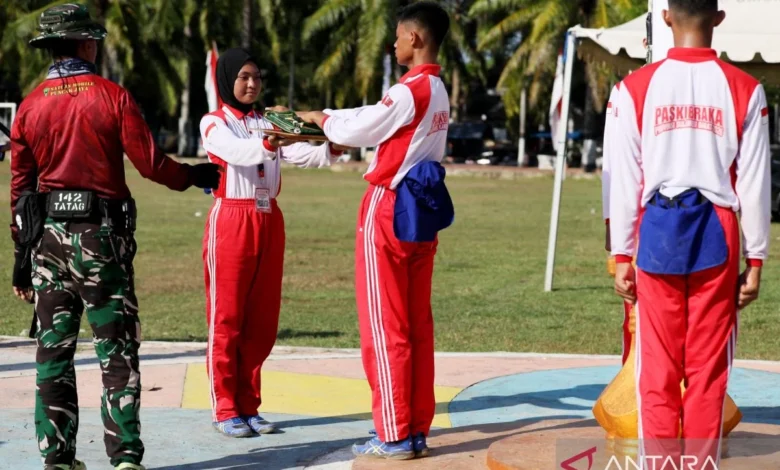
As Indonesia approaches its annual commemoration of Independence Day, the terminology surrounding the young men and women tasked with the honor of raising the national flag often becomes a subject of public discussion. While the terms Paskibra and Paskibraka are frequently used interchangeably in casual conversation, they represent distinct organizational structures, legal mandates, and operational scopes within the Indonesian national identity. Understanding these nuances is essential for appreciating the rigor and dedication required of the youth who participate in these storied traditions.
Defining the Core Concepts
At its simplest level, Paskibra is an acronym for Pasukan Pengibar Bendera (Flag Hoisting Troop), a broad term that encompasses any group tasked with performing flag-raising duties in various settings. Whether it is a daily school ceremony, a corporate event, or a local community gathering, these groups operate under the umbrella of institutional extracurricular activities. In the context of secondary and tertiary education, Paskibra functions as a character-building organization. It serves as a laboratory for leadership, instilling values of discipline, rhythmic precision in marching, collective responsibility, and the cultivation of a nationalist spirit.
In contrast, Paskibraka is the acronym for Pasukan Pengibar Bendera Pusaka (Heirloom Flag Hoisting Troop). Unlike the localized and general nature of Paskibra, Paskibraka is a formal state-mandated program. It is governed by rigorous legal frameworks, most notably Presidential Regulation Number 51 of 2022. This regulation formalizes the program as a primary vehicle for character development and ideological training, specifically focusing on the principles of Pancasila—the five foundational pillars of the Indonesian state. Paskibraka members are selected through a highly competitive, multi-tiered process that begins at the municipal level and culminates in the selection of the national team that serves at the State Palace.
The Chronological Evolution of a National Tradition
The history of the Paskibraka movement is inextricably linked to the early days of the Republic. Following the declaration of independence, the young nation faced significant challenges in maintaining state decorum. In 1946, while the capital was temporarily moved to Yogyakarta, President Sukarno entrusted Mayor (Navy) Husein Mutahar with the responsibility of organizing the first commemoration of the Proclamation of Independence at the Gedung Agung.
Mutahar, a visionary in youth development, proposed that the flag-raising duty be performed by youths representing the diversity of the archipelago. Due to the limited mobility of the era, he initially organized a team of five youths from various regions in Yogyakarta to symbolize the unity of the new nation. This humble beginning laid the conceptual groundwork for what would become a massive national mobilization effort.
By 1967, under the leadership of President Soeharto, the structure was formalized further. Mutahar introduced the symbolic formation of the troop, which remains the standard today:
- The Pasukan 17: Representing the date of Independence (17).
- The Pasukan 8: Representing the month of Independence (August).
- The Pasukan 45: Representing the year of Independence (1945).
It was not until 1973, however, that the term "Paskibraka" was officially adopted, proposed by Idik Sulaeman. This branding crystallized the identity of the troop, distinguishing the elite nature of those who handled the Bendera Pusaka (the original heirloom flag) from the general flag-raising activities conducted by students nationwide.
Comparative Analysis: Structural and Functional Differences
The distinction between these two groups extends beyond mere nomenclature. Analyzing their operational differences reveals the scale of the commitment required for each.
1. The Selection and Training Pipeline
For Paskibra, the selection process is typically decentralized. Schools or organizations manage their own training, which is often integrated into extracurricular schedules. The training is focused on operational competence—knowing the correct commands, timing, and protocols for school-level ceremonies.
Paskibraka, however, operates under a standardized national curriculum. Candidates undergo rigorous physical, psychological, and ideological assessments. The process is tiered: local selections lead to provincial selections, and eventually, the final candidates undergo an intensive national training camp (Diklat). This program does not merely focus on marching; it includes extensive workshops on Pancasila ideology, national ethics, and leadership development.
2. Legal Status and Mandate
Paskibra is an organizational label that lacks a single centralized legal mandate, though it is supported by the Ministry of Education’s extracurricular guidelines. Paskibraka is a state project. Presidential Regulation No. 51 of 2022 provides a clear, legally binding framework that defines the roles, responsibilities, and the developmental goals of the program. This legislation ensures that Paskibraka is treated as a strategic asset in national character building, rather than just a ceremonial task force.
3. The Scope of Duty
While Paskibra is flexible and can be deployed for virtually any flag-hoisting ceremony, Paskibraka is strictly reserved for high-level state functions. Their primary duty is the commemoration of the Proclamation of Independence on August 17th and the commemoration of the Birth of Pancasila on June 1st. The gravity of these events reflects the elite status of the participants.
Impact on National Youth Development
The Paskibraka program acts as a long-term investment in the nation’s human capital. Upon completing their tour of duty, members join the ranks of Purna Paskibraka (alumni). These individuals are often integrated into broader youth-led initiatives and are encouraged to become ambassadors for the Pancasila ideology in their respective communities.
Educational experts often highlight that the pedagogical value of both Paskibra and Paskibraka is rooted in the "Tri-Center of Education" concept: the cooperation between the family, the school, and the community. By engaging in these programs, students learn that their individual actions—whether it is the precise movement of a foot or the steady holding of a flag rope—contribute to a larger, collective national effort.
Official Perspectives and Public Policy
Government officials, including representatives from the Ministry of Youth and Sports, frequently emphasize that Paskibraka is a vital component of the national strategy to counter extremism and intolerance. By immersing youth in the history of the flag and the philosophy of Pancasila, the state aims to produce a generation that is not only physically disciplined but also intellectually grounded in democratic and pluralistic values.
While some critics have occasionally debated the intensity of the training regimes, the consensus remains that the discipline fostered in these groups provides a significant advantage for youth entering the workforce or higher education. The ability to perform under pressure, work as a cohesive unit, and adhere to strict time management protocols are universal skills that transcend the ceremonial nature of the task.
The Future of Flag-Bearing Traditions
As Indonesia continues to modernize, the role of Paskibra and Paskibraka is also evolving. Technology and social media have brought increased visibility to these troops, turning the selection process and the actual Independence Day ceremonies into major national media events. This increased visibility has arguably bolstered public interest in the program, leading to a more competitive and transparent selection process in recent years.
Furthermore, the integration of digital training modules and more modern psychological assessments has refined the Paskibraka program, ensuring it remains relevant to the current generation of students. As the nation approaches its centennial in 2045, these programs are expected to remain central to the state’s effort to maintain a unified identity amidst a diverse and rapidly changing society.
Conclusion
The distinction between Paskibra and Paskibraka is a reflection of the hierarchy of national duty. While Paskibra serves as the foundation—a broad, grassroots movement that teaches the basics of patriotism and discipline in schools and local organizations—Paskibraka stands as the pinnacle of that journey, a formal, state-led program that carries the weight of national history and constitutional values.
Both entities are essential to the Indonesian experience. One provides the wide base of the pyramid, engaging millions of students in daily acts of national devotion, while the other serves as the apex, representing the state’s highest standards for its youth. By understanding these differences, one gains a deeper respect for the thousands of young Indonesians who, through the simple act of raising the Merah Putih, demonstrate their commitment to the past, present, and future of the Republic of Indonesia.