Queen Máxima Concludes Landmark Fifth Visit to Indonesia, Championing Financial Inclusion and Economic Resilience as UNSGSA.

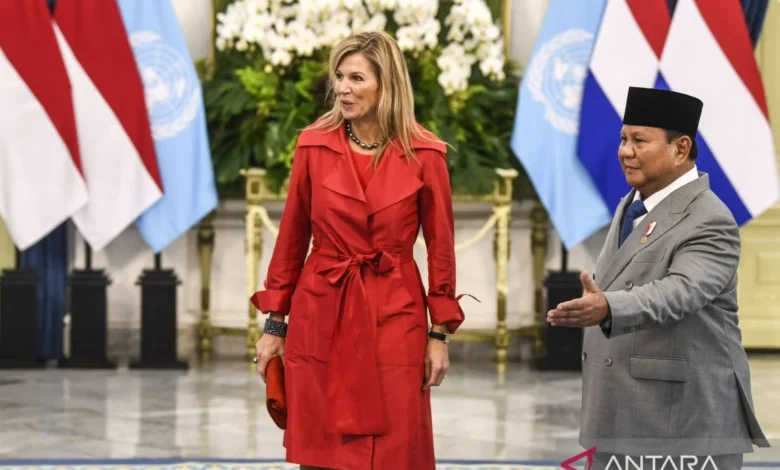
Jakarta, Indonesia – Her Majesty Queen Máxima of the Netherlands recently concluded a significant working visit to Indonesia, spanning from Monday, November 24, to Thursday, November 27, 2025. This visit, her fifth to the archipelago, was undertaken not in her capacity as Queen of the Netherlands, but as the United Nations Secretary-General’s Special Advocate (UNSGSA) for Inclusive Finance for Development. Her mission centered on promoting financial health, resilience, and wellbeing across various segments of Indonesian society, underscoring the critical role of accessible and appropriate financial services in achieving sustainable development goals.
The Mandate of the UNSGSA and Global Financial Inclusion
Queen Máxima’s role as UNSGSA, a position she has held since 2009, is pivotal in advocating for universal access to financial services. This mandate involves working with governments, central banks, regulators, financial service providers, development organizations, and other stakeholders to advance financial inclusion worldwide. Financial inclusion is broadly defined as ensuring that individuals and businesses have access to useful and affordable financial products and services—including transactions, payments, savings, credit, and insurance—that meet their needs and are delivered in a responsible and sustainable way.
The United Nations recognizes financial inclusion as a key enabler for achieving many of the Sustainable Development Goals (SDGs), including eradicating poverty (SDG 1), ending hunger (SDG 2), promoting good health and well-being (SDG 3), achieving gender equality (SDG 5), promoting decent work and economic growth (SDG 8), reducing inequalities (SDG 10), and building resilient infrastructure (SDG 9). By facilitating financial transactions, promoting savings, and providing access to credit, financial inclusion empowers individuals and small businesses to manage their finances better, invest in their futures, and cope with economic shocks, thereby fostering broader economic development and poverty reduction.
Queen Máxima’s repeated visits to Indonesia highlight the country’s importance as a strategic partner in the global financial inclusion agenda. Her previous engagements in Indonesia as UNSGSA occurred in 2012, 2016, and 2018. Additionally, she accompanied King Willem-Alexander on a state visit in 2020, demonstrating a consistent, multi-faceted engagement with the nation. Born on May 17, 1971, Queen Máxima married King Willem-Alexander in Amsterdam in 2002, bringing a strong background in international finance and development to her royal duties and her UN advocacy role.
Indonesia’s Landscape of Financial Inclusion
Indonesia, as the world’s fourth-most populous country and a rapidly growing economy, presents both immense opportunities and significant challenges in achieving comprehensive financial inclusion. Despite considerable progress in recent years, a substantial portion of its population, particularly in rural areas and among vulnerable groups, remains unbanked or underbanked. According to data from the Financial Services Authority (OJK) and Bank Indonesia (BI), while financial inclusion rates have steadily climbed, reaching over 85% by 2022, there remain persistent gaps, particularly in access to complex financial products like insurance and investment, and a notable disparity between urban and rural populations.
The Indonesian government has set ambitious targets, aiming for a financial inclusion rate of 90% by the end of 2024, emphasizing digital financial services as a key driver. Initiatives such as branchless banking (Laku Pandai), microfinance institutions, and the proliferation of fintech companies have played crucial roles in expanding access. However, challenges persist, including geographical dispersion across its thousands of islands, limited financial literacy, infrastructure disparities, and a lack of trust in formal financial institutions among some segments of the population. Queen Máxima’s visit aimed to observe firsthand the innovative solutions being implemented, engage with various stakeholders, and offer strategic advice to accelerate progress.
A Detailed Chronology of the Visit
Queen Máxima’s three-day working visit from Tuesday, November 25, to Thursday, November 27, 2025, meticulously blended site visits to grassroots initiatives with high-level policy dialogues, showcasing the comprehensive approach required for advancing financial health.
Tuesday, November 25: Focus on Micro-enterprises and Women’s Economic Empowerment
The first day of the visit was dedicated to exploring the impact of financial inclusion on local communities and micro-entrepreneurs in Central Java. Queen Máxima began her itinerary by visiting a garment factory in Sragen Regency. This visit underscored the importance of formal employment and access to financial services for factory workers, including digital wage payments, savings accounts, and micro-credit facilities that can enhance their financial resilience and planning. Discussions likely centered on how digital payment systems can streamline operations for businesses while providing employees with greater control over their earnings and easier access to formal financial products.
Following this, she traveled to Kampung Batik Laweyan in Solo, a renowned hub for traditional batik production. Here, the focus shifted to the financial health of small and medium-sized enterprises (MSMEs), particularly those run by women. Engaging with local artisans and entrepreneurs, Queen Máxima discussed their experiences in accessing financial products and services. Many MSMEs struggle with limited access to formal credit, relying instead on informal lending channels. The visit highlighted how tailored financial products, such as micro-loans for business expansion or digital payment platforms for sales, can significantly boost the livelihoods of these traditional craftspeople and preserve cultural heritage.
The day culminated with Queen Máxima attending a Women’s World Banking event at the majestic Pura Mangkunegaran in Solo. This high-profile gathering brought together young people, university students, and entrepreneurs to share their experiences with various financial products and services. Women’s World Banking is a global non-profit organization dedicated to designing and investing in financial solutions for women. The discussions likely emphasized how financial inclusion can empower women, enabling them to start and grow businesses, save for their families’ futures, and gain greater financial independence, thereby contributing to gender equality and broader economic development. The engagement provided a platform for direct feedback from beneficiaries, offering valuable insights into the practical impact and challenges of existing programs.
Wednesday, November 26: Engaging with Development Partners and Innovative Housing Solutions
The second day saw Queen Máxima transition to Jakarta and later to West Java, engaging with international development organizations and observing innovative solutions for low-income housing. The morning began with a roundtable discussion at the local United Nations office in Jakarta. She participated in a dialogue with various development organizations, focusing on collaborative strategies to accelerate financial inclusion targets in Indonesia. These discussions likely covered policy alignment, sharing best practices, and coordinating efforts among diverse stakeholders to maximize impact and avoid duplication.
Subsequently, Queen Máxima visited the International Finance Corporation (IFC), a member of the World Bank Group, in Jakarta. The IFC plays a critical role in promoting private sector development in emerging markets. Discussions here revolved around the development of loans and financial instruments that contribute to economic growth and enhance financial health. This engagement highlighted the importance of private capital and market-based solutions in scaling up financial inclusion initiatives, particularly in areas like sustainable finance and support for small and medium enterprises.
A significant part of the day was spent in Bekasi Regency, West Java, where Queen Máxima visited the Gran Harmoni Cibitung subsidized housing complex. This complex provides low-emission housing for low- and middle-income communities, addressing a critical need for affordable housing. During her visit, she interacted with residents, including representatives of first-time homebuyers, gaining insights into their experiences and the financial mechanisms enabling their homeownership.
A particularly innovative aspect observed was the integration of "bank sampah" (waste banks) as a method for residents to pay their mortgage installments. This pioneering initiative, likely supported by a local bank such as BTN (Bank Tabungan Negara), allows residents to exchange sorted waste for financial credit, which can then be used to pay for their housing loans. This dual-purpose scheme not only promotes environmental sustainability and waste management but also provides a flexible and accessible payment mechanism for low-income households, addressing financial literacy and liquidity challenges. Queen Máxima also observed the process of signing sale and purchase agreements for dozens of prospective homeowners, witnessing the tangible impact of these inclusive housing and finance programs.
In the afternoon, Queen Máxima visited Deloitte Indonesia to engage with employers. The discussions focused on how businesses can contribute to the financial health of their employees and clients. This highlighted the growing recognition within the private sector of the importance of employee financial wellness programs, responsible lending practices, and integrating financial literacy into corporate social responsibility initiatives. Such engagements are crucial for fostering a holistic ecosystem that supports financial health beyond traditional banking services.
Thursday, November 27: High-Level Policy Dialogue and Presidential Meeting
The final day of Queen Máxima’s visit was dedicated to high-level policy engagements, reinforcing Indonesia’s commitment to financial literacy and inclusion at the national level. She participated in a comprehensive agenda on financial literacy with key Indonesian financial authorities: the Financial Services Authority (OJK), Bank Indonesia (BI), and the Ministry of Finance (Kemenkeu) of the Republic of Indonesia. This meeting served as a crucial platform for discussing national strategies, regulatory frameworks, and collaborative efforts to enhance financial literacy and inclusion across the country. Topics likely included the acceleration of digital financial services, consumer protection, and the development of inclusive financial products tailored to diverse needs.
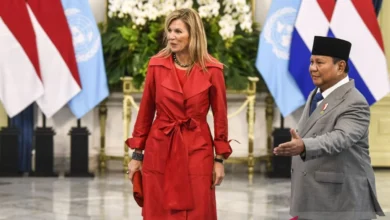
The culmination of her visit was a meeting with President of Indonesia, Prabowo Subianto, at the Merdeka Palace in Jakarta. This significant meeting provided Queen Máxima with the opportunity to convey her findings, impressions, and recommendations gleaned from her extensive engagements across various regions and sectors. The agenda included a private meeting followed by a luncheon, allowing for in-depth discussions on strategic partnerships and future cooperation in advancing financial inclusion. The presidential meeting served to underscore the Indonesian government’s political will and commitment to the financial inclusion agenda, reaffirming the importance of this work for national development.
Broader Implications and Future Outlook
Queen Máxima’s fifth visit to Indonesia as UNSGSA carries significant implications for the country’s financial inclusion landscape. Firstly, it provides high-level international validation and advocacy for Indonesia’s ongoing efforts. The visibility of such a visit can attract further international attention, investment, and technical assistance for financial inclusion initiatives.
Secondly, the diverse range of stakeholders engaged—from local artisans and factory workers to international development banks and national policymakers—demonstrates a holistic approach to financial inclusion. It highlights that effective strategies require collaboration across public, private, and civil society sectors. The observation of innovative local solutions, such as the waste bank scheme for mortgage payments, showcases Indonesia’s potential as a laboratory for practical and impactful financial innovation that can be scaled up or replicated in other developing contexts.
Thirdly, the focus on specific vulnerable groups, including women, youth, and low-income households, reinforces the inclusive nature of the financial health agenda. Empowering these groups financially is not only a matter of equity but also a powerful driver of economic growth and social stability.
Finally, the high-level policy discussions with OJK, BI, Kemenkeu, and President Subianto underscore the strategic importance of financial inclusion within Indonesia’s national development agenda. These engagements are vital for ensuring that policy frameworks are conducive to innovation, consumer protection, and sustainable growth in the financial sector.
As Indonesia continues its journey towards universal financial inclusion, the insights and advocacy provided by Queen Máxima’s visit will undoubtedly contribute to refining strategies, strengthening partnerships, and ultimately, improving the financial health and resilience of millions of its citizens. The sustained commitment from the UNSGSA role, coupled with Indonesia’s proactive stance, bodes well for a future where financial services are truly accessible and beneficial to all.