Queen Máxima Concludes High-Impact Visit to Indonesia as UN Special Advocate, Championing Financial Inclusion and Sustainable Development

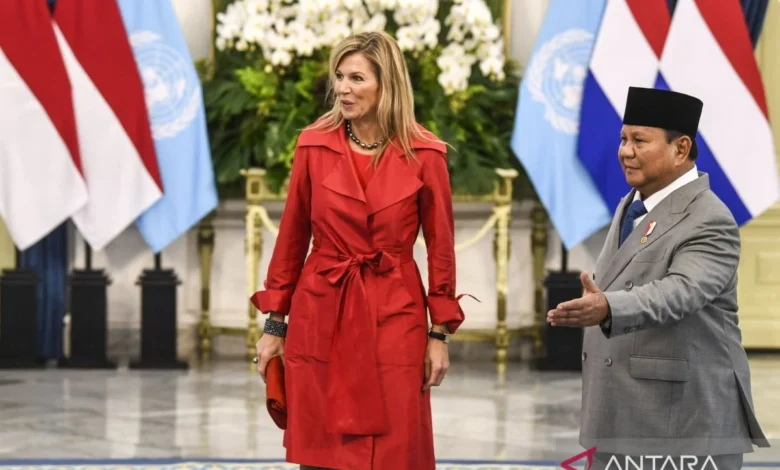
Jakarta (ANTARA) – Queen Máxima of the Netherlands has just concluded a comprehensive working visit to Indonesia, spanning from Monday, November 24, to Thursday, November 27, 2025. Her presence in the archipelago was not in her capacity as the reigning monarch of the Netherlands, but rather as the United Nations Secretary-General’s Special Advocate (UNSGSA) for Inclusive Finance for Development. This distinct role underscores a global commitment to fostering financial health and resilience, particularly in developing nations, by advocating for universal access to and effective use of financial services. Her four-day itinerary was meticulously designed to encompass a series of strategic meetings and field activities directly related to promoting financial inclusion and enhancing the financial well-being of communities across various regions of Indonesia.
The visit, marking Queen Máxima’s fifth engagement with Indonesia, highlights the enduring partnership and shared commitment between the UN’s financial inclusion agenda and Indonesia’s national development goals. Previously, Her Majesty had visited Indonesia three times as the UNSGSA in 2012, 2016, and 2018, demonstrating a sustained interest and engagement with the country’s progress in this crucial sector. Her prior visit as Queen of the Netherlands was in 2020, accompanying King Willem-Alexander during a state visit, which focused on broader bilateral relations and cooperation. Born on May 17, 1971, Queen Máxima married King Willem-Alexander in 2002 in Amsterdam, Netherlands, and has since emerged as a prominent global advocate for financial inclusion, leveraging her extensive background in international finance and her royal platform to drive impactful change.
The core mission of this specific visit was to champion financial resilience and welfare, aligning with the Sustainable Development Goals (SDGs), particularly SDG 1 (No Poverty), SDG 5 (Gender Equality), and SDG 8 (Decent Work and Economic Growth). Her three-day programmatic engagement, from Tuesday to Thursday (November 25-27, 2025), saw Queen Máxima traversing a diverse range of locations, from the industrial heartlands of Sragen and Bekasi in Central and West Java to the cultural hub of Solo and the bustling capital city of Jakarta. This geographical spread allowed for a holistic understanding of Indonesia’s diverse economic landscape and the varying challenges and opportunities in promoting financial inclusion across urban, semi-urban, and rural settings.
The UNSGSA Mandate: A Global Imperative
The role of the UNSGSA for Inclusive Finance for Development was established in 2009, with Queen Máxima appointed to the position in 2011. The mandate focuses on raising awareness and advocating for policies and initiatives that promote financial inclusion globally. Financial inclusion is broadly defined as the access to and usage of affordable, useful, and responsible financial products and services that meet the needs of individuals and businesses, including transactions, payments, savings, credit, and insurance. The UN recognizes that robust financial systems are pivotal for economic growth, poverty reduction, and achieving the SDGs.
In Indonesia, a nation with a vast archipelago and a rapidly growing digital economy, financial inclusion presents both significant opportunities and unique challenges. While the country has made considerable strides in increasing access to financial services, particularly through digital innovations, a substantial portion of its population, especially in remote areas and among vulnerable groups, remains underserved. According to recent data from Indonesia’s Financial Services Authority (OJK) and Bank Indonesia (BI), the financial inclusion index has steadily improved, reaching approximately 85% in 2022, up from around 36% in 2011. However, the depth and quality of financial service usage, alongside financial literacy levels, continue to be areas requiring focused intervention. Queen Máxima’s visit aimed to underscore the importance of not just access, but also effective usage, financial literacy, and consumer protection to ensure genuine financial health.
Chronology of a Transformative Visit
Tuesday, November 25: Focus on MSMEs, Women, and Youth in Central Java
Queen Máxima commenced her intensive visit in Central Java, a region renowned for its vibrant micro, small, and medium-sized enterprises (MSMEs) and rich cultural heritage. Her first stop was a garment factory in Sragen Regency. This visit was strategically important as garment factories often employ a significant number of low- and middle-income workers, many of whom are women. Discussions likely revolved around financial literacy programs for employees, the benefits of digital wage payments for increased transparency and savings, and access to basic financial products like savings accounts and micro-insurance. Enhancing the financial health of factory workers can lead to improved productivity, reduced financial stress, and greater economic stability for their families.
Following her engagement in Sragen, Queen Máxima proceeded to Kampung Batik Laweyan in Solo, a historic center for traditional batik production. Here, the focus shifted to the unique financial needs of MSMEs, particularly those rooted in traditional crafts. Batik artisans, often operating informally, face challenges in accessing formal credit, managing cash flows, and expanding their market reach. Her discussions in Laweyan likely explored innovative financial solutions tailored for these entrepreneurs, such as digital payment systems for customers, micro-credit facilities from local banks or fintech companies, and financial management training to help them formalize their businesses and improve their financial resilience. The visit also served to highlight the intersection of cultural preservation and economic empowerment through inclusive finance.
The day culminated with Queen Máxima’s participation in a Women’s World Banking event held at the majestic Pura Mangkunegaran in Solo. Women’s World Banking is a global non-profit organization dedicated to empowering low-income women entrepreneurs through financial services. At this event, Her Majesty engaged in dynamic conversations with young people, university students, and entrepreneurs. The dialogue centered on their personal experiences with various financial products and services, shedding light on both the successes and the persistent barriers to effective financial inclusion. The emphasis was placed on understanding user perspectives to inform more relevant and user-friendly financial solutions, particularly for women, who often face unique systemic barriers to financial independence. Empowering women financially is widely recognized as a catalyst for broader community and national development.
Wednesday, November 26: Engaging with Policy Makers, Private Sector, and Sustainable Housing in Jakarta and West Java
The second day of the visit began in Jakarta, the nation’s capital, with Queen Máxima attending a roundtable discussion at the local UN office. This gathering brought together various development organizations, allowing for a multi-stakeholder dialogue on accelerating financial inclusion initiatives across Indonesia. The discussions likely covered coordination efforts, best practices, and innovative approaches to reach the unbanked and underbanked populations, emphasizing collaboration between government, international bodies, and civil society.
Subsequently, Her Majesty visited the International Finance Corporation (IFC), a member of the World Bank Group, which focuses on private sector development in emerging markets. The meeting at the IFC delved into strategies for developing loans that specifically contribute to economic growth and financial health. Topics likely included impact investing, green finance, and leveraging private capital to support financial inclusion projects, especially those that benefit MSMEs and vulnerable populations. The IFC plays a critical role in catalyzing private investment in sectors that might otherwise be overlooked, and Queen Máxima’s engagement aimed to strengthen these partnerships.
In the afternoon, Queen Máxima traveled to the Gran Harmoni Cibitung subsidized housing complex in Bekasi Regency, West Java. This visit highlighted a crucial aspect of financial inclusion: access to affordable and sustainable housing for low- and middle-income communities. The Gran Harmoni complex is notable for its commitment to providing low-emission homes, aligning with global sustainability goals. During her visit, Her Majesty toured a resident’s home, engaging directly with a homeowner and representatives of first-time home buyers in the complex. This personal interaction provided firsthand insights into the impact of accessible housing finance on family well-being and stability.
A particularly innovative aspect of this visit was the review of a waste bank initiative operating within the community. These waste banks offer residents an alternative method to pay their home installments by collecting and selling recyclable waste. This ingenious system, championed by institutions like Bank Tabungan Negara (BTN), not only promotes environmental sustainability but also addresses financial liquidity challenges for low-income households, effectively turning waste into value. Queen Máxima observed the process of signing sales and purchase agreements for dozens of prospective homeowners, underscoring the tangible impact of such inclusive and sustainable financial models.
The day concluded back in Jakarta, with Queen Máxima visiting Deloitte Indonesia. Here, she engaged with employers to discuss their role in contributing to the financial health of their employees and clients. This session likely explored corporate wellness programs, financial literacy workshops for employees, and the adoption of responsible lending and financial advice practices for clients. Recognizing that employers play a significant role in the financial well-being of their workforce, this dialogue aimed to foster greater corporate responsibility and integration of financial health strategies within the private sector.
Thursday, November 27: High-Level Dialogue and Policy Integration
The final day of Queen Máxima’s visit was dedicated to high-level policy discussions and official engagements in Jakarta, solidifying the strategic implications of her advocacy. She participated in a critical financial literacy agenda meeting with key Indonesian financial regulatory and policy bodies: the Otoritas Jasa Keuangan (OJK – Financial Services Authority), Bank Indonesia (BI – Central Bank), and the Kementerian Keuangan (Kemenkeu – Ministry of Finance). This meeting was crucial for aligning national strategies with global best practices in financial literacy, consumer protection, and the development of an inclusive financial ecosystem. Discussions likely focused on scaling up digital financial services, strengthening regulatory frameworks to protect consumers, and integrating financial education into national curricula and public awareness campaigns.
The culmination of her visit was a meeting with the President of the Republic of Indonesia, Prabowo Subianto, at the Istana Merdeka in Jakarta. This high-profile engagement provided Queen Máxima with the opportunity to convey her findings, observations, and impressions from her extensive tour across Indonesia. The agenda included a private meeting and a luncheon, allowing for in-depth discussions on Indonesia’s progress in financial inclusion, remaining challenges, and potential areas for strengthened cooperation with the UN and international partners. The meeting served to reinforce Indonesia’s commitment at the highest political level to advancing financial inclusion as a cornerstone of its national development strategy, and to acknowledge the valuable insights and support offered by the UNSGSA.
Broader Impact and Implications
Queen Máxima’s 2025 visit to Indonesia as UNSGSA carries significant implications for both Indonesia’s financial sector and the global financial inclusion agenda. For Indonesia, the visit served as a powerful endorsement of its ongoing efforts to expand financial access and literacy, while also highlighting areas for further improvement. The focus on MSMEs, women, youth, sustainable housing, and employer-led financial health initiatives aligns perfectly with Indonesia’s strategic priorities for inclusive economic growth. The direct engagement with communities and innovative programs like the waste bank for mortgage payments provides tangible examples that can inspire broader adoption and policy support.
From a global perspective, the visit reinforces the critical role of the UNSGSA in fostering dialogue, sharing best practices, and mobilizing resources for financial inclusion. By showcasing successful models and addressing persistent challenges in a diverse country like Indonesia, Queen Máxima’s advocacy helps to shape the international agenda and galvanize commitment from governments, financial institutions, and development partners worldwide. The emphasis on digital transformation, sustainable finance, and the integration of financial health into broader development frameworks underscores the evolving nature of financial inclusion and its indispensable contribution to achieving the United Nations Sustainable Development Goals by 2030. The visit ultimately strengthens the collaborative spirit between Indonesia and the international community in building a more equitable and financially resilient future for all.