Korean Cinema’s Undying Legacy: A Deep Dive into the Evolving World of Zombie Films

The South Korean film industry continues to captivate global audiences with its diverse and innovative takes on the zombie genre, consistently pushing narrative boundaries far beyond mere survival horror. These films are not just about escaping hordes of the undead; they are intricate tapestries woven with threads of profound family drama, biting social commentary, political intrigue, and even darkly comedic revenge plots, enriching the conventional zombie narrative. For enthusiasts of horror and thriller cinema, Korean zombie films offer a uniquely compelling viewing experience, distinguished by their emotional depth, relentless pacing, and often thought-provoking allegories. From internationally acclaimed blockbusters that ignited a global phenomenon to experimental new releases, each title carves out its own distinct identity, earning a coveted spot on must-watch lists worldwide.
The Genesis of a Global Phenomenon: How Korean Zombies Redefined a Genre
The global ascendancy of Korean cinema, often referred to as Hallyuwood, has seen its zombie offerings become a cornerstone of the Korean Wave, captivating audiences and critics alike. While zombie films have a long history in Western cinema, Korean filmmakers injected fresh vitality into the subgenre by focusing heavily on human drama, societal collapse, and the moral dilemmas faced during an apocalypse. This approach allows the monstrous threat of the zombies to serve as a catalyst for examining the darker aspects of human nature and the resilience of the human spirit. The critical and commercial success of these films has cemented South Korea’s reputation as a powerhouse in genre filmmaking, capable of producing high-quality content that resonates universally.
The journey of Korean zombie films from niche appeal to global mainstream began to gather significant momentum in the mid-2010s, building upon a strong foundation of diverse Korean horror and thriller cinema that had already garnered international recognition. Directors like Bong Joon-ho, Park Chan-wook, and Kim Jee-woon had paved the way, demonstrating Korean cinema’s capacity for intricate storytelling and visually stunning productions. This groundwork proved fertile for the zombie genre, allowing it to flourish and evolve into the sophisticated narratives seen today.
A Chronological Undead March: Key Milestones in Korean Zombie Cinema
The evolution of the Korean zombie film can be traced through several pivotal releases, each contributing to the genre’s growth and diversification.
1. Doomsday Book (2012): An Early Glimpse into the Apocalypse
Long before the global sensation of Train to Busan, the anthology film Doomsday Book offered an early, albeit fragmented, exploration of the zombie trope within Korean cinema. Directed by Kim Jee-woon and Yim Pil-sung, this science fiction triptych included the segment "A Brave New World," which depicts a zombie outbreak caused by contaminated food waste. This segment showcased a nascent interest in the subgenre, blending dark humor with social satire. While not solely a zombie film, Doomsday Book indicated a willingness to experiment with apocalyptic themes and provided a foundation for future, more dedicated zombie narratives. It demonstrated that Korean filmmakers were already contemplating various scenarios for humanity’s downfall, including a plague of the undead, years before the genre exploded.
2. Seoul Station (2016): The Animated Prequel to Disaster
Released in the same year as its live-action counterpart, Seoul Station serves as the animated prequel to Train to Busan, both directed by Yeon Sang-ho. This film vividly depicts the initial outbreak of the zombie virus in and around Seoul’s bustling train station, focusing on marginalized characters—a runaway daughter, her desperate father, and her pimp boyfriend—as they navigate the rapidly descending chaos. The animation style allows for a grittier, more visceral portrayal of societal collapse and government inadequacy. Critics lauded Seoul Station for its sharp social commentary, highlighting issues of homelessness, police brutality, and class disparity, which are often amplified during a crisis. It laid the narrative and thematic groundwork for Train to Busan, establishing the origins of the fast-moving, aggressive zombies that would soon terrorize audiences worldwide.
3. Train to Busan (2016): The Global Breakthrough
This film single-handedly propelled Korean zombie cinema onto the international stage. Directed by Yeon Sang-ho, Train to Busan became a critical and commercial juggernaut, grossing over $92 million worldwide against a modest budget of $8.5 million. It premiered at the Cannes Film Festival, earning widespread acclaim for its relentless action, poignant emotional core, and astute social commentary. Starring Gong Yoo, Ma Dong-seok, and Jung Yu-mi, the film follows a group of passengers trapped on a high-speed train to Busan as a zombie apocalypse erupts across South Korea.
The virus, originating from a chemical leak, transforms humans into highly aggressive, fast-moving zombies, vulnerable only in darkness. Train to Busan masterfully blends thrilling survival sequences with deeply personal stories, exploring themes of sacrifice, parental love, and the moral compromises made under extreme duress. Its success wasn’t just in scares but in its ability to make viewers deeply care about its characters, turning a genre film into a powerful human drama. The film’s impact was monumental, inspiring numerous international remakes and solidifying the template for future Korean zombie productions.
4. Rampant (2018): Historical Horror Meets Undead Threat
Venturing into historical territory, Rampant, directed by Kim Sung-hoon, offers a unique fusion of the Joseon Dynasty period drama with zombie horror. Starring Hyun Bin and Jang Dong-gun, the film centers on Prince Lee Chung, who returns from exile to find his kingdom plagued not only by political conspiracy but also by terrifying "night demons" that are unmistakably zombies. Rampant cleverly uses the historical setting to explore themes of feudal power struggles, betrayal, and the challenge of fighting an unknown enemy with antiquated means. While perhaps not reaching the same critical heights as Train to Busan, it showcased the genre’s versatility and the willingness of Korean filmmakers to experiment with diverse backdrops, proving that the zombie threat could transcend modern urban settings.
5. The Odd Family: Zombie on Sale (2019): A Comedic Twist on the Undead
For those seeking a lighter, more satirical take on the zombie apocalypse, The Odd Family: Zombie on Sale delivers a delightful blend of horror and comedy. Directed by Lee Min-jae, the film features an ensemble cast including Jung Jae-young, Kim Nam-gil, and Uhm Ji-won. It tells the story of a quirky rural family who discover a zombie and, instead of fearing it, try to exploit its bite for profit, believing it holds rejuvenating properties. This dark comedy brilliantly satirizes human greed and gullibility, transforming the terrifying zombie into a bizarre, almost pet-like figure, at least initially. The film’s unconventional premise and humorous approach underscore the Korean industry’s creative freedom in interpreting genre conventions, proving that zombies can be just as effective in eliciting laughter as they are in inducing fear.
6. #Alive (2020): Isolation in the Digital Age
Released during a global pandemic that made its themes eerily resonant, #Alive tapped into contemporary anxieties about isolation and survival. Directed by Cho Il-hyung and starring Yoo Ah-in and Park Shin-hye, the film follows two young individuals trapped in their respective apartments as a zombie outbreak engulfs their city. With limited supplies and severed communication, they must find ingenious ways to survive and connect. #Alive masterfully uses its confined setting to explore the psychological toll of a crisis, the reliance on technology, and the primal instinct to survive. It resonated particularly strongly with audiences experiencing lockdowns, making its portrayal of urban isolation and the search for human connection deeply relatable.
7. Peninsula (2020): Expanding the Universe
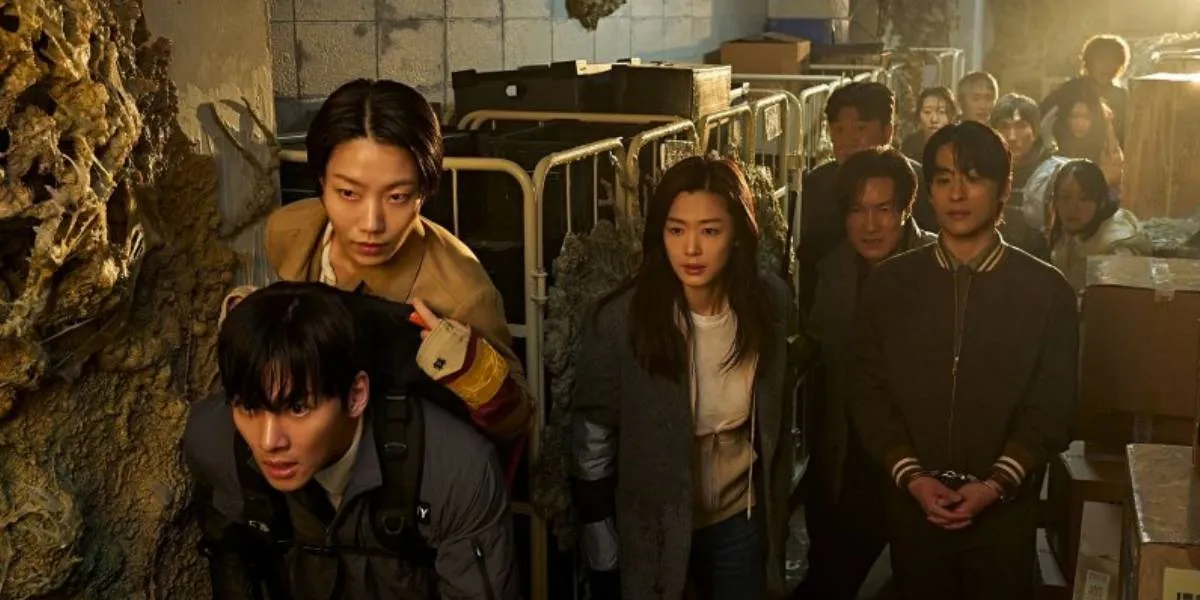
Four years after the events of Train to Busan, Yeon Sang-ho returned to his zombie universe with Peninsula. This sequel expands the scope, depicting a post-apocalyptic Korea overrun by zombies, now a desolate wasteland. The story follows a former soldier, Jung-seok (Gang Dong Won), who is tasked with returning to the quarantined peninsula to retrieve a large sum of money. Peninsula shifts from the claustrophobic tension of its predecessor to a more action-packed, Mad Max-esque aesthetic, featuring intense car chases and large-scale confrontations with both zombies and desperate human survivors. While its critical reception was more mixed compared to Train to Busan, it demonstrated the ambition to build a sprawling, complex universe around the initial outbreak, exploring the long-term consequences of a zombie-dominated world.
8. Kingdom: Ashin of the North (2021): The Origin Story of a Plague
As a special episode and prequel to the highly acclaimed Netflix series Kingdom, Kingdom: Ashin of the North delves into the tragic origins of the zombie plague in Joseon-era Korea. Starring Jun Ji-hyun as the titular Ashin, the film unravels her harrowing journey from a marginalized tribal girl to a vengeful woman who stumbles upon the resurrection plant, the source of the undead curse. Directed by Kim Seong-hun, this entry provides crucial backstory, exploring themes of ethnic discrimination, betrayal, and the desperate pursuit of vengeance that inadvertently unleashes a devastating plague. It enriches the Kingdom universe by grounding the zombie outbreak in historical folklore and personal tragedy, offering a compelling narrative that is both epic and intimate.
9. My Daughter Is A Zombie (2025): A Tender Look at the Undead Family
Slated for release in 2025, My Daughter Is A Zombie promises a unique blend of comedy and poignant family drama. Starring Jo Jung Suk and Choi Yoo Ri, the film tells the story of Lee Jung Hwan, a single father determined to protect his daughter, Soo A, after she becomes infected with the zombie virus. In an attempt to shield her from a panicked society, Jung Hwan takes Soo A to his mother’s remote coastal village. This premise allows for an exploration of unconditional parental love, the ethical dilemmas of caring for an infected loved one, and the societal prejudices against those who are different. It’s a departure from the typical action-heavy zombie narrative, focusing instead on the emotional and human cost of the apocalypse, infused with moments of levity.
10. Colony (2026): The Dawn of Intelligent Zombies
Looking ahead, Colony (2026) represents the next frontier in Korean zombie cinema, once again under the visionary direction of Yeon Sang-ho. Premiering at the Cannes Film Festival in May 2026 before its wider theatrical release in June, Colony introduces a terrifyingly innovative concept: intelligent zombies. These aren’t mindless shamblers or even fast, instinct-driven aggressors; they are capable of strategic thought, coordination, and information sharing, much like an ant colony, making them an unprecedented and formidable threat.
The film stars Jun Ji-hyun as Se-jeong, a biotec professor caught in a high-stakes conference when a bioweapon attack unleashes this new breed of smart undead. Koo Kyo-hwan and Ji Chang-wook also feature in prominent roles. Colony promises to redefine the boundaries of the zombie genre, pushing filmmakers and audiences to reconsider the nature of the threat and the strategies required for survival. This evolution signifies Korean cinema’s continued commitment to innovation and its refusal to rest on past successes, constantly seeking to refresh and deepen the genre.
Supporting Data and Industry Impact
The success of Korean zombie films is not merely anecdotal. Train to Busan, for instance, garnered a remarkable 94% approval rating on Rotten Tomatoes, with an average score of 7.6/10, a testament to its critical acclaim. Its global box office performance cemented its status as a major international hit. Subsequent films, while varying in commercial and critical reception, have consistently demonstrated strong production values, innovative storytelling, and compelling performances from A-list actors.
The genre’s popularity has also been boosted by streaming platforms like Netflix, which have made titles like Kingdom and #Alive accessible to a massive global audience, further fueling the Hallyu wave. Industry analysts have noted that the export value of Korean content, including films and series, has seen a significant surge, with zombie narratives playing a crucial role in this growth. The meticulous attention to detail in special effects, choreography, and world-building has set a high bar, often surpassing the quality of similar productions from other regions.
Statements and Reactions: Voices from the Industry
Filmmakers like Yeon Sang-ho have often spoken about their intentions to use the zombie genre as a vehicle for social commentary. "The zombie is a monster that reflects human fears," Yeon once remarked, implying his films are less about the undead and more about the living. Critics frequently highlight how Korean zombie films excel at blending intense action with profound emotional resonance, something often lacking in their Western counterparts. "[Korean zombie films] understand that true horror comes not just from jump scares, but from seeing humanity crumble and rebuild in the face of unimaginable terror," noted one prominent film critic.
Industry experts also point to the genre’s economic implications. "Korean zombie films are a potent export," states a representative from the Korea Creative Content Agency (KOCCA). "They showcase our storytelling prowess and technical capabilities, attracting international investments and collaborations." The global audience’s enthusiastic reception underscores a universal appreciation for well-crafted narratives that explore the human condition against a backdrop of existential threat.
Broader Implications and the Future of the Undead
The enduring popularity and continuous evolution of Korean zombie films carry significant broader implications. They contribute substantially to South Korea’s "soft power," enhancing its cultural influence worldwide. By consistently delivering high-quality, thought-provoking genre films, Korean cinema inspires other national film industries to explore their own unique cultural interpretations of global genre tropes.
Furthermore, these narratives often serve as powerful allegories for societal anxieties, be it class struggle (as seen in Train to Busan), governmental failures (evident in Seoul Station), or the existential dread of isolation (#Alive). The shift towards intelligent zombies in Colony suggests a new era where the threat is not just physical but intellectual, prompting deeper philosophical questions about consciousness, evolution, and the very definition of life and death. This continuous innovation ensures that Korean zombie cinema remains at the forefront of the genre, promising audiences even more compelling and terrifying experiences in the years to come. The genre’s ability to adapt, innovate, and continuously find new facets of human experience to explore through the lens of the undead guarantees its undying legacy in global cinema.