Streamlining Civil Administration: Indonesia Eliminates RT/RW Introductory Letters for Key Services

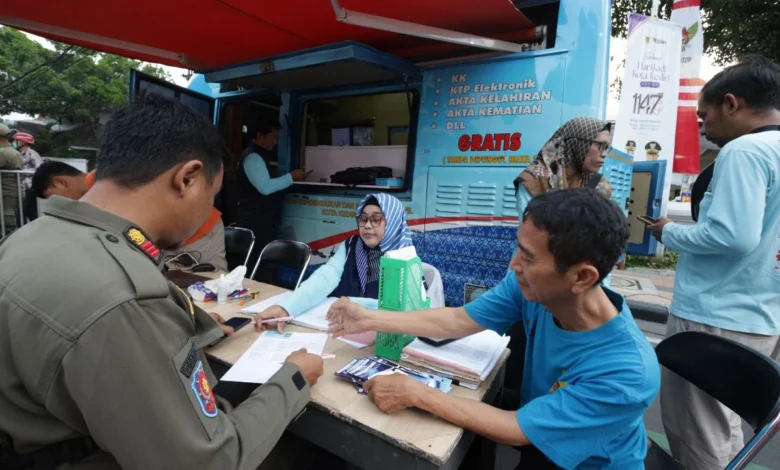
Jakarta, Indonesia – In a significant stride towards enhancing public service efficiency and accessibility, the Indonesian government has implemented a sweeping policy change that removes the requirement for introductory letters from local neighborhood units (RT/RW) and sub-district offices (kelurahan) for a wide array of civil administration services. This reform, spearheaded by the Directorate General of Population and Civil Registration (Dukcapil) under the Ministry of Home Affairs (Kemendagri), is designed to dramatically expedite the processing of essential population documents and alleviate the bureaucratic burden on citizens nationwide. The move signifies a broader commitment to modernizing governance, fostering transparency, and ensuring that fundamental rights to identity and legal recognition are more readily attainable for all Indonesians.
Background to Bureaucratic Reform
For decades, navigating Indonesia’s civil administration landscape has often been characterized by a multi-layered process, frequently involving initial endorsements from local community leaders before approaching central government agencies. The RT (Rukun Tetangga) and RW (Rukun Warga) units, while playing a crucial role in local community governance and acting as the grassroots extension of the state, traditionally served as the first point of contact for citizens seeking various administrative documents. This system, while intended to maintain local order and verify residency, often introduced bottlenecks, delays, and additional steps, leading to public frustration and inefficiencies. Citizens frequently reported needing to obtain several signed letters, sometimes from multiple community leaders, before their applications could even be considered by the Dinas Kependudukan dan Pencatatan Sipil (Disdukcapil) – the regional civil registration office.
The drive for reform is not new. Over the past two decades, successive Indonesian governments have embarked on various initiatives to streamline bureaucracy, reduce corruption, and improve public service delivery. The concept of "one-stop service" centers (Pelayanan Terpadu Satu Pintu – PTSP) and the digitalization of government processes have been central to these efforts. The elimination of RT/RW introductory letters for most Dukcapil services represents a critical milestone in this ongoing journey, directly addressing one of the most common administrative hurdles faced by millions of citizens annually. It underscores a shift towards a more citizen-centric approach, leveraging existing national population databases to verify information rather than relying on manual, localized endorsements.
The Policy Shift: A New Era of Accessibility
The core of this policy change dictates that the majority of population administration documents no longer mandate an introductory letter from RT/RW. This directive, articulated by Dukcapil, aims to empower citizens to directly approach their respective Disdukcapil offices, either in person or through increasingly available digital platforms, with only the necessary supporting documents for their specific service request. This simplification significantly cuts down on processing time, reduces opportunities for unofficial fees, and minimizes the physical movement required by applicants, especially beneficial for those in remote areas or with limited mobility.
The legal foundation for this transformative policy is rooted in national regulations designed to modernize and simplify population administration. Specifically, the provisions align with Peraturan Presiden (Presidential Regulation) Nomor 96 Tahun 2018 concerning Requirements and Procedures for Population Administration Services and Peraturan Menteri Dalam Negeri (Minister of Home Affairs Regulation) Nomor 108 Tahun 2019 concerning Regulations for the Implementation of Presidential Regulation Number 96 of 2018. These regulations collectively establish a framework for a more efficient, integrated, and technology-driven population administration system, moving away from archaic requirements and embracing digital verification where possible. They emphasize the principle of "single identity" through the Nomor Induk Kependudukan (NIK – National Identity Number) as the primary identifier for all administrative purposes.
Key Documents Affected by the Reform
The new policy encompasses several critical civil administration documents, which collectively represent the most frequently accessed services by the public. The removal of the RT/RW introductory letter requirement for these services is expected to have a profound impact on millions of Indonesian citizens each year.
-
Electronic Identity Card (KTP-el): The KTP-el is the fundamental identity document for all Indonesian citizens aged 17 and above. Whether for initial recording, data changes (such as address updates, marital status, or occupation), or replacement due to damage or loss, citizens can now directly visit Disdukcapil. The process primarily requires presenting existing identification documents, such as a family card (KK), and undergoing biometric data capture (fingerprints, iris scan, facial recognition). The elimination of the introductory letter streamlines a process that affects virtually every adult citizen at some point.
-
Family Card (Kartu Keluarga – KK): The KK is a crucial document that lists all members of a household and their relationship. It is essential for numerous administrative processes, including school enrollment, social security applications, and property transactions. Changes to the KK, such as the addition of a new family member (e.g., a newborn), removal of a member (due to death or relocation), or updates to personal data within the family unit, can now be processed directly at Disdukcapil. This directly benefits new parents, newly married couples, and families experiencing changes in their household composition.
-
Statement Letter for Relocation (Surat Keterangan Pindah Domisili): Moving between administrative regions, whether inter-city, inter-province, or even inter-district, traditionally involved a complex chain of approvals starting from the RT/RW. Under the revised policy, citizens wishing to change their domicile only need to submit an application to Disdukcapil, providing their existing KK and completing the required relocation forms. This simplification significantly eases internal migration, which is a common demographic phenomenon in Indonesia, particularly with urbanization trends. The underlying principle is that once a citizen’s data is recorded in the national population database, their identity and residency can be verified digitally.
-
Birth Certificate (Akta Kelahiran): The birth certificate is a fundamental document that legally establishes an individual’s identity, parentage, and nationality. It is indispensable for accessing education, healthcare, and other social services. The new policy allows for the direct processing of birth certificates at Dukcapil offices, supported by documents such as a birth statement from a healthcare facility, the parents’ KK, and other parental identification. This change is particularly vital for ensuring that every child is promptly registered, preventing issues of statelessness or lack of access to basic rights. For individuals whose data is already in the system, the process is further simplified.
-
Death Certificate (Akta Kematian): Similar to birth certificates, death certificates are critical for legal purposes, including inheritance, insurance claims, and the updating of family cards. The process for obtaining a death certificate can now be initiated directly at Disdukcapil, requiring supporting documents as per prevailing regulations. This direct approach eases the burden on grieving families, allowing them to complete necessary administrative tasks more efficiently during a difficult time.
-
Child Identity Card (Kartu Identitas Anak – KIA): The KIA is a relatively newer initiative aimed at providing official identity documents for children under 17 who are not yet eligible for a KTP-el. It serves various purposes, including facilitating access to child-specific services and simplifying administrative processes for minors. The application for a KIA can now be submitted directly to Disdukcapil, requiring family documents, without the need for an RT/RW introductory letter, provided the child’s data is already recorded in the population database.
Exceptions and Specific Conditions
While the policy marks a significant move towards simplification, the Ministry of Home Affairs has clarified that certain specific conditions may still necessitate an introductory letter from RT/RW. These exceptions primarily pertain to situations where a citizen’s data is not yet fully integrated into the national population database or requires special verification.
The most common scenario where an introductory letter remains essential is for individuals who are not yet registered in the population database and are seeking to obtain a Nomor Induk Kependudukan (NIK) for the first time, or to be included in a Kartu Keluarga (KK). This usually applies to new residents in an area with no prior record or specific cases requiring robust local verification of identity and residency before initial data entry into the national system. Such cases often involve cross-checking with local community leaders to confirm the applicant’s presence and details within the neighborhood. This cautious approach ensures data integrity and prevents fraudulent registrations, acting as a crucial safeguard during the initial onboarding process into the national population registry.
Digital Transformation and Implementation Challenges
The simplification of administrative requirements is intrinsically linked to Indonesia’s broader agenda of digital transformation in public services. The Ministry of Home Affairs has actively encouraged regional governments (Disdukcapil) to develop and implement online platforms for population administration services. This digital push aims to further enhance efficiency, transparency, and accessibility, moving beyond face-to-face interactions where possible.
A notable example of this digital innovation is the Alpukat Betawi application in Jakarta. Developed by the Provincial Government of DKI Jakarta, Alpukat Betawi provides a comprehensive online portal for residents to manage various Dukcapil services, including applying for KTP-el, KK, birth certificates, and death certificates, among others. Such digital platforms allow citizens to submit applications, upload supporting documents, and track the status of their requests from the convenience of their homes, significantly reducing the need for physical visits to government offices. Similar digital initiatives are being rolled out or planned in other provinces and cities across Indonesia, reflecting a nationwide commitment to leveraging technology for improved governance.
Despite the clear benefits, the implementation of these reforms is not without its challenges. Ensuring consistent application of the new policy across all 514 districts/cities and 34 provinces requires extensive training for Disdukcapil staff, robust digital infrastructure, and public awareness campaigns. Bridging the digital divide remains a critical concern, as not all citizens have equal access to internet connectivity or the digital literacy required to utilize online services effectively. For these populations, accessible physical service points and assistance will remain vital. Furthermore, maintaining the integrity and security of the national population database is paramount, requiring continuous investment in cybersecurity and data management systems.
Official Responses and Broader Implications
Officials from the Directorate General of Population and Civil Registration have consistently reiterated that this simplification is a core component of the government’s commitment to public service excellence. A spokesperson for Dukcapil, speaking on the policy’s rollout, emphasized that the goal is to "make government services truly citizen-centric, reducing unnecessary steps and empowering individuals to access their fundamental rights with ease." The Ministry of Home Affairs views this reform as a tangible demonstration of bureaucratic reform, aiming to foster greater public trust in government institutions.
The broader implications of this policy are far-reaching:
- Enhanced Efficiency and Productivity: By removing an entire layer of bureaucracy, millions of man-hours previously spent on obtaining introductory letters can now be reallocated, leading to increased productivity for both citizens and government agencies.
- Reduced Potential for Corruption: Simplified processes with fewer intermediaries inherently reduce opportunities for unofficial payments or corrupt practices, contributing to a cleaner and more accountable public service environment.
- Improved Data Integrity: By shifting verification reliance from localized manual checks to a centralized national database, the policy encourages greater accuracy and consistency in population data, which is crucial for policy planning, election processes, and social welfare programs.
- Greater Inclusivity: Easier access to identity documents ensures that more citizens, including vulnerable populations, can formally exist within the state system, thereby gaining access to essential services and protections.
- Modernization of Governance: This reform aligns Indonesia with global best practices in public administration, demonstrating a commitment to modern, technology-driven governance structures that prioritize citizen convenience.
- Economic Impact: The time and cost savings for individuals and businesses engaging with administrative processes can contribute to broader economic efficiency and ease of doing business.
In conclusion, the elimination of RT/RW introductory letters for most civil administration services marks a pivotal moment in Indonesia’s ongoing journey of bureaucratic reform. It is a clear signal of the government’s dedication to creating a more agile, transparent, and citizen-friendly public service delivery system. As the policy continues to be implemented and refined, its success will depend on sustained efforts in digitalization, public awareness, and ensuring equitable access for all citizens, ultimately fostering a more efficient and inclusive Indonesia.
Related posts: