Indonesia National Police Traffic Corps Officially Launches Digital Vehicle Registration Certificate To Modernize Public Services

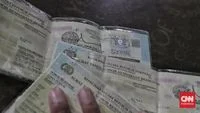
The Indonesian National Police Traffic Corps, widely known as Korlantas Polri, has officially introduced the digital version of the Vehicle Registration Certificate, commonly referred to as the STNK, through its dedicated mobile platform, the Digital Korlantas application. This milestone development follows the successful prior rollout of the digital Driver’s License, or SIM, marking a significant step forward in the ongoing digitalization of public administration and law enforcement services across the archipelago.
The official inauguration ceremony took place in Jakarta on Friday, September 25, coinciding with the grand commemoration of the 71st Bhayangkara Traffic Day. Chief of the Indonesian National Police, General Listyo Sigit Prabowo, led the launching event, underscoring the institution’s commitment to modernizing bureaucratic processes and improving the overall experience of millions of motorists nationwide. Through this integrated application, vehicle owners can now effortlessly access, manage, and display their official vehicle documentation directly from their smartphones, eliminating the traditional reliance exclusively on physical paper documents.
Traffic Corps leadership emphasized that this strategic initiative forms a core component of a broader, long-term digital transformation agenda. The overarching objective is to streamline traffic-related services, enhance transparency, and ensure that public access to essential documentation is as seamless and practical as modern technology allows.
Legal Equivalence and Verification Mechanisms
A central question arising from the introduction of digital identification documents concerns their legal validity during routine traffic stops or roadside inspections. To address this, high-ranking officials have confirmed that the digital STNK carries the exact same legal weight and regulatory validity as its physical counterpart.
The digital STNK platform operates by securely linking and validating user data directly against the centralized motor vehicle database managed by Korlantas Polri. When motorists are pulled over or subjected to routine checkpoints, law enforcement officers can instantly verify the authenticity of the digital document in real-time via a dynamically generated, cryptographically certified QR code displayed within the application.
Head of Korlantas Polri, Inspector General Wibowo, reiterated this stance during the launch event, noting that the introduction of the digital variant aligns seamlessly with existing legal frameworks. This mirrors the precedent established by the digital SIM rollout, which began initial trials in May. During the early rollout phase of the digital SIM, authorities advised citizens to continue carrying physical cards as a precautionary backup while the supporting technical infrastructure and field verification protocols were fully deployed across various regional jurisdictions.
Official documentation from the Digital Korlantas platform clarifies that the digital identity features are designed to complement physical documents rather than completely replace them. However, the legal equivalence of the digital STNK has been explicitly highlighted from its inception, providing motorists with immediate regulatory reassurance.
Advanced Security and Anti-Fraud Measures
To mitigate security risks such as forgery, unauthorized duplication, and identity theft—which have historically plagued physical paper-based vehicle documents—the digital STNK interface incorporates robust technological safeguards. Most notably, the application pages displaying the digital STNK are engineered with stringent security protocols that prevent users from capturing screenshots or recording video feeds of the active document.
This anti-piracy and anti-screenshot mechanism ensures that screenshots cannot be easily shared or manipulated to deceive law enforcement officers. Furthermore, it accelerates the roadside verification process, allowing traffic personnel to confirm vehicle ownership and tax compliance within seconds. By closing the loopholes that allowed fraudulent physical documents to circulate in the grey market, the digital ecosystem significantly enhances the integrity of vehicle administration in Indonesia.
Integration with Electronic Traffic Law Enforcement and LantasPay
In addition to housing the digital STNK, the Digital Korlantas application has expanded its utility by integrating electronic payment gateways specifically tailored for traffic violation fines. Motorists whose infractions are captured by the Electronic Traffic Law Enforcement system can now review their violation data, confirm their details, and settle associated fines directly through the application’s integrated financial feature, known as LantasPay.
The payment workflow is structured to ensure fairness and transparency. When a motorist pays a fine through LantasPay prior to court proceedings, any overpayment resulting from the final judicial verdict is automatically calculated and refunded directly to the user’s digital wallet balance. This integration reduces administrative friction, minimizes opportunities for illicit cash transactions during roadside stops, and modernizes the state revenue collection process for traffic violations.
Practical Implications for Daily Commuters
For the average motorist navigating Indonesia’s congested urban centers, the introduction of the digital STNK offers immediate practical relief. Historically, failing to present a physical STNK during a police checkpoint resulted in administrative penalties, even if the vehicle was fully registered and legally compliant.
Under the new operational guidelines, motorists who inadvertently leave their physical documents at home or misplace them no longer need to panic. As long as they possess a smartphone with an active internet connection and can log into the official Digital Korlantas application, presenting the verified digital document to officers fulfills legal requirements.
"This means that if members of the public one day leave their documents behind or due to other factors cannot bring their physical STNK, they only need to show the digital STNK, which is genuinely downloaded from the Digital Korlantas application, to the officers," stated Inspector General Wibowo during a press briefing following the launch.
Chronology of Digitalization in Indonesian Traffic Policing
The transition toward a fully digital traffic administration ecosystem in Indonesia has progressed through distinct, methodical phases over recent years. The foundation was laid with the gradual computerization of vehicle registration databases and the implementation of electronic ticketing systems, such as ETLE, which reduced direct physical contact between motorists and traffic officers.
In May of the current year, Korlantas took its first major consumer-facing step by launching the digital SIM. This initial rollout served as a vital testing ground for mobile-based identity verification, allowing the IT infrastructure to absorb high volumes of user traffic and address initial technical bottlenecks. Following months of system stabilization, optimization, and positive public feedback, traffic authorities accelerated plans to migrate secondary vehicle documentation into the same digital ecosystem.
The culmination of this multi-year roadmap is the September launch of the digital STNK, unveiled during the 71st Bhayangkara Traffic Day celebrations. This milestone marks the shift from isolated digital features to an interconnected, comprehensive mobile portal for Indonesian vehicle owners.
Broader Socio-Economic and Administrative Impacts
The deployment of the digital STNK and its supporting ecosystem carries far-reaching implications for public sector governance, economic efficiency, and law enforcement practices. By reducing the physical issuance of paper documents, the National Police anticipates a significant decrease in operational costs associated with the printing, distribution, and storage of traditional documentation.
From an economic perspective, administrative digitalization curtails opportunities for petty corruption and curbs the illegal market for counterfeit vehicle papers, ensuring that vehicle ownership data remains accurate and transparent. For insurance companies, financial institutions, and automotive markets, a tamper-proof digital registry simplifies the verification of vehicle status during loan applications, insurance claims, and ownership transfers.
Nevertheless, experts note that the success of this digital transformation depends heavily on equitable access to digital infrastructure. Ensuring that motorists in remote or economically disadvantaged regions can reliably access and utilize the application without encountering technical exclusion remains a vital challenge for the implementing authorities.
Future Outlook and Ongoing Expansion
As the Digital Korlantas platform continues to mature, Korlantas Polri plans to introduce further enhancements and additional administrative services to the application interface. Future updates are expected to streamline vehicle ownership transfers, integrate digital tax payment reminders, and expand interoperability with regional provincial revenue offices that manage motor vehicle taxes.
For now, the immediate focus remains on socializing the digital STNK among the driving public, ensuring that law enforcement personnel across all regional police departments are thoroughly trained in verification procedures, and maintaining high levels of cybersecurity within the application infrastructure. As Indonesia continues its broader national digital transformation, the modernization of traffic policing stands out as a tangible example of technology improving everyday public services.