The Rise, Turbulence, and Dissolution of the Indonesian Communist Party: A Historical Overview of a Defining Era

The Indonesian Communist Party (PKI) stands as perhaps the most controversial and significant political entity in the history of the Indonesian republic, representing a trajectory that moved from an influential revolutionary movement to total proscription in 1966. Its lifespan, marked by ideological fervor, electoral success, and ultimate violent collapse, remains a central pillar in understanding the structural formation of the modern Indonesian state. Analyzing the PKI requires a careful navigation of archived documents, state mandates, and the evolving interpretations of historians who weigh the nuances of cold-war era politics against the backdrop of post-colonial nation-building.
The Genesis of Radicalism: Early 20th Century Foundations
The roots of the PKI trace back to the early 20th century, specifically the formation of the Indische Sociaal-Democratische Vereeniging (ISDV) in 1914, established by Dutch socialist Henk Sneevliet. This organization served as the primary incubator for Marxist ideology in the Dutch East Indies. By 1920, the movement had gained enough momentum to formally reconstitute itself as the Perserikatan Komunis di Hindia, which shortly thereafter adopted the name Partai Komunis Indonesia (PKI).
The party’s early years were characterized by a combative stance against colonial authorities. In 1926, the PKI orchestrated an uprising against the Dutch colonial government. The rebellion was poorly coordinated and met with severe, systematic repression. The resulting crackdown decimated the party’s leadership and forced its operations underground for the remainder of the colonial period. It was not until the post-independence era that the party was able to reorganize as a legitimate political force, though its return to the public sphere was quickly challenged by the realities of a nascent nation struggling for stability.
The 1948 Madiun Affair: A Defining Schism
The first major post-independence crisis for the PKI occurred in 1948, culminating in the Madiun Affair. On September 18, 1948, the PKI, operating under the umbrella of the People’s Democratic Front (FDR), declared the formation of a "Soviet Republic of Indonesia" in Madiun. This act was interpreted by the fledgling government of President Sukarno as an outright insurrection against the republic during its most vulnerable moment—a time when the nation was simultaneously negotiating sovereignty with the Dutch.
The government, led by the military and republican forces, moved swiftly to suppress the revolt. Within months, the rebellion was dismantled. The leadership, including figures like Musso, were either captured or killed. This event left an indelible mark on the national psyche, positioning the PKI as an existential threat to the republican project in the eyes of the military and nationalist factions. It also marked the first major divergence between the PKI and the nationalist government, a rift that would never fully heal.
Resurgence and the 1955 Electoral Peak
Despite the trauma of 1948, the PKI displayed remarkable resilience. Throughout the 1950s, under the pragmatic and charismatic leadership of D.N. Aidit, the party pivoted toward a strategy of mass mobilization. By focusing on the grievances of landless peasants, laborers, and marginalized urban youth, the PKI rebuilt its organizational backbone with unprecedented efficiency.
The 1955 general election served as the ultimate litmus test for the party’s revival. Data provided by the General Elections Commission (KPU) confirms that the PKI secured 6,179,914 votes, representing 16.36 percent of the national total. This performance granted them 39 seats in the parliament (DPR), placing them as the fourth-largest political force, trailing only the PNI, Masyumi, and NU. Their success extended to the Constituent Assembly, where they gained 80 seats. This period marked the height of the PKI’s influence within the framework of parliamentary democracy, establishing it as a pillar of Indonesian political life.
The Era of Guided Democracy and Nasakom
Following President Sukarno’s issuance of the Decree on July 5, 1959, Indonesia transitioned into the era of "Guided Democracy." The political landscape became increasingly centralized around the presidency, creating a delicate balancing act between three competing power centers: the nationalist bloc, the religious parties, and the military.
The PKI skillfully maneuvered within this environment by championing Sukarno’s concept of "Nasakom"—an acronym for Nasionalisme (Nationalism), Agama (Religion), and Komunisme (Communism). By aligning itself with Sukarno’s populist vision, the PKI gained significant political legitimacy and expanded its influence into almost every corner of Indonesian bureaucracy and mass organization. However, this ascent placed them on a collision course with the Indonesian Army (TNI AD), which viewed the growing influence of the communists—and their proposals to establish a "Fifth Force" (an armed peasant and worker militia)—as a direct threat to the military’s role in the state.
The 1965 Turning Point: The G30S Incident
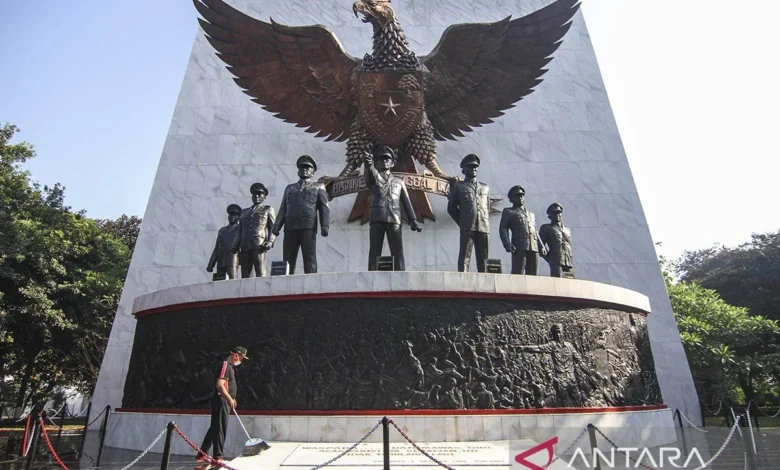
The night of September 30 to October 1, 1965, remains the most pivotal and debated moment in modern Indonesian history. A group of military officers, claiming to act to prevent a CIA-backed coup, kidnapped and murdered six top-ranking Army generals and one lieutenant. The bodies were disposed of in a location known as Lubang Buaya in East Jakarta.
The official narrative during the subsequent New Order era explicitly linked the G30S to the PKI, framing the event as a failed communist coup. Contemporary historians and researchers, however, argue that the involvement was complex and that multiple actors with varying agendas were at play. The National Archives of the Republic of Indonesia (ANRI) suggests that a comprehensive understanding requires analyzing not only local records but also declassified files from the United States and Japan, acknowledging that the historiography of 1965 remains subject to ongoing academic scrutiny and competing narratives.
Aftermath: Violence and Systematic Dismantling
The failure of the G30S triggered a swift and brutal transformation of the Indonesian political order. Under the leadership of Major General Soeharto, the Army launched an extensive campaign to neutralize the PKI. This period saw the mass arrest, detention, and extrajudicial killing of individuals suspected of being affiliated with or sympathetic to the party.
The National Commission on Human Rights (Komnas HAM) has documented the systematic nature of these events, classifying them as gross violations of human rights. The violence was not limited to political elites but extended to the grassroots, affecting families and communities across the archipelago. The scale of the bloodshed in late 1965 and 1966 remains one of the most painful chapters in the nation’s history, leading to deep societal scars that persist decades later.
Legal Dissolution and the New Order
The political end for the PKI was formalized on March 12, 1966, when Soeharto issued a decree effectively banning the party and its affiliated organizations. This mandate was later codified in the MPRS Decree (TAP MPRS) No. XXV/1966, which prohibited the spread of Communist, Marxist, and Leninist ideologies.
This legal framework remains in force today. The dissolution of the PKI fundamentally altered the trajectory of the Indonesian state, leading to the rise of the New Order regime, which would govern Indonesia for the next 32 years. The political dominance of the military became entrenched, and the space for ideological opposition was severely constrained.
Historical Implications and Modern Reflections
Six decades later, the events of 1965–1966 continue to serve as a critical point of study. The legacy of the PKI is not merely a record of a defunct political party, but a complex study of ideological conflict, the fragility of democratic institutions, and the enduring challenge of reconciling a nation with its violent past.
In 2024, the National Archives of the Republic of Indonesia emphasized the necessity of using diverse, multi-national sources to construct a more balanced historical record. By acknowledging that the archives are a mosaic of American, Japanese, and Indonesian perspectives, the current approach seeks to move beyond the monolithic narratives of the past. As Indonesia continues to develop its democratic institutions, the history of the PKI remains a mandatory subject of reflection—not only to prevent the recurrence of such immense national trauma but to better understand the foundations of the current republic. The prohibition of the ideology stands as a legal reality, yet the intellectual and historical inquiry into the causes and consequences of that era remains a vibrant, albeit sensitive, component of contemporary Indonesian scholarship.
Related posts: