Nanik Sudaryati Deyang Resigns as Head of National Nutrition Agency Citing Health Reasons, Pledges Continued Oversight of Key Programs

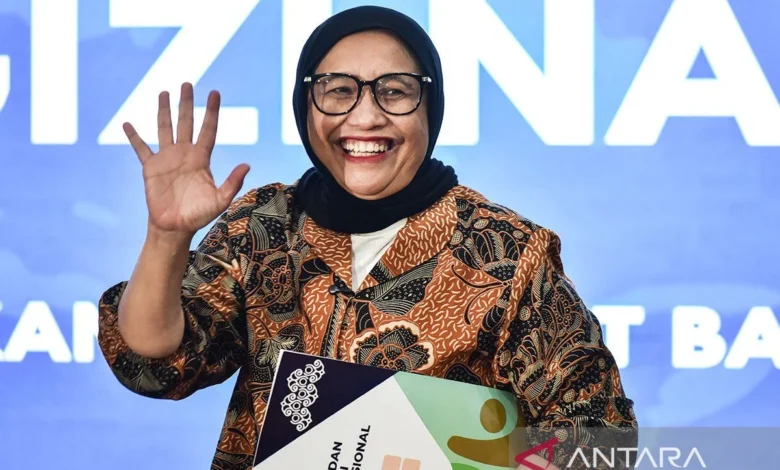
Jakarta, Indonesia – Nanik Sudaryati Deyang, the recently appointed Head of the National Nutrition Agency (BGN), has tendered her resignation, a decision she conveyed to President Prabowo Subianto. Her departure comes amidst plans to undergo critical medical treatment for a heart condition, necessitating her focus on personal health. Despite her resignation, Ms. Deyang has indicated her commitment to remain involved in an oversight capacity, emphasizing the importance of the agency’s mission, particularly the flagship Free Nutritious Meals (MBG) program.
The announcement was confirmed by Dirgayuza Setiawan, Special Assistant to the President for Communication and Policy, who stated that President Prabowo accepted Ms. Deyang’s decision after considering her health situation. Ms. Deyang, who had been entrusted with leading the BGN—a crucial institution responsible for implementing national nutrition programs, including the high-profile MBG initiative—had spent approximately one and a half months in the role, during which she initiated significant internal reforms and conducted extensive evaluations of program implementation.
Resignation Confirmed Amidst Health Challenges
The news of Nanik Sudaryati Deyang’s resignation emerged on Wednesday, with Dirgayuza Setiawan clarifying the circumstances surrounding her departure. Setiawan revealed that Ms. Deyang had formally bid farewell to President Prabowo, simultaneously submitting her resignation to prioritize her health. "Today, Ibu Nanik Deyang bid farewell to President Prabowo to undergo heart treatment and simultaneously resigned as Head of the National Nutrition Agency," Yuza stated, confirming the information from Jakarta.
In a personal statement, Ms. Deyang elaborated on her decision, explaining that she plans to seek medical treatment abroad. This choice was made after careful consideration of the comprehensive examinations and care required, including the necessity of obtaining additional medical opinions to ensure the most effective treatment path. She underscored that her primary reason for stepping down was to dedicate herself fully to her recovery, emphasizing that her health condition precluded her from continuing to fulfill the demanding responsibilities of leading a national agency.
Ms. Deyang conveyed her profound apologies to President Prabowo for having to relinquish her position as Head of BGN, citing her need to safeguard her health. She noted that the President expressed understanding and concern for her well-being, ultimately approving her resignation. Importantly, Ms. Deyang was keen to dispel any speculation, firmly asserting that her resignation was solely due to health considerations and not linked to any other issues. Her focus, she explained, must now be entirely on her recovery process to ensure optimal treatment outcomes. "I conveyed to the President, with a thousand apologies, that I must resign as Head of BGN for my health. Because the President was concerned and sympathetic, he approved, but he asked me to continue overseeing BGN," Ms. Deyang shared in her personal update, hinting at a continued, albeit different, form of involvement.
A Brief but Impactful Tenure at the Helm of National Nutrition
Despite her relatively short tenure of approximately one and a half months, Nanik Sudaryati Deyang’s leadership at the BGN was marked by a proactive approach to evaluation and reform, particularly concerning the implementation of the Free Nutritious Meals (MBG) program. This program, a cornerstone of President Prabowo’s policy agenda, aims to address nutritional deficiencies across Indonesia, especially among vulnerable populations, and is central to the nation’s efforts to combat stunting.
During her time in office, Ms. Deyang embarked on a comprehensive review of the MBG program’s execution. One of her key initiatives involved inspecting thousands of Nutrition Fulfillment Service Units (SPPGs) to ascertain adherence to service standards and program quality. The BGN recorded that Ms. Deyang oversaw the evaluation of nearly 28,000 SPPGs nationwide. This extensive assessment led to the categorization of thousands of kitchens based on quality standards, the cessation of kitchen expansion in certain regions, and the identification of hundreds of SPPGs deemed problematic due to various issues ranging from operational inefficiencies to quality concerns. These actions underscored her commitment to ensuring transparency, efficiency, and effectiveness in the delivery of critical nutritional services.
Ms. Deyang reaffirmed her unwavering support for President Prabowo Subianto’s administration and expressed her earnest hope that government programs, particularly those aimed at improving community nutrition, would continue to advance successfully. Her efforts laid a foundation for ongoing improvements within the MBG program, setting a precedent for rigorous oversight and quality control.
The Mandate of the National Nutrition Agency and the Flagship MBG Program
The National Nutrition Agency (BGN) plays a pivotal role in Indonesia’s public health infrastructure, tasked with orchestrating and implementing strategies to enhance the nutritional status of the population. Established to consolidate and streamline efforts previously dispersed across various ministries and agencies, BGN’s mandate includes developing national nutrition policies, coordinating interventions, and monitoring progress towards national health goals, particularly in combating malnutrition and stunting.
Indonesia, like many developing nations, faces significant challenges in public health, with stunting remaining a critical concern. Stunting, defined as impaired growth and development that children experience from poor nutrition, repeated infection, and inadequate psychosocial stimulation, has long-term consequences on physical and cognitive development, impacting national human capital and economic productivity. According to data from the Ministry of Health, while stunting rates have shown a declining trend in recent years, the national target of reducing prevalence to 14% by 2024 (from around 21.6% in 2022) requires sustained and robust interventions.
It is against this backdrop that the Free Nutritious Meals (MBG) program emerges as a flagship initiative, reflecting a strategic government priority. Conceptualized as a key promise during President Prabowo Subianto’s campaign, the MBG program aims to provide balanced and nutritious meals to school children and pregnant women, directly targeting two of the most vulnerable groups susceptible to nutritional deficiencies. The program is envisioned not only as a means to alleviate immediate hunger but also as a long-term investment in the nation’s future, promising to improve children’s learning outcomes, enhance maternal health, and ultimately contribute to a healthier, more productive generation. Its implementation involves a complex logistical network, engaging local communities, food suppliers, and various government tiers, making the leadership of BGN paramount to its success. Ms. Deyang’s early initiatives to evaluate and standardize the SPPGs were thus critical steps towards ensuring the program’s integrity and effectiveness on a national scale.
Personal Health Takes Precedence: The Rationale Behind the Decision
Nanik Sudaryati Deyang’s decision to step down from her demanding role underscores a critical personal choice driven by serious health considerations. Her statement confirmed the need for extensive heart treatment, including seeking a second medical opinion, which necessitates her full attention and presence abroad. This decision, though difficult, highlights the often-unseen pressures and personal sacrifices involved in high-level public service.
The gravity of her medical condition required a pragmatic assessment of her ability to simultaneously lead a national agency responsible for a complex, nationwide program. The role of Head of BGN involves intense travel, strategic decision-making, stakeholder coordination, and constant oversight, all of which demand robust physical and mental stamina. Recognizing that her health would prevent her from performing these duties to the required standard, Ms. Deyang made the responsible choice to prioritize her well-being. This move serves as a poignant reminder that even dedicated public servants must sometimes put their personal health first. President Prabowo’s sympathetic understanding and acceptance of her resignation reflect an acknowledgement of this fundamental human need, reinforcing a culture of empathy within the highest echelons of government. Her transparency about the health reasons for her departure also helps to maintain public trust and prevent unfounded speculation regarding her exit.
Continued Contribution: Nanik Deyang’s Future Role in Oversight
Despite her formal resignation as Head of BGN, Nanik Sudaryati Deyang has expressed her intention to maintain a connection with the agency and its vital mission. She revealed that President Prabowo specifically requested her continued involvement in an oversight capacity. This potential arrangement suggests the formation of a Supervisory Board for BGN, within which Ms. Deyang might play a crucial role.
Her ongoing contribution, even if not in an executive capacity, would be invaluable. Given her recent hands-on experience in evaluating the MBG program and identifying areas for improvement, her insights and institutional knowledge could provide critical guidance for the agency’s future direction. This continuity of expertise would help mitigate the impact of her departure, ensuring that the momentum gained during her brief tenure is not lost. Her involvement in oversight could include advising on policy implementation, reviewing program effectiveness, and ensuring accountability, particularly for the reforms she initiated within the SPPG network. This arrangement allows the BGN to benefit from her experience while accommodating her health needs, providing a bridge during the leadership transition and reinforcing the stability of the national nutrition agenda.
Implications for National Nutrition Strategy and Program Continuity
Nanik Sudaryati Deyang’s resignation, while prompted by personal health, inevitably raises questions about the continuity and future direction of Indonesia’s national nutrition strategy, particularly the implementation of the Free Nutritious Meals (MBG) program. The MBG program, being a flagship initiative, requires stable and decisive leadership to navigate its complexities, including logistical challenges, budget allocation, quality control, and stakeholder coordination across various regions.
The immediate implication is the need for a swift and effective leadership transition at BGN. The agency will require a new head who can seamlessly pick up where Ms. Deyang left off, continuing the reforms and evaluations she initiated. The efficiency of this transition will be crucial in maintaining the program’s momentum and avoiding any perceived disruptions that could undermine public confidence or operational effectiveness. The mention of Sudaryono, currently the Deputy Minister of Agriculture, as a potential candidate by the Gerindra party, suggests that the government is already considering successors who possess relevant experience in public administration and agricultural policy, which are intrinsically linked to food security and nutrition.
Furthermore, Ms. Deyang’s continued involvement in an oversight capacity, if formalized, could serve as a vital mechanism for institutional memory and strategic guidance. Her insights into the challenges and successes of the early phases of the MBG program will be invaluable for the incoming leadership. This dual structure—a new executive head supported by an experienced oversight board—could provide both dynamism and stability, ensuring that the agency’s mission remains on track.
Beyond leadership, the incident underscores the broader challenges of implementing large-scale social programs. Ensuring the quality and integrity of 28,000 SPPGs, as highlighted by Ms. Deyang’s evaluations, is a monumental task that demands sustained political will, administrative capacity, and robust monitoring mechanisms. The findings of problematic units and the halting of expansion in certain areas indicate that while the program’s ambition is commendable, its execution requires constant vigilance and adaptation. The next head of BGN will inherit these ongoing challenges and the responsibility to build upon the foundations laid by Ms. Deyang, driving forward the government’s commitment to improving national nutrition.
The Broader Landscape of Public Health in Indonesia
Nanik Sudaryati Deyang’s departure from the National Nutrition Agency serves as a focal point for discussing the broader landscape of public health and governance in Indonesia. The nation is at a critical juncture in its development, striving to achieve ambitious health targets, including the eradication of extreme poverty and the drastic reduction of stunting, as part of its demographic dividend aspirations. The BGN and programs like MBG are not just standalone initiatives; they are integral components of a comprehensive strategy to build a healthier, more productive society.
The government’s commitment to these goals is evident in the prioritization of the MBG program, which signifies a direct investment in human capital. However, the successful implementation of such large-scale programs requires not only significant financial resources but also robust institutional frameworks, dedicated leadership, and sustained public engagement. The challenges Ms. Deyang identified within the SPPG network reflect the complexities inherent in delivering services across a vast archipelago with diverse socio-economic conditions.
The incident also highlights the importance of public officials’ well-being. The demanding nature of high-level government positions can take a toll on individuals, making it crucial for systems to support both their performance and their health. Ms. Deyang’s transparency regarding her health condition sets an important precedent for acknowledging the human element in public service.
As Indonesia continues its journey towards achieving its national development goals, the role of agencies like BGN will only grow in significance. The effective management of nutritional programs, coupled with broader public health initiatives, will be paramount in ensuring that all citizens have the opportunity to thrive. The transition at BGN, while prompted by personal circumstances, offers an opportunity for the government to reaffirm its commitment to national nutrition, to ensure program continuity, and to strengthen the institutional capacity to deliver on its promises for a healthier future. The legacy of Ms. Deyang’s brief but impactful tenure will be measured not just by the evaluations she conducted, but by the ongoing commitment to excellence and accountability that she championed within a crucial national agency.