Beyond the Badge: Understanding the Strategic Distinction Between Mitsubishi Pajero and Pajero Sport in the Global and Indonesian Automotive Markets


Jakarta — Automoting enthusiasts and prospective buyers frequently conflate vehicles sharing familial nomenclature, assuming mechanical interchangeability or direct generational succession. A prominent instance within the global automotive landscape involves Mitsubishi Motors’ iconic SUV lineup: the Pajero and the Pajero Sport. Despite carrying the illustrious Pajero moniker—a name synonymous with rugged off-road capability, endurance, and Dakar Rally dominance—these two nameplates represent entirely distinct vehicle architectures, sizing categories, design philosophies, and market positioning strategies.
Clarifying this distinction has become increasingly vital following recent global product announcements and shifting consumer expectations. Industry experts, brand representatives, and corporate executives have emphasized that while both sport utility vehicles inherit Mitsubishi’s engineering DNA and formidable four-wheel-drive heritage, they are engineered to fulfill fundamentally different roles within the manufacturer’s global portfolio. For consumers, particularly within dynamic Southeast Asian markets such as Indonesia, recognizing these technical and dimensional variances ensures a clearer understanding of vehicle capabilities, pricing tiers, and intended utility.
The Architectural Divide: Flagship Cross-Country vs. Versatile Medium SUV
The fundamental divergence between the two models lies in their classification and structural foundations. According to Rifat Sungkar, Brand Ambassador for Mitsubishi Motors Indonesia, the vehicle hierarchy is distinctly defined by vehicle architecture and market tiering.
"Pajero is an exclusive SUV with a larger body, while the Mitsubishi Pajero Sport falls into the medium SUV class," Sungkar explained via his official social media channels, addressing a common point of confusion among automotive consumers.
This classification is not merely semantic; it dictates the engineering parameters, interior packaging, suspension geometry, and target demographic of each vehicle. The full-sized Pajero is traditionally constructed to serve as the brand’s flagship multi-terrain vehicle, combining heavy-duty off-road architecture with executive-level comfort and dimensions. Conversely, the Pajero Sport is designed as a versatile, family-oriented medium SUV, frequently sharing its underlying ladder-frame architecture with the Triton pickup truck platform, thereby balancing commercial-grade durability with daily urban drivability and multi-passenger utility.
Chronology and Evolution: The Rebirth of a Legend
The distinction between the two models was thrust back into the spotlight following a major global automotive milestone. On September 2, 2026, Mitsubishi Motors officially debuted the next-generation Pajero in Thailand, marking a triumphant return for a nameplate that had seen varied production cycles across different global territories over the preceding decade.
The introduction of the all-new model showcased a complete stylistic and structural overhaul. Mitsubishi transformed the flagship SUV into a purpose-built cross-country vehicle, explicitly engineered to reclaim its dominant position at the pinnacle of the brand’s global lineup. This generational leap introduced cutting-edge powertrain technology, advanced structural rigidity, and modern multi-terrain management systems designed to tackle the most punishing off-road environments while meeting contemporary stringent safety and emissions standards.
In contrast, the Mitsubishi Pajero Sport lineage in Indonesia has followed a distinct historical trajectory. The current iteration available in the Indonesian market represents the third generation of the mid-sized SUV, which originally made its domestic debut in 2016. Demonstrating strong market resilience and sustained consumer demand, the vehicle has undergone localized assembly (completely knocked down, or CKD) at Mitsubishi’s manufacturing facility in West Java, complemented by significant cosmetic and functional facelifts introduced in 2021 and 2024. These updates have kept the Pajero Sport competitive against an influx of rivals in the fiercely contested body-on-frame mid-size SUV segment.
Comparative Technical Analysis: Dimensions and Powertrains
A granular examination of the physical dimensions and mechanical specifications underscores the distinct engineering targets of the two vehicles.
The newly debuted All-New Pajero commands a commanding physical footprint. It measures 4,920 mm in length, 1,925 mm in width, and stands at an imposing 1,910 mm in height when equipped with 20-inch wheels. Its robust proportions are further anchored by a generous wheelbase of 2,870 mm, providing expansive interior volume and superior stability over broken terrain. Beneath the hood, this flagship model is propelled by a refined 2,4-liter diesel power plant capable of generating a robust maximum torque of 480 Nm (though certain market-specific configurations yield 470 Nm). Power is delivered through Mitsubishi’s advanced Super Select 4WD-II system, seamlessly integrated with the Super All Wheel Control (S-AWC) vehicle dynamics architecture, though exact specifications vary by trim level and regional market requirements.
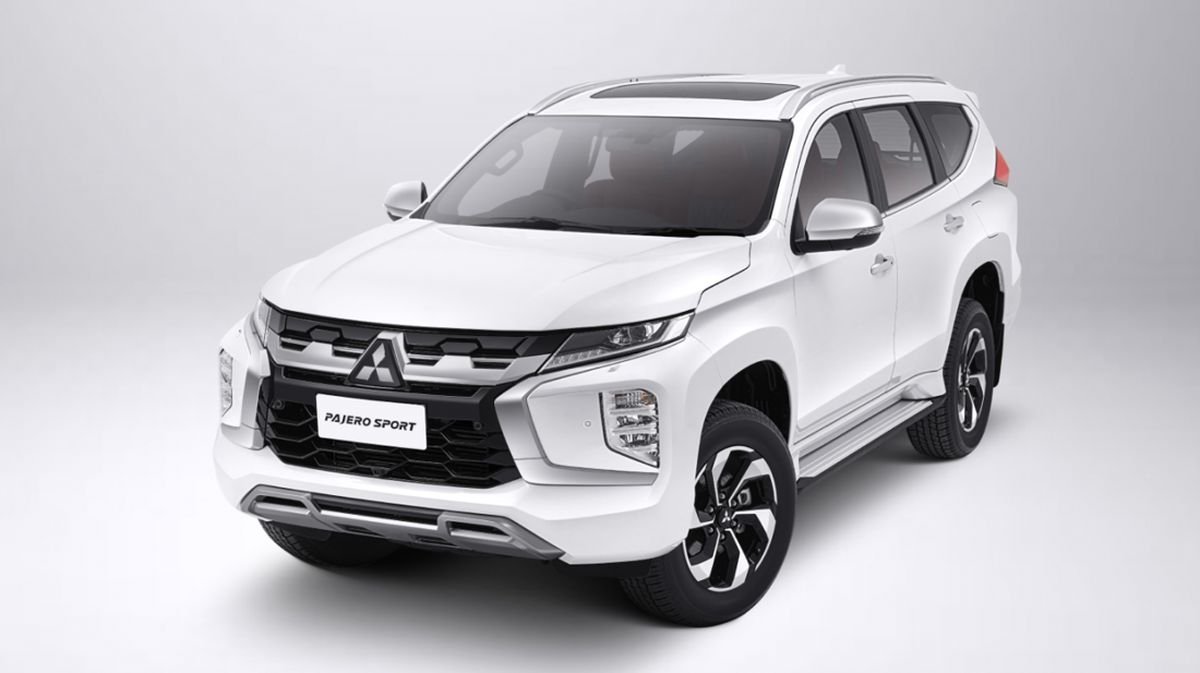
Conversely, the Indonesian-market Pajero Sport exhibits more compact, city-friendly proportions while retaining a commanding road presence. It measures 4,840 mm in length, 1,815 mm in width, and 1,835 mm in height, featuring a slightly shorter wheelbase of 2,800 mm. Despite its smaller physical envelope, the Pajero Sport shares a comparable displacement engine lineage, utilizing a 2,4-liter diesel engine that delivers a healthy maximum torque of 430 Nm. Like its larger sibling, upper variants of the Pajero Sport are equipped with the proven Super Select 4WD-II system, offering drivers multiple terrain modes to handle varying road and weather conditions.
Official Perspectives and Market Implications in Indonesia
The commercial implications of maintaining two distinct tiers of Pajero-badged SUVs are significant, particularly in strategic growth markets like Indonesia where brand loyalty runs deep. Irwan Kuncoro, Director of Sales & Marketing Division at PT Mitsubishi Motors Krama Yudha Sales Indonesia (MMKSI), addressed the interplay between the two models, emphasizing that while they share historical roots, their market applications are purposefully tailored.
"Both the All-New Pajero and the Pajero Sport carry a strong DNA and tradition, yet they come with distinct characters, positioning, and intended purposes to address the diverse needs of our customers," Irwan stated. He further underscored the entrenched market confidence in the mid-size offering, noting, "In Indonesia, the Pajero Sport has gained strong trust from customers and will continue to be one of the mainstay models for Mitsubishi Motors."
This sentiment is echoed by brand representatives who recognize that the introduction of a flagship, premium-tier global model does not invalidate the utility or popularity of an established regional favorite. Rifat Sungkar reinforced this perspective by assuring domestic consumers that the availability of the medium SUV remains uncompromised despite international product launches.
"For the Indonesian market, the Pajero Sport will remain available for us," Sungkar affirmed. He noted that since its introduction, the Pajero Sport has firmly established itself as an icon among domestic SUV enthusiasts, carving out a dedicated consumer base that values its balance of rugged capability, passenger comfort, and accessible maintenance networks.
Broader Economic and Industrial Context
The ongoing parallel presence of these two vehicle lines highlights a sophisticated product segmentation strategy by Mitsubishi Motors. In emerging economies across Southeast Asia, the mid-size ladder-frame SUV segment serves as a critical volume driver, balancing commercial utility with aspirational family transport. By assembling the Pajero Sport locally, MMKSI has successfully optimized supply chain efficiencies, stabilized pricing structures, and ensured ready access to spare parts and localized customer service—factors that heavily influence consumer purchasing decisions in the region.
At the same time, the rollout of the All-New Pajero flagship serves a vital brand-building function. By reintroducing a top-tier cross-country vehicle packed with advanced technological integrations, Mitsubishi reinforces its engineering credentials in four-wheel-drive technology and durability—halo attributes that ultimately benefit the perception and market equity of its broader product portfolio, including the Pajero Sport and the Triton pickup.
Ultimately, while both vehicles wear names that evoke legendary off-road expeditions and motorsport triumphs, understanding the distinct engineering philosophy behind each model ensures that consumers, fleet operators, and industry observers evaluate them within their proper context. Whether navigating dense metropolitan traffic in Jakarta or tackling remote provincial terrain, the Mitsubishi Pajero and Pajero Sport continue to fulfill separate yet complementary roles in the modern automotive landscape.