Vehicle Owners Urged to Promptly Process Vehicle Mutation Documents to Prevent Administrative Gridlock and Financial Losses


The Indonesian National Police and regional traffic directorates are intensifying calls for vehicle owners who change their residential addresses or purchase second-hand vehicles to immediately execute the vehicle mutation process. Delaying this crucial administrative procedure is no longer just a minor oversight; it has evolved into a significant compliance issue that triggers widespread bureaucratic hurdles, legal vulnerabilities, and substantial financial losses for vehicle owners across the archipelago.
As vehicle mobility increases alongside urbanization and the steady growth of the secondary automotive market, provincial Samsat (Sistem Administrasi Manunggal Satu Atap) offices nationwide report a persistent backlog of unmutated vehicles. Authorities emphasize that proactive compliance safeguards legal ownership, optimizes regional tax collection, and ensures precise statistical data for traffic safety and urban planning initiatives.
Understanding Vehicle Mutation: Definition and Classifications
Vehicle mutation, known locally as mutasi kendaraan, is the formal bureaucratic procedure of transferring a vehicle’s registration files, data records, and tax jurisdiction from one regional Samsat office to another. This process becomes mandatory whenever a vehicle is permanently relocated to a different administrative district or province due to the owner’s change of residence, or when ownership is legally transferred to a resident of a different jurisdiction.
The procedure is structurally categorized into two distinct types:
- Intra-provincial Mutation (Mutasi Satu Daerah): This applies when the vehicle is relocated within the same province, though often involving a change of district or municipal registration office.
- Inter-provincial Mutation (Mutasi Beda Provinsi): This is the more complex procedure executed when a vehicle crosses provincial borders—for instance, moving a registration file from Jakarta to West Java. This requires complete file extraction from the origin database and re-entry into the destination province’s system.
Comprehensive Document Requirements for Private and Corporate Vehicles
To ensure a smooth transition and maintain compliance with prevailing traffic regulations, applicants must prepare a meticulous set of documents. The requirements differ slightly depending on whether the vehicle is registered under an individual name or a corporate entity.
For privately owned vehicles, the mandatory dossier includes:
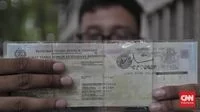
- The original and photocopies of the Vehicle Registration Certificate (STNK).
- The original and photocopies of the Vehicle Ownership Document (BPKB).
- The original Identity Card (KTP) of the previous owner, alongside the original and photocopies of the new owner’s KTP.
- An official Certificate of Relocation of Domicile issued by the local sub-district (kelurahan) or district (kecamatan) office.
- Proof of the most recent Motor Vehicle Tax (PKB) payment.
- Official physical inspection results (cek fisik) of the vehicle’s engine and chassis numbers.
- A notarized power of attorney letter, accompanied by a duty stamp (meterai), if the procedure is delegated to a third party.
- The official bill of sale or purchase receipt, particularly if the mutation coincides with a change of ownership (balik nama).
For commercial fleets or vehicles registered under legal entities and corporations, additional corporate documentation is strictly required. These include the corporate Deed of Establishment, an official Power of Attorney signed by the board of directors, and a valid Corporate Domicile Certificate. Traffic authorities stress that incomplete documentation will lead to immediate rejection at the intake counter, causing unnecessary delays for applicants.
The Two-Tiered Procedural Workflow: From Origin to Destination
The execution of a vehicle mutation follows a rigorous two-stage workflow designed to prevent identity fraud, vehicle cloning, and tax evasion.
Stage One: Origin Samsat (Outgoing Mutation / Mutasi Keluar)
The process initiates in the region where the vehicle is currently registered.
- Physical Inspection: The owner brings the vehicle to the origin Samsat office, where officers conduct a physical verification of the chassis and engine numbers against the registry files.
- Dossier Submission: The owner submits the complete physical file along with administrative forms.
- Fee Settlement: The applicant pays the statutory Non-Tax State Revenue (Penerimaan Negara Bukan Pajak or PNBP) fees.
- Document Release: The origin Samsat issues a formal outgoing mutation file, alongside regional fiscal clearance documents (fiskal daerah), effectively closing the file in the old database.
Stage Two: Destination Samsat (Incoming Mutation / Mutasi Masuk)
Upon arriving in the new residential jurisdiction, the second phase begins.
- File Registration: The owner presents the outgoing mutation files to the destination Samsat office.
- Secondary Verification: Depending on local policy, a secondary physical check may be mandated.
- Administrative Processing: The applicant settles local processing fees, including the Motor Vehicle Name Transfer Fee (Bea Balik Nama Kendaraan Bermotor or BBN-KB), which typically amounts to 1 percent of the vehicle’s assessed value, alongside regional administration fees and PNBP costs for new documentation.
- Issuance: The destination Samsat issues a newly minted STNK and a new license plate (TNKB), integrating the vehicle fully into the local provincial database.
Severe Financial and Administrative Consequences of Non-Compliance
Ignoring the legal obligation to execute a vehicle mutation carries heavy ramifications. Traffic safety experts and financial analysts point to five primary risk areas faced by procrastinating vehicle owners:
-
Compromised Legal Status and Traffic Vulnerabilities
When a vehicle operates in a new jurisdiction with out-of-region plates and unupdated registration files, it is technically flagged during automated electronic traffic enforcement (ETLE) and manual highway checkpoints. Law enforcement agencies treat persistent non-compliance as an infraction, exposing drivers to immediate administrative sanctions, fines, and temporary vehicle impoundment during large-scale traffic operations (operasi patuh). -
Financial Escalations via Fines and Progressive Taxation
Vehicle owners who fail to mutate their files must continue settling their annual taxes through the origin jurisdiction. If payments lapse, late penalties accumulate rapidly. Furthermore, maintaining a vehicle registered under an old address introduces the severe risk of progressive taxation (pajak progresif). If the owner has acquired another vehicle under their current residential address, the legacy vehicle left at the old address may inadvertently trigger higher tax brackets due to system miscalculations regarding multi-vehicle ownership. -
Depressed Resale Value in the Secondary Market
The secondary automotive market penalizes unmutated vehicles. Prospective buyers routinely factor in the hidden costs, bureaucratic friction, and time required to process overdue mutations and ownership transfers. Consequently, sellers of unmutated vehicles are often forced to slash their asking prices significantly to attract buyers willing to shoulder the administrative burden. -
Logistical Exhaustion and Administrative Inefficiency
Failing to execute a mutation forces vehicle owners into a recurring logistical trap. Every single year, when the annual tax renewal or five-year STNK renewal falls due, the owner must travel back to the original Samsat jurisdiction—sometimes crossing provincial boundaries. This routine drains personal time, incurs travel expenses, and causes unnecessary productivity losses. -
Restricted Access to Financial Services and Credit Facilities
In Indonesia’s financial ecosystem, the BPKB serves as a primary collateral instrument for micro-loans, working capital, and consumer financing. Financial institutions and authorized multi-finance companies generally reject loan applications backed by BPKBs that reflect outdated ownership or unmutated regional statuses. Lenders cite the legal complexities of asset seizure and jurisdiction transfer in the event of default as an unacceptable risk, effectively shutting vehicle owners out of legitimate credit markets.
Official Perspectives and Future Policy Outlook
Regional revenue agencies (Bapenda) alongside the Indonesian Traffic Police Corps (Korlantas Polri) view vehicle mutations not merely as bureaucratic red tape, but as an indispensable pillar of regional fiscal health. Motor vehicle taxes constitute a major component of local government revenues (Pendapatan Asli Daerah or PAD), directly funding infrastructure maintenance, public transport development, and regional public services.
When vehicle owners neglect mutation, destination regions absorb the wear and tear of increased traffic on their roads without receiving the corresponding tax allocations, while origin regions collect revenue for vehicles no longer operating within their boundaries.
To mitigate these imbalances, authorities are currently exploring the complete digitalization of Samsat services through integrated national databases. Initiatives such as the Digital Korlantas application aim to streamline documentation tracking, reduce face-to-face bureaucratic friction, and eventually permit online processing for specific phases of administrative transfers.
Until full digital integration is realized nationwide, traffic authorities urge the public to treat vehicle mutation as an immediate priority following any residential relocation or vehicle purchase. Compliance protects vehicle owners from unexpected financial liabilities, ensures unhindered access to financial markets, and preserves the integrity of national transportation data systems.