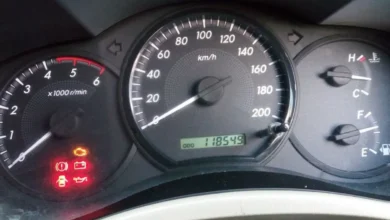
Understanding the Causes of Squeaky Vehicle Brakes and Why Prompt Maintenance is Crucial for Road Safety

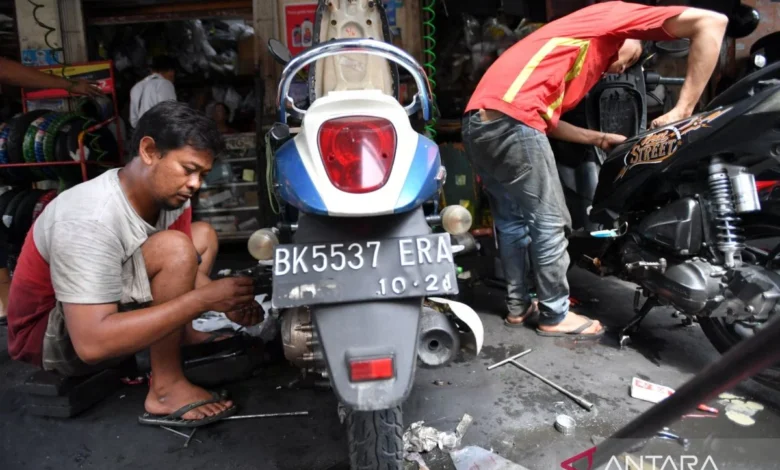
The auditory warning of a squeaky brake system is often the first, and sometimes the only, signal that a vehicle’s most critical safety component requires professional attention. While many drivers are tempted to dismiss a brief high-pitched chirp as a minor nuisance—perhaps caused by morning dew or light surface oxidation—automotive safety experts maintain that consistent noise from the braking assembly is a symptom of underlying mechanical distress. Given that the braking system is responsible for the deceleration and controlled stoppage of a vehicle moving at significant velocities, any deviation from its silent, smooth operation warrants an immediate technical evaluation.
The Anatomy of Braking Failure: A Mechanical Overview
Braking systems operate through a complex conversion of kinetic energy into thermal energy. When a driver presses the brake pedal, hydraulic fluid forces brake pads against a rotating disc (rotor). This friction is what slows the vehicle. Over time, the materials involved in this process undergo significant physical stress, heat cycles, and mechanical wear.
Data from national road safety administrations consistently rank brake failure as a leading cause of preventable traffic accidents. In modern automotive engineering, manufacturers have integrated "wear indicators"—small metal tabs attached to the brake pads. These tabs are designed to make contact with the rotor when the friction material has worn down to a specific threshold, creating a deliberate, high-pitched squeal. This is not a malfunction, but a safety feature intended to prevent metal-on-metal contact, which can catastrophicallly damage the rotors and lead to a total loss of stopping power.
Primary Drivers of Brake Noise
While wear indicators are a common culprit, the automotive industry recognizes several distinct factors that contribute to acoustic irregularities in the braking assembly.
1. Friction Material Degradation
The most prevalent cause of brake noise is the thinning of the brake pads. As the friction material dissipates through thousands of miles of usage, the structural integrity of the pad changes. Once the lining reaches the "service limit"—often defined by manufacturers as 2 to 3 millimeters—the indicator tab will engage. Ignoring this sound is dangerous; as the pad disappears, the steel backing plate will eventually scrape against the rotor, causing deep gouging and a drastic increase in stopping distance.
2. Environmental Contamination
Vehicles operate in harsh environments where road debris, brake dust, and moisture are constant variables. Accumulation of grit, sand, or environmental pollutants between the brake pad and the rotor surface can cause temporary squealing. While this does not always indicate a failed part, trapped debris can score the rotor surface, leading to uneven wear patterns that may persist long after the debris has been cleared.
3. Thermal Distortion of Rotors
Brake rotors are susceptible to "warping" or thermal distortion. When a vehicle is subjected to heavy, prolonged braking—such as descending a steep mountain pass—the extreme heat can cause the metal to expand unevenly. Once cooled, the rotor may no longer be perfectly flat. This manifests as a rhythmic squeak or a pulsing sensation felt through the brake pedal. If left unaddressed, the vibration can cause premature wear on suspension components and wheel bearings.
4. Material Incompatibility and Quality
Not all brake pads are created equal. The automotive aftermarket is saturated with various compounds, ranging from organic to ceramic and semi-metallic. Choosing a pad material that is too hard for the specific alloy of the vehicle’s rotors can result in excessive noise and premature rotor degradation. Major manufacturers, such as Toyota and Suzuki, emphasize that using Original Equipment Manufacturer (OEM) parts ensures that the friction coefficients are matched correctly, minimizing both noise and wear.
The Role of Hydraulic Components
The "squeak" is not always located at the contact patch of the pad and rotor. The brake caliper, the hydraulic unit that houses the piston and holds the pads, must function with precise, sliding movement. If the caliper pins or the piston become seized due to corrosion or lack of lubrication, the pads may remain in partial contact with the rotor even when the driver is not depressing the pedal. This "dragging" brake condition generates heat, reduces fuel efficiency, and produces a constant squealing or grinding noise. Suzuki service centers have noted that seized pistons are a common cause of uneven brake wear, where one side of the vehicle performs significantly better than the other, leading to dangerous handling instability during emergency maneuvers.
A Timeline for Maintenance and Inspection
Automotive maintenance experts recommend a tiered approach to brake care:
- Routine Inspection (Every 5,000–7,500 miles): During every scheduled oil change or tire rotation, the brake pads and rotors should be visually inspected. This is the most effective way to catch debris or minor uneven wear before it necessitates a full component replacement.
- The "New Part" Break-in Period: It is common for brand-new brake pads to produce a slight noise for the first 100 to 200 miles. This is the "bedding-in" process, where the pad material transfers a microscopic layer onto the rotor. If the noise persists beyond this period, it may indicate improper installation or a defect.
- Post-Exposure Service: If a vehicle has been submerged in floodwaters or stored in a high-humidity environment for an extended period, surface rust will inevitably form on the rotors. While a few firm stops can clear light oxidation, thick, persistent rust requires professional cleaning or resurfacing.
Economic and Safety Implications
The financial cost of ignoring a squeaky brake is often higher than the cost of timely maintenance. A set of brake pads is a relatively inexpensive consumable; however, if the pads are allowed to grind down the rotors, the repair costs escalate significantly, as the rotors must then be replaced or turned on a lathe.
More importantly, the safety implications are absolute. A vehicle with compromised brakes has an increased "perception-reaction-distance" delay. In heavy traffic, a few feet of additional stopping distance is the difference between a safe stop and a collision. Furthermore, modern vehicles equipped with Anti-lock Braking Systems (ABS) and Electronic Stability Control (ESC) rely on the mechanical integrity of the brake pads to function. If the hardware is damaged, these electronic safety nets may fail to compensate for a driver’s input.
Professional Guidance for Vehicle Owners
When confronted with brake noise, owners should follow a logical diagnostic process:
- Assess the Sensation: Does the pedal pulse? Is the vehicle pulling to one side? These are indicators of structural issues like warped rotors or seized calipers.
- Verify the Sound: Does the sound occur only during light braking? Is it a high-pitched metallic screech? These are classic signs of wear indicators.
- Seek Expert Intervention: While cleaning debris is a task some DIY enthusiasts perform, the precision required for rotor measurement and caliper lubrication is best left to certified mechanics. Attempting to "sand" or resurface rotors at home without the proper equipment can lead to uneven thickness, which exacerbates the very vibrations one intends to fix.
Conclusion
The evolution of automotive technology, from the adoption of electric vehicles—which rely heavily on regenerative braking—to the increased complexity of braking sensors, has not changed the fundamental importance of the brake pad-rotor interface. A squeaky brake is not merely a noisy annoyance; it is an early warning system. By treating these sounds as vital pieces of information, drivers can ensure the longevity of their vehicles and, more crucially, the safety of everyone on the road. Professional maintenance is the standard of care for a reason; it ensures that when the time comes to rely on the vehicle’s stopping power, the system performs without hesitation or error. As the automotive industry shifts toward new technologies, the core requirement remains unchanged: the necessity for proactive, diligent, and expert-led maintenance of the braking system.