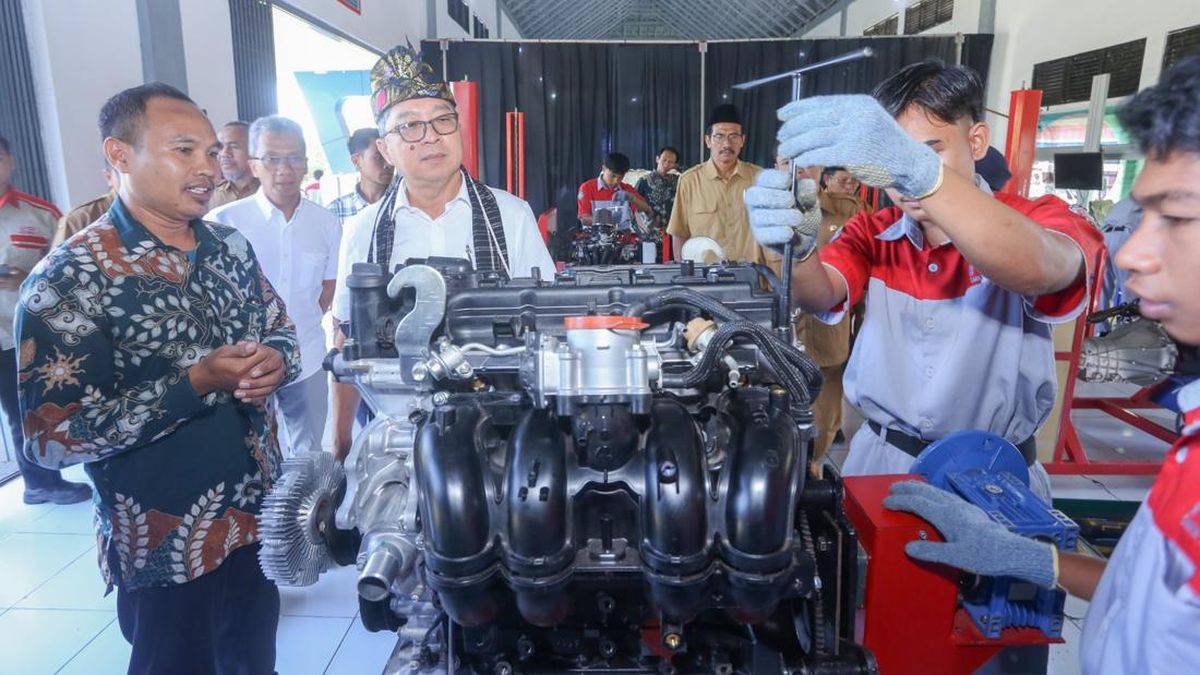
Toyota Motor Manufacturing Indonesia (TMMIN) has significantly broadened its vocational school training program by extending its reach to the island of Lombok in West Nusa Tenggara (NTB). This expansion marks a crucial step in TMMIN’s commitment to enhancing the quality of technical education and bridging the gap between academic learning and industry demands. As part of this initiative, the company has donated two essential automotive engines to vocational high schools, providing students with hands-on experience directly relevant to the modern automotive sector.
The valuable equipment has been allocated to two specific educational institutions: SMKN 1 Jonggat in Central Lombok and SMKN 2 Kuripan in West Lombok. Each school received a Toyota engine unit, specifically a 2TR gasoline engine for SMKN 1 Jonggat and a 2GD diesel engine for SMKN 2 Kuripan. These engines are slated to serve as primary practical learning tools and demonstrative aids, aiming to deepen students’ understanding of automotive engineering principles in a real-world context.
A Strategic Investment in Future Workforce Development
The extension of TMMIN’s vocational training program to Lombok underscores a strategic commitment to fostering skilled talent beyond Java, where the company has historically concentrated its educational outreach. This move is part of a larger Corporate Social Responsibility (CSR) initiative focused on education, recognizing that the development of a robust vocational education system is a shared responsibility requiring active participation from industry leaders.
Nandi Julyanto, President of TMMIN, emphasized the importance of industry involvement in elevating vocational education standards. "This step may seem small, but we hope it can be a part of their journey to grow, contribute, and thrive in their respective regions," Julyanto stated during the equipment handover ceremony. This sentiment highlights TMMIN’s long-term vision, aiming not just to provide resources but to inspire and empower the next generation of automotive technicians and engineers.
The provision of practical training equipment is a core component of TMMIN’s strategy to bolster students’ technical competencies. By offering learning tools that closely mirror the equipment and processes found in industrial settings, the company seeks to ensure that graduates are not only academically prepared but also practically equipped to meet the rigorous demands of the automotive industry. This approach is crucial in an era where technological advancements in automotive engineering are rapid and continuous.
Beyond Equipment Donation: A Holistic Approach to Vocational Education
TMMIN’s engagement with vocational schools extends beyond the mere donation of machinery. The company actively implements its "Vocational School Development" program in its partner schools. This comprehensive program encompasses several key areas designed to create a more industry-aligned educational environment.
Curriculum Development and Industry Alignment
A significant aspect of the Vocational School Development program involves the collaborative development of curricula. TMMIN works with educational institutions to ensure that their learning materials and syllabi are updated to reflect current industry standards, emerging technologies, and best practices. This process typically involves industry experts reviewing and providing input on curriculum content, ensuring that students are learning skills that are in high demand. This proactive approach to curriculum design helps to mitigate the common challenge of vocational training lagging behind industry evolution.
Enhanced Learning Resources
In addition to engine donations, the program also focuses on providing other essential learning aids. These can range from specialized tools and diagnostic equipment to software and virtual learning platforms. The goal is to equip schools with a comprehensive suite of resources that facilitate effective and engaging learning experiences. Access to up-to-date and industry-relevant learning materials is vital for nurturing student interest and fostering a deeper understanding of complex automotive systems.
Cultivating an Industry Work Culture
Another critical element of TMMIN’s program is the introduction of an "industry work culture" within the school environment. This involves instilling principles such as punctuality, teamwork, problem-solving, safety consciousness, and a commitment to quality – values that are paramount in any professional setting. By integrating these cultural aspects into the daily operations of vocational schools, TMMIN aims to prepare students not only in terms of technical skills but also in their professional demeanor and readiness for the workplace. This holistic development is essential for long-term career success.
Building Bridges Between Education and Industry
Nandi Julyanto further elaborated on the synergy between educational institutions and industrial sectors, stating that this collaboration is a cornerstone for enhancing the competitiveness of vocational graduates. "Schools prepare their competencies, and industry helps to shape them. TMMIN wants to be a part of that process," he remarked in a written statement. This perspective underscores TMMIN’s philosophy of partnership, viewing its role as a facilitator and contributor rather than merely a donor.
This collaborative model is designed to create a virtuous cycle: as industry needs evolve, educational institutions, with industry support, can adapt their training programs. This ensures that graduates possess the skills that employers are actively seeking, thereby improving employability and reducing the time it takes for new entrants to become productive members of the workforce.
Expanding a Proven Model: From Java to Lombok
Prior to its expansion into NTB, TMMIN’s vocational education development program had already established a strong presence across various regions in Indonesia. The company currently supports 29 vocational high schools scattered across the island of Java. This extensive network has allowed TMMIN to refine its program models, gather valuable feedback, and build a robust understanding of the diverse needs of vocational education across different geographical and economic contexts.
The expansion to Lombok signifies a deliberate effort to deepen the access that vocational schools in this region have to learning facilities that are aligned with the specific requirements of the automotive industry. Lombok, with its growing tourism sector and increasing infrastructure development, presents a promising landscape for the automotive industry’s future growth. Equipping its youth with relevant technical skills is therefore a timely and strategic move.
Economic and Social Implications for Lombok
The introduction of TMMIN’s program in Lombok carries significant economic and social implications for the region. By enhancing the quality of automotive technical education, the initiative aims to:
- Boost Local Employment Opportunities: Graduates with up-to-date, industry-relevant skills will be better positioned to secure employment in the growing automotive sector, including workshops, dealerships, and related service industries. This can lead to reduced unemployment and underemployment rates in Central and West Lombok.
- Support Local Economic Growth: A more skilled workforce can attract further investment in automotive-related businesses. Furthermore, local businesses that can access skilled technicians are likely to experience increased efficiency and customer satisfaction, contributing to broader economic development.
- Empower Local Communities: Providing young people with marketable skills offers them a pathway to economic independence and upward mobility. This can have a positive ripple effect on their families and communities, fostering a sense of opportunity and pride.
- Enhance the Automotive Service Sector: As vehicle ownership increases in Lombok, so does the demand for reliable and skilled automotive repair and maintenance services. TMMIN’s initiative will help ensure that the local service sector can meet this demand effectively, potentially improving the longevity and performance of vehicles used by residents and businesses.
- Contribute to National Skill Development Goals: TMMIN’s program aligns with national objectives to enhance the quality of vocational education and build a competitive workforce. By investing in regions like Lombok, the company is contributing to a more equitable distribution of skilled labor across the archipelago.
The Broader Context of Indonesia’s Automotive Industry
Indonesia’s automotive industry is a vital component of its economy, contributing significantly to manufacturing output, employment, and exports. The sector has been experiencing steady growth, driven by a large and increasingly affluent population, government support for local manufacturing, and the expansion of automotive component suppliers.
However, the industry also faces challenges, including the need to adopt new technologies such as electric vehicles (EVs) and advanced driver-assistance systems (ADAS). To remain competitive on a global scale, Indonesia needs a workforce that is not only proficient in traditional automotive mechanics but also skilled in these emerging areas. TMMIN’s proactive approach, by providing modern engines and potentially future-proofing its training content, is a step in the right direction.
The company’s historical track record in vocational training, with its extensive network in Java, provides a solid foundation for its expansion to Lombok. This expansion signifies a commitment to inclusive development, recognizing that talent and potential exist across all regions of Indonesia. The success of this initiative in Lombok could serve as a blueprint for further expansion to other developing regions, creating a more skilled and competitive workforce nationwide.
The handover of these engines is more than just a donation; it represents an investment in human capital, a commitment to educational excellence, and a strategic move to ensure that Indonesia’s automotive sector has a steady pipeline of qualified professionals ready to meet the demands of the present and the future. TMMIN’s ongoing efforts in vocational training underscore the critical role of industry-academia partnerships in driving national development and empowering the next generation of skilled workers.