Four Members of the Free Papua Movement Return to the Indonesian Fold in Puncak Jaya

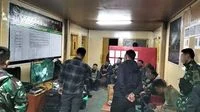
JAKARTA, Indonesia — In a significant development reflecting shifting dynamics in Indonesia’s easternmost region, four members of the Free Papua Movement (Organisasi Papua Merdeka or OPM), including a senior field commander, have formally severed ties with the separatist group and pledged their allegiance to the Unitary State of the Republic of Indonesia (NKRI). The reintegration ceremony, marked by the symbolic surrender of four firearms, took place at the headquarters of the 1714/Puncak Jaya Military District Command (Makodim) in Central Papua province, drawing attention from national security analysts and local stakeholders alike.
The transition process culminated in a formal ceremony presided over by the Commander of the TNI Operational Command (Pangkoops Habema), Brigadier General TNI Riyanto. This event highlights ongoing efforts by state security apparatuses to employ localized, persuasion-based approaches to security and regional development in Papua, a region that has experienced decades of asymmetric conflict.
Identification of Returnees and Surrendered Hardware
Military intelligence and operational reports identified the four returning individuals as Bongkar Tabuni and Lipar Tabuni, both previously affiliated with OPM Kodap X/Tolikara, alongside Bejo Tabuni and Kopitua Tabuni, who operated under OPM Kodap XXVIII/Yambi. Notably, Kopitua Tabuni held a leadership position within the insurgent structure, serving as the Field Operations Commander (Danops Wil) for the Yambi regional command.
The surrender involved a collection of lethal hardware, underlining the operational significance of their departure from the separatist ranks. According to official data released by TNI operational spokespersons, the handed-over weaponry comprised:
- One AR-15 assault rifle chambered in 5.56 mm.
- One 9 mm caliber revolver.
- One Trailside Sig Arms .22 LR caliber pistol, surrendered by Bejo Tabuni.
- One 9 mm caliber Combat pistol, surrendered by Lipar Tabuni.
The retrieval of these firearms directly degrades the localized operational capability of the respective OPM commands in the Tolikara and Yambi sectors, reducing the circulation of illicit military-grade weaponry in the Central Papua highlands.
Official Statements and the Philosophy of Reintegration
Addressing the gathering during the national reintegration ceremony, Brigadier General TNI Riyanto commended the courage demonstrated by the four men. He emphasized that the decision to abandon armed struggle represents a profound paradigm shift toward constructive societal re-engagement.
"True courage is not only demonstrated when a person is capable of picking up a weapon, but also when they have the bravery to lay it down and choose a better life," Brigadier General Riyanto stated in a release distributed from Timika. "Today is not about who wins and who loses. Today is about choosing a future."
Riyanto stressed that the surrender of weapons is merely the opening phase of a much longer, more critical process. The ultimate challenge lies in the sustainable rehabilitation and social absorption of the returnees. This requires coordinated efforts from immediate families, local communities, municipal governments, and civil society to ensure these individuals can transition smoothly into normal, productive civilian routines.
"The weapons handed over today symbolize that an old, destructive path has been left behind. After this, let us return to our families, build our villages, cultivate our land, work, worship, and together safeguard the future of Papua’s children. The path of peace is always open to our brothers who wish to return home," Riyanto added.
Furthermore, military leadership underscored that true reintegration cannot be achieved by security forces alone. It demands a collaborative framework encompassing regional governments, customary tribal leaders (para tokoh adat), religious authorities, community representatives, and family units.
Background Context of the Papua Conflict and Security Strategy
The Puncak Jaya regency, situated within the rugged terrain of Central Papua, has historically been a focal point of friction between Indonesian security forces and armed separatist factions. The OPM, a loose coalition of armed groups advocating for independence from Indonesia, has operated in the dense jungles and mountainous highlands of Papua for decades, utilizing guerrilla tactics to contest state authority.
In response, the Indonesian government has implemented a dual-track strategy combining infrastructure-led economic development—exemplified by the expansion of the Trans-Papua Highway and the acceleration of regional autonomy—with targeted security operations managed by integrated military and police commands, such as Koops Habema.
In recent years, the Indonesian National Armed Forces (TNI) have increasingly emphasized a territorial and persuasive approach (pendekatan teritorial dan persuasif). This doctrine prioritizes community outreach, humanitarian assistance, medical missions, and dialogue over direct kinetic engagement, aiming to peel away the base of active combatants by addressing local grievances and offering viable pathways for defection and societal re-entry.
Chronology of the Reintegration Initiative
While high-profile surrenders are frequently publicized, intelligence sources note that successful reintegration is typically the result of months, sometimes years, of clandestine communication, trust-building, and family mediation.
- Initial Outreach: Local territorial units (Babinsa and Intel teams) operating within the Puncak Jaya sector initiated quiet channels of communication with moderate elements within the Kodap X and Kodap XXVIII structures, facilitated by trusted community intermediaries.
- Negotiation and Assurance: Discussions focused on guaranteeing the physical safety, legal clarity, and civil rights of the combatants upon surrender, assuring them that they would not face extrajudicial harm and would be integrated into civilian life.
- Logistical Coordination: Arrangements were finalized for the secure transit of the combatants and their ordnance out of the contested zones into the Makodim 1714/Puncak Jaya facility.
- Formal Ceremony: The public reintegration event took place on Saturday, September 26, presided over by Pangkoops Habema Brigjen TNI Riyanto, marking the official transition from insurgency to civil status.
Implications for Regional Stability and Future Outlook
Security analysts suggest that the return of high-ranking regional figures like Kopitua Tabuni carries symbolic and tactical weight. When commanders with operational responsibilities lay down their arms, it often creates a psychological ripple effect within the broader insurgent network, demonstrating to lower-ranking members that peaceful pathways out of the conflict zone are viable and protected.
However, experts also caution that sustainable peace in the Central Papua highlands requires addressing structural socio-economic challenges. For reintegration programs to succeed long-term, returnees must be provided with meaningful economic opportunities—such as agricultural development support, vocational training, and local employment—to prevent recidivism or economic marginalization.
Moreover, community reconciliation remains a delicate task. Bringing former combatants back into local villages requires careful mediation to heal divisions caused by past conflicts within communities. The involvement of customary and religious leaders is vital in mediating these community dynamics, ensuring that former OPM members can coexist peacefully with neighbors who may have suffered from past instability.
As Indonesia continues to refine its approach to Papua—balancing firmness in maintaining territorial integrity with empathy in regional development—events in Puncak Jaya offer a case study in the complexities of conflict transformation. Whether this localized success can be replicated on a broader scale across other restive pockets of Papua will depend heavily on sustained government commitment, economic inclusion, and the persistent cultivation of trust between state institutions and the indigenous population of Papua.