CustoMAXi Yamaha 2026 Kicks Off in Bandung with 85 Customizers Showcasing Extreme Yet Street-Legal Maxi Scooters


The landscape of Indonesian motorcycle customization reached a vibrant new crescendo as the CustoMAXi Yamaha 2026 officially commenced in Bandung, West Java. Drawing a formidable lineup of 85 passionate participants, the prestigious event served as a grand showcase of engineering ingenuity, aesthetic daring, and mechanical prowess. Centered entirely around Yamaha’s highly popular MAXi family of scooters—ranging from the nimble Lexi and the versatile Nmax to the sporty Aerox and the commanding Xmax—the competition challenged builders to push the boundaries of design while adhering to strict functional parameters. Far from being static museum pieces destined solely for exhibition halls, every single machine entered into the fray was bound by a non-negotiable rule: it had to successfully pass a rigorous riding test to prove its viability as a street-legal vehicle.
This year’s staging in the creative hub of Bandung underscored the enduring cultural footprint of the MAXi modification scene in Indonesia. As urbanization accelerates and scooter culture evolves from a mere commuting subculture into an art form, events like CustoMAXi provide a sanctioned, highly competitive platform for builders to translate their visions into metal, carbon fiber, and paint. The sheer diversity of entries—spanning from ultra-clean elegance and aggressive racing setups to deeply technical, high-end "hedonistic" builds—testified to the depth of talent within the local modification community.
The Anatomy of Competition: Dominance, Diversity, and Detail
From the moment the exhibition gates opened, it was evident that users of the Yamaha Xmax and Aerox dominated the numerical landscape of the 2026 roster. However, sheer numbers only told part of the story; the true narrative lay in the distinct styling philosophies adopted across the various engine displacements and chassis configurations.
In the Nmax and Lexi categories, builders frequently turned to advanced techniques such as intricate airbrush artistry to redefine the visual identity of their machines. These categories highlighted a meticulous attention to detail, where custom gradients, hand-painted motifs, and refined body panels transformed standard commuter platforms into rolling canvases.
Conversely, the Aerox category leaned heavily into the realm of racing and high performance. Owners and builders outfitted these lightweight, sporty scooters with race-inspired components, uprated braking systems, aerodynamic cowlings, and suspension setups tuned for aggressive handling. The design language here was unmistakably velocity-oriented, reflecting the sporty DNA inherent to the stock Aerox platform.
Meanwhile, the flagship Xmax category became the breeding ground for the most elaborate and technically complex builds of the weekend. Often associated with the "hedonistic" modification style—a term used within the community to describe spare-no-expense builds featuring premium, exotic materials—the Xmax entries pushed the envelope of what a maxi scooter could be.
A prime example of this uncompromising approach was demonstrated by Rizky Bayu Pradana, whose heavily modified Xmax captivated both the judges and the spectators. Rizky’s machine underwent a radical transformation, incorporating a comprehensive full-suspension overhaul and a custom titanium chassis framework. This fusion of lightweight metallurgical engineering and bespoke suspension geometry not only elevated the bike’s aesthetic profile but drastically altered its structural integrity and handling dynamics. Consequently, Rizky’s masterpiece swept the podium, securing an astounding seven distinct awards, including the coveted first-place title in the SuperMAXi Xmax class.
International Aspirations and Cinematic Inspirations
Beyond the domestic triumphs, the CustoMAXi Yamaha 2026 stage also served as a launchpad for projects with global ambitions. Among the most talked-about machines of the event was a specially crafted Xmax inspired directly by the iconic, dark aesthetic of the famous caped crusader from comic book lore.
Collaboratively engineered by the seasoned workshops of Yonk Jaya and MWM Custom, this Batman-inspired maxi scooter was a study in meticulous fabrication. Every contour, custom body panel, and dark-themed accent was painstakingly shaped to evoke the brooding, high-tech persona of the legendary superhero. Organizers confirmed that this cinematic creation would not merely rest on its laurels in Bandung; rather, it has been selected to proudly fly the Indonesian flag, representing the nation’s world-class custom motorcycle industry at an upcoming international modification exhibition overseas.
The Mandate of Functionality: The Crucial Street-Legal Riding Test
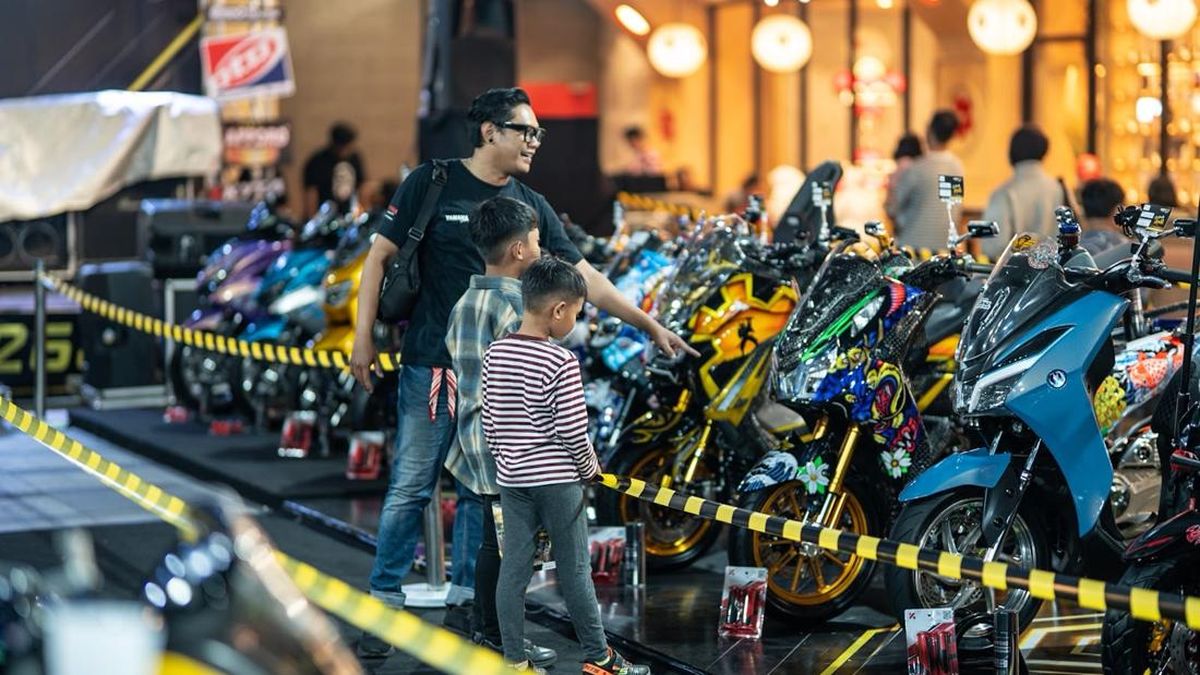
While jaw-dropping aesthetics and exotic component lists frequently capture the headlines in custom bike shows, the CustoMAXi Yamaha 2026 maintained a steadfast commitment to practical engineering through its mandatory riding test. In many custom shows around the world, extreme modifications often render a vehicle completely inoperable, turning functional machines into fragile, unrideable sculptures. Yamaha Motor Indonesia, however, enforced a strict street-legal policy for this competition.
To qualify for top honors, every customized scooter had to navigate a designated evaluation course under its own power. This rigorous assessment verified that critical systems—such as steering geometry, braking response, powertrain reliability, and electrical integration—remained fully operational and safe for public roadways.
For the participating builders, this requirement added an intense layer of technical complexity. It meant that engineering solutions could not merely prioritize visual shock value; they had to withstand the mechanical stresses of actual road use. Suspension adjustments had to account for real-world load-bearing, custom wiring harnesses had to be weatherproofed, and structural modifications had to maintain chassis rigidity under dynamic forces. This emphasis on usability bridges the gap between show-bike fantasy and real-world execution, ensuring that the innovation displayed on the event floor holds genuine engineering credibility.
Organizational Insights and Industry Implications
Reflecting on the overwhelming turnout and the exceptional standard of craftsmanship on display, Fitri Agustadhi, Chief Yamaha DDS 2 West Java, offered official insight into the trajectory of the movement.
"We see the enthusiasm and the incredible diversity of works this year as undeniable proof that the MAXi Yamaha modification culture continues to evolve and mature," Fitri stated in an official written release. "Builders are no longer just following trends; they are setting them, utilizing advanced techniques, and exploring new frontiers in design while maintaining the core identity of the motorcycles."
Industry analysts tracking the aftermarket and custom automotive sectors note that manufacturer-backed competitions like CustoMAXi play a vital role in stimulating local economies. By providing a structured arena for customizers, brands foster a thriving ecosystem that benefits independent workshops, aftermarket parts manufacturers, paint specialists, and accessory retailers. Furthermore, the strong emphasis on street-legal innovation encourages safer, higher-quality modifications that positively influence the broader riding public, steering enthusiasts away from dangerous shortcuts and toward professional-grade engineering.
A Multifaceted Festival of Scooter Culture
To complement the fierce competition on the main stage, the organizers curated a comprehensive array of supporting activities designed to engage the broader automotive community and visiting families.
The MAXi Photo Contest drew aspiring and professional photographers alike, eager to capture the striking lines, metallic finishes, and creative angles of the customized scooters. Meanwhile, a bustling aftermarket bazaar provided attendees with direct access to performance parts, specialized accessories, lifestyle apparel, and tuning consultations from leading industry vendors.
To maintain an energetic and festive atmosphere throughout the multi-day event, organizers also scheduled live performances by popular local musicians, transforming the venue into an interactive celebration of contemporary Indonesian youth culture, music, and automotive passion.
As the curtains closed on the Bandung leg of the event, the CustoMAXi Yamaha 2026 firmly cemented its status as a benchmark for custom motorcycle culture in Southeast Asia. By celebrating technical mastery, artistic vision, and uncompromised functionality, the event has once again proven that the canvas of a Yamaha MAXi scooter holds limitless potential in the hands of Indonesia’s master builders.