Strategies for Battery Subscription Models Are Reshaping Electric Motorcycle Ownership in Indonesia

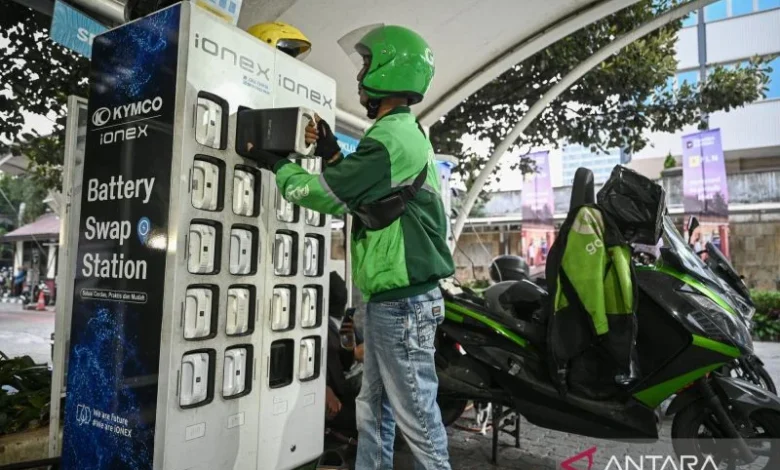
The landscape of electric vehicle (EV) adoption in Indonesia is undergoing a significant transformation as manufacturers move away from traditional "buy-out" models toward more flexible, service-oriented ownership structures. Central to this shift is the battery-as-a-service (BaaS) or battery subscription model, a financial mechanism that allows consumers to purchase an electric motorcycle unit at a substantially lower upfront cost by decoupling the price of the vehicle from its most expensive component: the lithium-ion battery. As of September 2026, this strategic pivot has become a cornerstone of the industry’s efforts to accelerate the transition to sustainable urban mobility.
The Economic Rationale Behind Battery Leasing
In the conventional automotive market, the battery accounts for approximately 30% to 40% of the total manufacturing cost of an electric motorcycle. By implementing a rental or subscription model, original equipment manufacturers (OEMs) effectively lower the "barrier to entry" for potential buyers. This approach targets not only individual consumers sensitive to initial capital expenditure but also commercial fleets, such as ride-hailing drivers and delivery services, who prioritize operational liquidity.
Beyond the immediate reduction in sticker price, the subscription model addresses one of the primary concerns of long-term EV ownership: battery degradation. Under many of the current subscription frameworks, the responsibility for maintaining, servicing, and replacing the battery rests with the manufacturer. This shifts the risk of technological obsolescence and capacity loss away from the consumer, providing a level of "peace of mind" that has historically been missing from the electric two-wheeler market.
Market Landscape: Comparing Leading Subscription Schemes
As of the third quarter of 2026, several key players have established distinct service tiers to accommodate varying consumer needs. The following analysis outlines the prevailing subscription rates and service structures currently dominating the Indonesian market.
VinFast: Setting the Floor for Subscription Costs
VinFast has positioned itself as the most aggressive competitor in terms of pricing. By offering a subscription model for its Evo, Feliz II, and Viper models, the company has effectively democratized access to entry-level electric mobility.
- Single-battery configuration: Priced at IDR 84,000 per month.
- Dual-battery configuration: Priced at IDR 144,000 per month.
These units utilize dual-slot under-seat storage, allowing for quick battery swaps—a critical feature for high-mileage users. By keeping its entry-level subscription under the IDR 100,000 mark, VinFast has successfully captured a segment of the market that was previously priced out of the EV transition.
Polytron: Focusing on Performance and Durability
Polytron’s approach is tailored toward a diverse range of performance requirements, catering to the mid-to-high-end segment. Their pricing structure reflects the varying power demands of their specific models:
- Fox 200: IDR 125,000 per month.
- Fox 500 and Fox R: IDR 200,000 per month.
Polytron differentiates itself through a robust warranty and replacement clause. A standout policy in their contract states that if the battery’s State of Health (SoH) drops below 85% due to standard usage, the manufacturer will facilitate a replacement. This creates a predictable operational cost for the owner, effectively mitigating the fear of premature battery failure.
ALVA: The Premium Service Tier
ALVA has implemented its "BEBAS" (Berlangganan Baterai Sewa) program, targeting users who prioritize technical support and high-performance battery integration.
- ALVA N3: Single battery at IDR 150,000; dual battery at IDR 250,000.
- ALVA CERVO: Dual battery at IDR 250,000.
These figures are inclusive of taxes, providing transparency for the consumer. ALVA’s model is built on the premise that the battery remains an asset of the company, which ensures that consumers are always operating with hardware that meets the manufacturer’s rigorous safety and performance standards.
Chronology of the Shift Toward Battery Decoupling
The adoption of the subscription model in Indonesia did not occur in a vacuum. It represents the culmination of a multi-year effort by the government and the private sector to foster a self-sustaining EV ecosystem.
- 2023–2024 (The Pilot Phase): Early adoption was characterized by pilot programs focused primarily on B2B fleet operations. Companies began testing battery-swapping kiosks in major metropolitan hubs like Jakarta and Surabaya.
- 2025 (Regulatory Consolidation): The government intensified its push for local content requirements (TKDN), pressuring manufacturers to localize battery production. This led to increased vertical integration, allowing manufacturers to lower costs through economies of scale.
- 2026 (Widespread Commercialization): The current period marks the maturity of the subscription model. With major brands like VinFast, Polytron, and ALVA standardizing their subscription schemes, the model has transitioned from a niche experiment to a standard retail offering.
Fact-Based Analysis of Industry Implications
The move toward battery subscription models carries profound implications for the Indonesian automotive industry.
1. Managing Asset Life Cycles
By retaining ownership of the batteries, manufacturers are incentivized to build more durable, long-lasting energy storage systems. Furthermore, this model creates a secondary market for battery recycling. Once a battery is no longer efficient for automotive use, it can be repurposed for stationary energy storage (e.g., home or industrial power walls), extending the lifecycle of the lithium-ion cells and reducing the total carbon footprint of the product.
2. Consumer Behavior and Financial Literacy
While the subscription model lowers the barrier to entry, it necessitates a shift in consumer financial management. Buyers must now treat their transportation costs as a hybrid of capital expenditure (the motorcycle frame) and operating expenditure (the battery subscription). This requires a shift in mindset; consumers are no longer just buying a vehicle but are entering into a long-term service contract.
3. The Role of Government Policy
Government initiatives continue to play a pivotal role. The ongoing dialogue regarding subsidies and tax incentives for electric vehicles has evolved to recognize the nuances of subscription models. By encouraging the growth of the electric motorcycle sector, the government is effectively reducing the nation’s dependence on fossil fuel imports and lowering urban air pollution levels. Legislative bodies, including the DPR RI, have expressed strong support for the acceleration of the national battery industry, viewing it as a strategic pillar for economic growth.
Challenges and Future Considerations
Despite the clear benefits, several challenges remain. The primary concern for consumers is the long-term variability of subscription rates. While current contracts offer stability, the market lacks long-term guarantees against significant price hikes once a manufacturer gains a dominant market share. Additionally, the availability and density of battery-swapping stations remain uneven. In Jakarta, the infrastructure is robust, but connectivity in secondary cities is still developing.
Furthermore, consumers must carefully evaluate the "hidden" costs of these agreements. Beyond the monthly fee, one must consider:
- Electricity tariffs: The cost of home charging for non-swap batteries.
- Maintenance intervals: Subscription models often require servicing at authorized dealerships to maintain warranty and battery eligibility.
- Contract exit clauses: Understanding the penalties associated with terminating a subscription early.
Conclusion
The battery subscription model is proving to be a catalytic force in the Indonesian electric two-wheeler market. By bridging the gap between affordability and advanced technology, manufacturers are effectively accelerating the mass adoption of clean transportation. While the monthly cost ranges from IDR 84,000 to IDR 250,000, the true value lies in the flexibility, reduced risk, and technological support provided by the OEMs.
As the industry continues to evolve, the focus will likely shift toward increasing the efficiency of the battery-swapping network and standardizing battery formats across different brands. For the Indonesian consumer, the current market landscape offers an unprecedented opportunity to participate in the green energy transition with lower financial risk than ever before. Prospective buyers are encouraged to perform a detailed cost-benefit analysis—weighing their daily mileage against the specific service terms—to ensure that the chosen subscription model aligns with their financial goals and lifestyle requirements. With the continued support of government policy and private sector innovation, the electric motorcycle is set to become the standard for Indonesian mobility by the end of the decade.
Related posts: