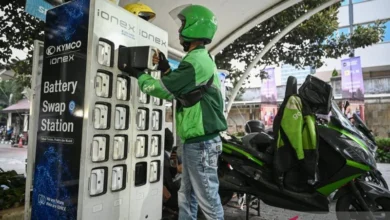
Indonesian Industry Minister Optimistic Electric Vehicle Sector Will Hit 60 Percent Local Content Target by 2027


Jakarta, CNN Indonesia — The development of Indonesia’s electric vehicle (EV) ecosystem has entered a critical phase of policy enforcement and industrial adaptation. Minister of Industry Muhammad Sarmuji has expressed strong optimism that the domestic electric vehicle manufacturing sector is fully capable of meeting the mandatory Minimum Domestic Component Level (Tingkat Komponen Dalam Negeri, or TKDN) requirement of 60 percent by the year 2027.
This ambitious yet achievable target forms the backbone of Indonesia’s broader strategy to position itself as a strategic regional hub for green mobility, transitioning away from fossil-fuel dominance and integrating deeper into the global electric vehicle supply chain. Speaking to reporters in Jakarta, Minister Sarmuji underscored that the fundamental prerequisite for achieving these regulatory thresholds is localized manufacturing.
"I am confident that the industry is ready. The essence of TKDN is domestic production. If the industry manufactures its products within Indonesia, there will certainly be no problem," Sarmuji stated, highlighting the government’s unwavering commitment to fostering domestic industrial capabilities.
The push for localized EV production is not merely a regulatory hurdle, but a strategic economic policy designed to stimulate domestic job creation, facilitate technology transfer, and reduce reliance on imported completely built-up (CBU) units. As global automotive giants increasingly pivot toward electrification, Indonesia’s vast nickel reserves and burgeoning consumer market offer a compelling value proposition. However, the government remains firm that resource wealth must translate into domestic value addition rather than raw material exports.
Regulatory Roadmap and Phased TKDN Implementation
The optimism voiced by the Ministry of Industry is anchored in a carefully structured regulatory roadmap designed to give manufacturers adequate lead time to build local supply chains, establish joint ventures, and construct component manufacturing facilities—particularly for high-value items such as lithium-ion battery cells, electric motors, and power control units.
Under the current regulatory framework stipulated by the Ministry of Industry, the TKDN targets for electric four-wheeled vehicles and other electrified transport modes are implemented progressively:
- Phase 1 (Current Period): The mandatory minimum TKDN is set at 40 percent. This threshold encourages early movers to assemble vehicles locally using a mix of domestic and imported components while laying the groundwork for tier-1 and tier-2 supplier networks.
- Phase 2 (2027–2029): The requirement scales up significantly to 60 percent. During this window, manufacturers are expected to source a majority of their vehicle parts—including body panels, chassis components, interior systems, and select electrical sub-assemblies—from domestic suppliers.
- Phase 3 (2030 and Beyond): The apex target is established at 80 percent TKDN. By this milestone, the Indonesian electric vehicle industry is envisioned to possess an almost entirely self-sustaining domestic supply chain, minimizing foreign exchange outflows for component imports.
Minister Sarmuji emphasized that the government is not merely setting benchmarks and stepping back; rather, active enforcement and continuous monitoring mechanisms are being deployed. The administration will persistently promote the utilization of local products while closely auditing compliance across all registered automotive brands operating within the archipelago.
"So do not worry; we will always push to prioritize domestic products. We will certainly control and monitor the TKDN compliance," the Minister asserted.
Commitment to Technology Transfer and Upstream Integration
A pivotal element strengthening the readiness of domestic industry players is the formal and informal commitment to technology transfer embedded in industrial licensing agreements. When foreign automotive manufacturers—originating from traditional automotive powerhouses in Japan, South Korea, Europe, and increasingly from China and the United States—establish production facilities in Indonesia, they do so under frameworks that encourage knowledge sharing and local workforce upskilling.
The complexity of electric vehicle manufacturing differs fundamentally from internal combustion engine (ICE) vehicles. While ICE vehicles rely heavily on mechanical precision machining, transmissions, and complex exhaust systems, EVs are defined by software integration, battery chemistry, thermal management systems, and high-voltage power electronics.
By enforcing rigorous TKDN standards, the Indonesian government aims to force foreign investors to partner with local component suppliers. This forces a transfer of technical know-how, quality control standards, and engineering expertise to local Indonesian enterprises. Over time, this dynamic transforms local businesses from low-tier general contractors into sophisticated component manufacturers capable of competing on the global stage.
Macroeconomic Pressures: Navigating Currency Volatility and Manufacturing Resilience
Beyond the specific trajectory of the electric vehicle sector, Minister Sarmuji also addressed broader macroeconomic headwinds currently buffeting the Indonesian manufacturing landscape, specifically the depreciation of the Indonesian rupiah against the United States dollar (USD).
Currency fluctuations introduce complex, multidimensional pressures on industrial operators, with the net impact varying wildly depending on a company’s operational orientation—specifically its target market (export-oriented versus domestic-focused) and its supply chain exposure (domestic sourcing versus imported raw materials).
For manufacturing firms heavily reliant on international export markets, a strengthening US dollar can serve as a favorable financial catalyst. When companies sell their goods abroad in foreign currencies and subsequently convert those revenues back into rupiah, the higher exchange rate yields elevated nominal revenues, bolstering profit margins and offering a buffer against domestic cost increases.
Conversely, manufacturers operating primarily within the domestic market who must source their raw materials, semi-finished goods, or specialized components from international suppliers face severe operational compression. A weaker rupiah directly escalates the cost of imported inputs, squeezing profit margins and forcing management teams to choose between absorbing the rising costs or passing them on to consumers, which risks dampening domestic demand.
Mitigation Strategies and Strategic Adjustments for Industry Players
In light of these persistent currency fluctuations, the Ministry of Industry has strongly urged business leaders and manufacturing executives to adopt proactive risk mitigation frameworks. Waiting for external macroeconomic conditions to stabilize is no longer a viable strategy in an era marked by geopolitical friction and global supply chain volatility.
Minister Sarmuji highlighted that industrial actors must enhance their predictive modeling capabilities, conduct comprehensive scenario planning, and rapidly execute structural supply chain localization to insulate their operations from foreign exchange shocks.
"So there must be mitigation for the industry. The industry must also make predictions and make self-adjustments," Sarmuji concluded.
This call for structural resilience aligns closely with the core objectives of the TKDN policy itself. By reducing reliance on imported components and building robust domestic supply chains—not just for electric vehicles, but across the entire manufacturing sector—Indonesian industries can naturally hedge against foreign exchange volatility. When raw materials and parts are sourced locally, transactions are conducted in rupiah, shielding balance sheets from the whims of international currency markets.
Implications for the Future of Indonesian Industrialization
The convergence of aggressive local content regulations and macroeconomic adaptation paints a clear picture of Indonesia’s industrial policy direction. The government is systematically leveraging its massive domestic market and critical mineral reserves—most notably nickel, cobalt, and emerging interest in bauxite and copper—to force a structural upgrade of its manufacturing economy.
While challenges remain—including the need for extensive public charging infrastructure, consumer price sensitivity, and the technical complexity of scaling up domestic battery cell production—the trajectory is firmly set. If the electric vehicle sector successfully navigates the path toward the 60 percent TKDN target by 2027, Indonesia will have achieved a historic milestone: transforming from a passive consumer market for foreign automotive products into an active, self-reliant manufacturing powerhouse capable of driving the green transition across Southeast Asia and beyond.
Related posts: