MotoGP Australia 2026 Cancelled at Phillip Island Due to Severe Weather Conditions and Medical Helicopter Grounding

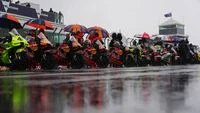
The 2026 Australian Motorcycle Grand Prix at the iconic Phillip Island Grand Prix Circuit has been officially cancelled due to severe weather conditions that rendered medical helicopter operations impossible, casting a shadow over what was intended to be a historic farewell weekend for the legendary coastal venue.
For the premier class of motorcycle road racing, the sudden and dramatic cancellation brings an abrupt end to a race weekend that had promised high-octane drama, emotional farewells, and fierce championship battles. While free practice sessions, qualifying rounds, and Saturday’s sprint race proceeded largely without major disruption, Mother Nature ultimately intervened on Sunday, forcing race management to make the difficult call to pull the plug on the full-length Grand Prix.
This unexpected turn of events raises questions regarding the logistical vulnerabilities of historic racing circuits and echoes rare historical precedents where weather has stripped fans and riders of a Sunday showdown in the modern era of the sport.
The Chronology of a Weekend Interrupted
The trajectory of the 2026 Australian Grand Prix weekend initially pointed toward a successful and memorable event. From Friday through Saturday, teams and riders navigated the notoriously windy and unpredictable Phillip Island layout, completing free practice, the intense qualifying sessions, and the Saturday afternoon sprint race under manageable, albeit chilly, maritime weather conditions.
However, conditions deteriorated rapidly overnight and into Sunday morning. A heavy, persistent weather system rolled over the Bass Strait, bringing low-hanging clouds, heavy downpours, and drastically reduced visibility across the circuit and its surrounding airspace.
As race time approached, race direction monitored the meteorological updates closely, hoping for a break in the weather that would allow proceedings to get underway. Instead, the visibility minimums required for safe aviation failed to clear, and as the hour of the main race arrived, the difficult decision to cancel the event was finalized. The emotional weight of the cancellation was particularly heavy for the paddock and fans alike, given that the 2026 event was scheduled to be the final MotoGP race held at Phillip Island before the Australian Grand Prix relocates to the Adelaide Circuit starting next season.
The Logistics of Safety: Why Medical Helicopters are Non-Negotiable
At the heart of the race cancellation lies an absolute, non-negotiable prerequisite of modern motorsport safety protocols: the immediate availability of rapid medical evacuation by air. MotoGP Race Director Graham Webber provided definitive clarity on the situation, explaining that the geographical isolation of the Phillip Island circuit leaves event organizers entirely dependent on aerial transport in the event of severe trauma.
"In other circuits, you might be able to go by road, but unfortunately, the distance of the nearest hospital from here is more than 45 minutes away, and we have to rely on the helicopter and the weather," Webber stated in an official briefing published by MotoGP.
While modern tarmac, runoff areas, air fences, and rider gear have evolved exponentially to mitigate the impacts of high-speed crashes, catastrophic injuries still demand immediate surgical intervention within the critical "golden hour." When visibility drops below safety thresholds—making it impossible for the medical helicopter to safely navigate between the circuit and the designated major trauma hospital—race directors have no alternative protocol. Running a premier-class race without guaranteed airborne medical evacuation represents an unacceptable risk that the Fédération Internationale de Motocyclisme (FIM) and Dorna Sports are strictly unwilling to take.
Historical Precedents: Weather-Related Cancellations in Modern MotoGP
The cancellation of a full Sunday Grand Prix due to weather is an exceedingly rare occurrence in the modern era of the championship, which spans from 2002 to the present day. Motorsport events routinely run through rain, wind, and changing track conditions; however, when environmental factors cross the line from challenging to hazardous for either racing or emergency response, drastic measures become necessary.
Prior to the events at Phillip Island, the most recent total cancellation of a Grand Prix day due to weather occurred during the 2018 British Grand Prix at the Silverstone Circuit. On that occasion, the threat did not stem from airborne visibility for medical transport, but rather from severe hydroplaning risks caused by newly laid asphalt that failed to drain adequately. Torrential downpours on Sunday created standing water across multiple sections of the track, resulting in numerous high-speed crashes during morning warm-ups. After extensive deliberations involving riders, teams, and race direction, the entire race card—comprising MotoGP, Moto2, and Moto3—was called off to protect competitor safety.
Similarly, other rounds throughout the decades have seen individual classes trimmed, postponed, or curtailed due to fog, typhoons, or volcanic ash, though the complete abandonment of a premier-class Sunday race remains a statistical anomaly. Aside from weather-related anomalies, the other major category of modern cancellations stems from global health crises, most notably the widespread rescheduling and cancellations forced by the COVID-19 pandemic during the 2020 and 2021 seasons—though those decisions were typically made weeks or months in advance rather than on race day itself.
Broader Implications for the 2026 Championship and Phillip Island’s Legacy
The cancellation of the 2026 Australian Grand Prix carries substantial implications, both for the ongoing world championship standings and for the emotional closure of Phillip Island’s long tenure on the calendar.
From a sporting perspective, losing a full-length Grand Prix reduces the total number of available points in the season, potentially altering championship math for title contenders entering the final stretch of the calendar. Riders who excel in mixed or wet conditions miss out on an opportunity to claw back points, while championship leaders breathe a sigh of relief as a high-variance, weather-plagued race is removed from the equation.
Furthermore, the inability to run Sunday’s race casts a bittersweet note over the circuit’s farewell. Phillip Island has hosted world championship motorcycle racing for decades, revered by riders for its fast, flowing layout and praised by fans for its breathtaking coastal scenery. While the transition to the Adelaide Circuit next year represents a new commercial and infrastructural chapter for Australian motorsport, the abrupt conclusion to the Phillip Island era leaves a lingering sense of unfinished business for a venue that has delivered so many legendary racing moments.
As the MotoGP paddock packs up and prepares to travel to the next round, the events of this weekend serve as a stark reminder of the unpredictable elements that govern outdoor motorsport, where human engineering and elite athletic skill must ultimately bow to the forces of nature.