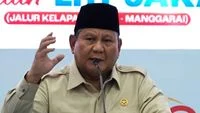
Megawati Soekarnoputri Urges Indonesian Youth to Balance Intellectual Brilliance with Moral Integrity and Courage at Merah Muda Fest 2026


Jakarta, CNN Indonesia — In a powerful address directed at the nation’s rising generation, the fifth President of the Republic of Indonesia and Chairperson of the Indonesian Democratic Party of Struggle (PDI-Perjuangan), Megawati Soekarnoputri, has issued a profound call to action. Speaking at the grand finale of the Merah Muda Fest 2026, held at the historic Lapangan Banteng in Central Jakarta on Sunday, October 25, Megawati underscored that true national development relies as heavily on robust moral character and steadfast courage as it does on technological mastery and academic achievement.
The high-profile event, designed to engage young Indonesians, served as a focal point for discussions surrounding the future leadership, ethical responsibilities, and civic duties of the country’s youth. As Indonesia navigates a rapidly shifting global landscape defined by artificial intelligence, digital transformation, and complex socio-economic challenges, Megawati’s remarks aimed to steer the national discourse toward the preservation of core national values derived from Pancasila, the nation’s foundational philosophical basis.
The Need for Character Beyond Academic Excellence
Addressing an enthusiastic crowd of young attendees via a pre-recorded video broadcast that resonated across the sprawling Lapangan Banteng venue, Megawati articulated a vision of human resource development that transcends standard educational metrics. She argued that while academic prowess, scientific inquiry, and technological literacy are vital drivers of modern progress, they remain fundamentally insufficient without a strong ethical compass.
"The future of Indonesia is not determined solely by the level of scientific mastery you possess, but equally by the strength of your character," Megawati stated during her keynote address. She elaborated on the dichotomy between intellectual capability and moral fortitude, warning the younger demographic against the pitfalls of intelligence divorced from ethical grounding.
"Many individuals are exceptionally clever, yet their hearts waver, their resolve lacks firmness, and they ultimately lack courage," she added, emphasizing that the modern world frequently tests the resilience of young professionals, activists, and leaders.
Megawati’s message struck a chord with the core themes of the festival, which sought to challenge youth complacency. She explicitly called upon the younger generation to cultivate the bravery required to speak truth to power, challenge systemic injustices, and consistently advocate for marginalized and vulnerable communities who rely on collective solidarity for social mobility and protection.
Harmonizing Technological Progress with Ethical Responsibility
As the event coincided with an era of unprecedented technological disruption, Megawati took the opportunity to address the ethical dilemmas posed by the digital age. She reminded the audience that the rapid adoption of automation, big data, and digital platforms must be balanced with timeless humanistic values.
"Be a generation capable of fusing intelligence with wisdom, technological advancement with elevated human values, and the courage to act with profound moral and ethical responsibility," Megawati urged.
This sentiment reflects a growing concern among Indonesian policymakers and thought leaders regarding the societal implications of digital saturation. Observers note that while digital literacy initiatives have expanded rapidly across the archipelago, questions regarding digital ethics, misinformation, and the preservation of communal empathy remain pressing concerns. Megawati’s intervention places the responsibility squarely on youth leadership to ensure that technological modernization does not erode the foundational principles of social justice and national unity.
Contextualizing the Merah Muda Fest 2026 and Youth Day Commemorations
The Merah Muda Fest 2026 was organized by PDI-Perjuangan as part of a series of nationwide events leading up to the 98th anniversary of Indonesia’s historic Youth Pledge (Sumpah Pemuda), officially commemorated on October 28. The Sumpah Pemuda remains a sacred historical milestone in the Indonesian collective memory, marking the 1928 congress where young nationalists swore an oath to one unified homeland, one nation, and one language, laying the ideological groundwork for the declaration of independence in 1945.
By anchoring the festival to the Sumpah Pemuda legacy, the organizers sought to rekindle the revolutionary spirit of early 20th-century youth movements among contemporary millennials and Generation Z. The choice of Lapangan Banteng—a historic public square in Jakarta steeped in national significance—further amplified the symbolic weight of the gathering.
The festival itself featured a diverse array of interactive programs, including cultural performances, panel discussions on digital entrepreneurship, environmental workshops, and artistic exhibitions designed to showcase youth innovation. Over the course of the weekend, the venue drew tens of thousands of participants from various backgrounds, cementing its status as one of the premier youth-centric cultural and political events of the year.
High-Level Attendance and Concurrent Memorial Activities
The culmination of the festival on Sunday afternoon was attended by a roster of high-profile political figures, regional leaders, and national lawmakers. Among the notable attendees spotted at related commemoration events earlier in the day were Jakarta Governor Pramono Anung and member of Commission X of the House of Representatives (DPR RI) Denny Cagur.
Governor Pramono Anung and lawmaker Denny Cagur participated in a commemorative visit to the Museum Sumpah Pemuda, located in Central Jakarta, earlier on Sunday afternoon. Their visit underscored the institutional commitment of regional and national stakeholders to preserving historical consciousness among the younger generation. During their tour of the museum—which houses artifacts, dioramas, and historical documents detailing the formation of the 1928 Youth Pledge—the officials engaged with young museum docents and student visitors, discussing the relevance of historical nationalism in contemporary governance and urban development.
The presence of senior political figures alongside grassroots youth organizers highlighted the strategic importance political parties place on engaging the demographic majority. With Indonesia currently experiencing a demographic dividend—where a significant portion of the population falls within the productive working-age bracket—youth engagement has become a critical battleground for policy formulation and political outreach.
Broader Socio-Political Implications and Future Outlook
Megawati Soekarnoputri’s address at Merah Muda Fest 2026 carries significant implications for the broader trajectory of Indonesian civil society and political leadership. As the nation looks toward its centenary in 2045—the target year for the "Golden Indonesia" (Indonesia Emas) vision—the quality of upcoming leaders remains a subject of intense national debate.
Political analysts and sociologists point out that while contemporary Indonesian youth are better educated, more digitally connected, and globally aware than any previous generation, they also face unprecedented pressures, including economic uncertainties, housing affordability crises, and intense competitive labor markets driven by automation. In this context, Megawati’s emphasis on moral courage and empathy serves as a timely reminder that structural progress requires ethical stewardship.
Furthermore, the call for youth to champion marginalized groups aligns with ongoing policy discussions surrounding income inequality, regional disparities in education and healthcare, and the protection of civil liberties. By framing courage as an essential civic virtue, the former president challenges young citizens to move beyond passive digital activism and engage in substantive, community-level advocacy.
As the commemorations for the 98th Sumpah Pemuda draw to a close, the discourse initiated at Merah Muda Fest 2026 is expected to ripple across academic institutions, political organizations, and civil society networks throughout Indonesia. The challenge moving forward will lie in translating these high-minded ideals into concrete educational curricula, public policies, and grassroots initiatives that empower the next generation to lead with both competence and character.
Related posts: