Honda Motor Co. and Mitsubishi Motors Corporation Form Strategic Alliance to Launch Triton-Based Pickup Truck in ASEAN Markets by 2028

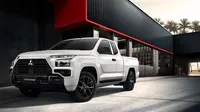
In a landmark development that underscores the accelerating consolidation and strategic realignment within the global automotive industry, Japanese automotive giants Honda Motor Co. and Mitsubishi Motors Corporation have officially inked a memorandum of understanding (MoU) regarding a vehicle supply partnership. Under the terms of the newly formalized agreement, Mitsubishi will manufacture a mid-size passenger pickup truck based on its flagship Triton platform, which Honda will subsequently badge, distribute, and sell within select Southeast Asian markets starting in 2028.
The announcement, released jointly by the participating corporations, marks a profound departure from traditional corporate independence, particularly for Honda. Industry analysts have noted that this agreement represents the first time in approximately three decades that Honda will source a fully developed vehicle from a rival domestic manufacturer outside of joint-development ventures. As legacy automakers face mounting capital expenditure pressures, volatile supply chains, and aggressive market incursions by Chinese electric vehicle and utility vehicle manufacturers, traditional competitors in Japan are increasingly finding common ground to ensure long-term viability and market share protection.
Strategic Rationale and Market Dynamics in ASEAN
The primary impetus behind this unexpected alliance lies in the hyper-competitive and rapidly shifting automotive landscape of the Association of Southeast Asian Nations (ASEAN) region. For decades, the ASEAN automotive market—particularly powerhouse economies like Thailand, Indonesia, and Malaysia—has been heavily dominated by Japanese manufacturers, with Toyota Motor Corporation holding a commanding lead. However, the rapid ascent of Chinese automotive brands offering competitively priced internal combustion engines, hybrids, and electric vehicles has eroded traditional profit margins and forced legacy brands to reevaluate their operational strategies.
Honda has long maintained a formidable presence in ASEAN through its passenger cars, SUVs, and motorcycles. Yet, the company has conspicuously lacked a dedicated ladder-frame pickup truck offering in its regional portfolio. In ASEAN economies, pickup trucks are not merely recreational vehicles; they are indispensable commercial workhorses that drive rural economies, logistics networks, and small-to-medium enterprise operations. Developing a brand-new, dedicated ladder-frame platform from scratch requires billions of dollars in research, development, and tooling costs—an investment that Honda deems economically inefficient given its strategic focus on electrification and core software-defined vehicle technologies in markets such as North America, India, and Japan.
By partnering with Mitsubishi, Honda effectively circumvents the prohibitive capital expenditure of engineering a robust, off-road-capable ladder-frame chassis. The Mitsubishi Triton has built a stellar global reputation for durability, payload capacity, and rugged off-road performance. Its robust ladder-frame architecture, paired with refined passenger cabin comforts, makes it an ideal foundation for Honda’s entry into the fiercely contested regional utility vehicle segment. While neither company has disclosed specific sales volume projections or the commercial model moniker, the strategic objective is clear: to capture untapped market share in ASEAN by offering a trusted, high-utility product without the accompanying development overhead.
Revitalizing Manufacturing Capacity in Thailand
For Mitsubishi Motors, the partnership delivers a critical operational lifeline for its manufacturing footprint in Thailand, which serves as the company’s primary export and production hub outside of Japan. Despite boasting a formidable annual production capacity of approximately 386,000 units during the 2025 fiscal year, Mitsubishi’s actual production output languished at roughly 170,000 units, representing an operational capacity utilization rate of merely 44 percent.
This severe underutilization has created immense financial and structural pressures for the company. To streamline operations and mitigate mounting overhead costs, Mitsubishi previously announced plans to decommission and halt operations at one of its three primary assembly plants in Thailand by the mid-point of the 2027 fiscal year. Even with the closure of that facility, residual overcapacity concerns would have persisted without a significant injection of new volume.
The integration of Honda’s upcoming branded pickup truck into Mitsubishi’s production lines provides a vital source of manufacturing volume. The Triton is already Mitsubishi’s global sales champion, registering approximately 130,000 units globally in the 2025 fiscal year. Furthermore, Mitsubishi has a proven track record of contract manufacturing and platform sharing; the company already produces the Nissan Navara based on the Triton architecture for export to international markets, including Australia. Adding Honda to its roster of manufacturing clients will significantly optimize assembly line efficiency, safeguard local employment, and improve overall factory profitability in Thailand.
The Broader Context: The Tripartite Alliance of Honda, Nissan, and Mitsubishi
This pickup truck supply agreement does not exist in a vacuum; rather, it is deeply embedded within a broader corporate realignment that began taking shape in the summer of 2024. On August 1, 2024, Honda, Nissan Motor Co., and Mitsubishi Motors formally signed a memorandum of understanding to explore a comprehensive strategic partnership across multiple automotive domains.
The genesis of this tripartite alignment was forged out of necessity. The global automotive sector is undergoing its most radical transformation in a century, driven by the rapid transition toward electrification, autonomous driving capabilities, software-defined vehicle (SDV) architectures, and artificial intelligence integration. These technological shifts demand astronomical research and development budgets that individual mid-tier automakers struggle to sustain independently.
Initial discussions among the three companies experienced bureaucratic friction and temporary stagnation before gaining fresh momentum. By August of the current year, leadership at Honda and Nissan reached a formal consensus to jointly develop core software platforms and next-generation electronic architectures. Mitsubishi Motors, which maintains a longstanding equity and operational alignment with Nissan, was positioned to integrate into these technological initiatives where applicable.
This massive consolidation has effectively redrawn the competitive map of the Japanese automotive industry, bifurcating the nation’s legacy manufacturers into two distinct, formidable power blocs:
-
The Toyota Group Bloc: Anchored by Toyota Motor Corporation, this massive alliance includes subsidiary Daihatsu, truck and specialty vehicle manufacturer Hino, alongside strategic equity-partner affiliates Suzuki Motor Corporation, Subaru Corporation, and Mazda Motor Corporation. Combined, this dominant group commands an annual global sales volume of approximately 17 million units, granting it unmatched economies of scale, supply chain leverage, and financial resilience.
-
The Honda-Nissan-Mitsubishi Bloc: Representing the challenger coalition, this newly consolidated tripartite grouping achieves a combined global sales volume of approximately 7.4 million units annually. While significantly smaller than the Toyota-led ecosystem, the pooling of resources, shared component manufacturing, collaborative software development, and cross-brand vehicle supply agreements like the upcoming Triton-based pickup aim to close the efficiency gap and secure long-term competitiveness against both domestic rivals and surging international EV manufacturers.
Industry Implications and Future Outlook
The decision by Honda and Mitsubishi to collaborate on a commercial utility vehicle highlights a pragmatic shift within boardrooms across Tokyo. Rigid corporate pride and brand isolationism are increasingly giving way to functional modularity and platform sharing, particularly as profit margins are squeezed by global macroeconomic uncertainties and price wars initiated by new market entrants.
For Honda, the 2028 launch of the Triton-based pickup represents a low-risk, high-reward strategic expansion. It allows the brand to test the waters in a lucrative vehicle category without diverting critical engineering resources away from its primary electrification roadmap. For consumers in ASEAN markets, the arrival of a Honda-badged pickup truck will introduce fresh competition, combining Mitsubishi’s legendary engineering durability in ladder-frame chassis design with Honda’s renowned reputation for customer service, resale value, and interior ergonomic design.
As the timeline advances toward the 2028 commercial rollout, industry observers will be closely monitoring how both corporations handle distribution networks, marketing differentiation, and potential subsequent phases of the partnership. With the global automotive industry increasingly dictated by scale, cross-brand collaborations of this magnitude may no longer be the exception, but rather the mandatory blueprint for survival in an evolving market.