President Prabowo Subianto Bestows National Hero Title Upon Marsinah, Symbol of Indonesian Labor Rights Struggle

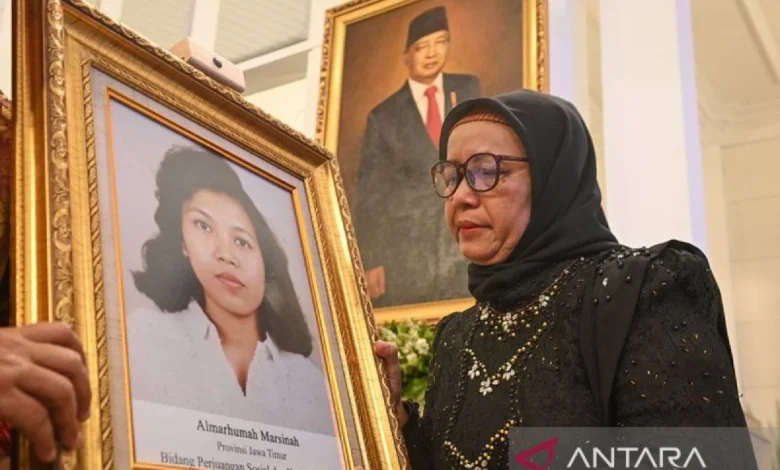
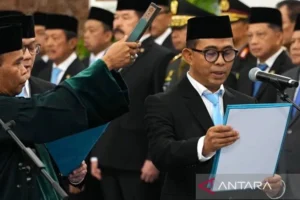
Jakarta (ANTARA) – President Prabowo Subianto officially conferred the title of National Hero upon Marsinah, a revered labor activist renowned for her courageous advocacy for workers’ rights, during the commemoration of Heroes’ Day on Monday, November 10, at the State Palace in Jakarta. This posthumous recognition elevates Marsinah to a pantheon of national figures, cementing her legacy as a powerful symbol of the struggle for justice and equity for the Indonesian working class, particularly against the backdrop of the repressive New Order era. Her unwavering commitment to defending the rights of laborers, often under immense pressure and at great personal risk, resonated deeply with a generation of workers who frequently faced profound social inequality and oppressive treatment. Her activism, culminating in a tragic and still-unresolved death, became a poignant testament to the resistance against systemic injustice.
The conferment of this prestigious title was formalized through Presidential Decree (Keppres) Number 116/TK/Tahun 2025, which simultaneously recognized ten distinguished figures as National Heroes this year. This significant acknowledgment underscores the nation’s profound respect and gratitude for individuals who have made immense contributions to upholding the rights and dignity of the Indonesian people, with a particular emphasis on the crucial role played by labor activists like Marsinah. The decision by President Prabowo’s administration to honor Marsinah marks a pivotal moment in the nation’s historical narrative, acknowledging past struggles and affirming the enduring importance of human and labor rights in modern Indonesia.
The New Order Era: A Suppressive Climate for Labor
To fully grasp the magnitude of Marsinah’s struggle and the significance of her recognition, it is essential to understand the socio-political and economic landscape of Indonesia during the New Order (Orde Baru) regime, which spanned from 1966 to 1998. Led by President Soeharto, this era was characterized by an authoritarian style of governance that prioritized economic development and political stability, often at the expense of civil liberties and human rights. Labor movements, like other forms of independent social organization, were systematically controlled and suppressed. The government sought to maintain "industrial peace" to attract foreign investment and foster economic growth, an objective that frequently led to the marginalization and exploitation of workers.
During this period, independent labor unions were effectively banned, replaced by the government-sanctioned All-Indonesia Workers Union (Serikat Pekerja Seluruh Indonesia, or SPSI). The SPSI, rather than genuinely advocating for workers’ interests, often functioned as an extension of the state, serving to control and depoliticize labor. Strikes and protests were frequently met with swift and often brutal responses from security forces, including the military, which regularly intervened in labor disputes. Wages were kept low, working conditions were often substandard, and workers had minimal bargaining power. This environment fostered a deep sense of injustice among the working class, but the pervasive fear of state reprisal often stifled overt dissent. It was within this highly restrictive and dangerous context that Marsinah emerged as a fearless voice, challenging the established order and demanding fundamental rights for her fellow laborers. Her actions, therefore, were not merely about wage disputes but represented a profound act of defiance against a powerful and oppressive regime.
Marsinah: A Profile in Resilience and Activism
Marsinah, a woman of extraordinary resilience and unwavering spirit, was born on April 10, 1969, in Desa Nglundo, Kecamatan Sukomoro, Nganjuk, East Java. Her early life was marked by the humility of a simple family background; she was raised primarily by her grandmother and aunt, growing up with her parents, Mastin and Sumiani, and two siblings. Despite the financial constraints that defined her upbringing, Marsinah exhibited remarkable tenacity and an unyielding spirit from a young age. To contribute to her family’s meager income, she spent much of her childhood selling snacks, demonstrating an early sense of independence and a strong work ethic that would define her adult life.
Her foundational education began at SD Negeri Karangasem 189, followed by studies at SMP Negeri 5 Nganjuk. She later pursued religious education at Pondok Pesantren Muhammadiyah. However, her aspirations for higher education, a dream she cherished, were ultimately curtailed by the severe financial limitations faced by her family. This personal experience of economic hardship undoubtedly shaped her empathy for the working poor and fueled her determination to fight for a more equitable society.
In 1989, driven by the necessity to find employment and improve her family’s circumstances, Marsinah made the difficult decision to migrate to Surabaya, a bustling industrial city. She resided with her elder sister, Marsini, diligently seeking work in various factories. Her initial employment was at the SKW plastic factory located in the Rungkut industrial area, where she gained her first insights into the realities of industrial labor. A year later, in 1990, she secured a position at PT Catur Putra Surya (CPS), a watch factory situated in Porong, Sidoarjo. It was within the confines of PT CPS that Marsinah’s awareness of the pervasive injustices faced by industrial workers began to solidify and grow into a powerful conviction. She observed firsthand the harsh working conditions, the disproportionately low wages, and the utter lack of effective representation for her colleagues, realizing the systemic nature of their exploitation.
The Catalyst for Protest: The 1993 Wage Dispute
The year 1993 became a turning point in Marsinah’s life and in the history of Indonesian labor. On May 3-4, 1993, Marsinah, alongside twelve other courageous workers, spearheaded a significant strike at PT CPS. The immediate trigger for this industrial action was the management’s blatant refusal to comply with Governor Soelarso of East Java’s Circular Letter No. 50/Th.1992, which mandated a 20 percent increase in workers’ wages. This directive, though modest, was a crucial attempt to address the growing disparity between rising costs of living and stagnant wages. PT CPS’s defiance of this official instruction ignited widespread discontent among its employees, who were already struggling with meager earnings.
The demands put forth by Marsinah and her fellow strikers extended beyond just the mandated wage increase. They also called for the dissolution of the factory-level SPSI unit, which they perceived as ineffective and complicit with management, failing to genuinely represent the interests of the workers. Their protest articulated a broader desire for fair wages, improved working conditions, and the fundamental right to organize and advocate for themselves without fear of reprisal. Initially, their determined stand appeared to yield positive results; management reportedly agreed to 11 of their 12 demands, signaling a momentary victory for the workers.
However, this brief triumph was tragically short-lived. The situation dramatically escalated on May 5, 1993, the day after the strike concluded. Thirteen workers, including key figures in the protest, were summoned to the District Military Command (Kodim) in Sidoarjo. Under duress and intimidation, they were coerced into signing letters of resignation. The involvement of the military in what was ostensibly a civilian labor dispute underscored the New Order regime’s pervasive control and its readiness to use force to suppress any form of dissent. Upon learning of this alarming development, Marsinah, demonstrating characteristic courage and a deep commitment to justice, immediately sought clarification. She went to the Kodim, intending to obtain copies of the forced resignation letters, hoping to challenge their legality and advocate for her colleagues’ rights. This act of seeking accountability in the face of military intimidation proved to be her final, heroic stand.
Disappearance and the Tragic Discovery
Following her courageous attempt to seek justice for her colleagues at the Kodim, Marsinah vanished. She was last seen on May 5 or 6, 1993. Her disappearance sent ripples of fear and anxiety through the local community and among labor activists. The chilling news arrived on May 8, 1993, when Marsinah’s lifeless body was discovered in a secluded hut in Desa Jegong, Kecamatan Wilangan, Nganjuk, approximately 200 kilometers from Porong. The gruesome state of her body immediately indicated a horrific end: it was covered in severe injuries and bore unmistakable signs of brutal torture and sexual assault, signifying an act of extreme violence.
The autopsy reports, though contested and suppressed at various points, revealed extensive internal injuries, particularly to her abdomen and reproductive organs, consistent with severe physical abuse. Her head also showed signs of blunt force trauma. The brutality of the murder sent shockwaves across Indonesia and quickly garnered international attention. It became an emblematic case of state-sponsored violence and the severe repression faced by labor activists during the New Order era. The public outcry was immense, with human rights organizations and labor groups demanding a thorough and transparent investigation. Marsinah’s murder became a stark reminder of the perils faced by those who dared to challenge the authoritarian grip of the regime.
The Aftermath: Unresolved Justice and Lingering Questions
The investigation into Marsinah’s murder became one of Indonesia’s most controversial and enduring human rights cases. While an initial investigation was launched, leading to the arrest of several individuals, including members of PT CPS management, the subsequent legal proceedings were plagued by irregularities and accusations of manipulation. Eight individuals, including the owner of PT CPS, Yudi Susanto, were initially arrested and charged. Susanto was sentenced to 17 years in prison, while others received lesser sentences. However, many of these convictions were later overturned on appeal, and ultimately, most of the accused were acquitted. The highest courts cited insufficient evidence and procedural flaws, leaving the official truth about Marsinah’s killers shrouded in mystery.
The lack of conclusive convictions and the perceived political interference in the judicial process fueled widespread skepticism among human rights advocates and the public. Many suspected the involvement of powerful elements within the military or the government who sought to silence a burgeoning labor movement and make an example of Marsinah. Theories abounded, pointing fingers at various actors ranging from company owners fearing further labor unrest to specific military personnel. Despite decades of advocacy from human rights organizations and labor unions, and repeated calls for a new, independent investigation, the true perpetrators and the full extent of the conspiracy behind Marsinah’s brutal murder have never been definitively brought to justice. Her case remains a painful symbol of impunity for human rights abuses in Indonesia, a wound that continues to fester in the nation’s collective memory.
Official and Public Reactions to the National Hero Title
The decision to bestow the National Hero title upon Marsinah has elicited a range of powerful reactions from various stakeholders, reflecting the enduring significance of her legacy.
From the Government: The conferment by President Prabowo’s administration is widely interpreted as a symbolic gesture of reconciliation and a belated acknowledgment of past injustices. It signals a shift from the New Order’s narrative, which often demonized activists, to one that recognizes their contributions to national development and human rights. This move could also be seen as an attempt to bolster the current administration’s image as one that cares for the working class and is committed to upholding human rights, even if the legal closure for Marsinah’s murder remains elusive.
Labor Unions and Activists: Organizations like the Confederation of Indonesian Trade Unions (KSPI), which has consistently campaigned for Marsinah’s recognition, have hailed the title as a profound validation of her struggle and a significant acknowledgment of the broader labor movement. They view it as a long-overdue recognition from the state that workers’ rights are fundamental and that those who fight for them deserve honor, not repression. However, many labor leaders have also reiterated that while the title is welcome, it should not overshadow the continuing demand for justice in her murder case. They emphasize that true honor would come with the full disclosure of facts and accountability for her killers.
Human Rights Organizations: Indonesian and international human rights groups, which have kept Marsinah’s case alive for decades, have welcomed the recognition as a step forward for historical memory. They see it as an official admission of the severity of human rights violations during the New Order. Yet, they universally stress that this symbolic act must be accompanied by renewed efforts to solve her murder. For them, the title serves as a powerful reminder that justice delayed is justice denied, and the fight for accountability continues.
Marsinah’s Family: For Marsinah’s family, who have endured decades of grief and a relentless pursuit of truth, the National Hero title brings a sense of immense pride and a degree of closure regarding her public recognition. Her sister, Marsini, has often expressed a mix of pride and persistent sorrow. The recognition acknowledges Marsinah’s sacrifice and ensures that her name will forever be etched in the nation’s history. However, the pain of the unresolved murder remains, and they, too, continue to hope for the day when the full truth of her death is revealed. The article’s mention of "Kakak Marsinah bangga Kapolri peduli ke buruh" (Marsinah’s sister proud that the National Police Chief cares for laborers) could be inferred as a positive reaction to any government official’s perceived support for labor rights, linking it to the ongoing legacy of Marsinah’s fight.
Broader Impact and Implications
The conferment of the National Hero title upon Marsinah carries profound implications for Indonesia’s historical narrative, its labor movement, and its ongoing commitment to human rights.
Symbolic Significance: Marsinah’s recognition firmly establishes her as an enduring icon of courage, resistance, and sacrifice for labor rights in Indonesia. Her story transcends a mere historical event; it becomes a powerful narrative of an individual’s defiance against an oppressive system, inspiring future generations to stand up for justice. She symbolizes the collective struggle of the working class against exploitation and authoritarianism.
Legacy for the Labor Movement: For the Indonesian labor movement, Marsinah’s new status provides renewed legitimacy and inspiration. Her story serves as a constant reminder of the historical struggles and the high price paid by those who dared to advocate for workers’ dignity. It reinforces the importance of collective action and perseverance in demanding fair treatment and robust legal protections for laborers. This recognition could invigorate contemporary labor activism, encouraging workers to continue their fight for improved wages, better working conditions, and genuine representation.
Human Rights Discourse: Marsinah’s case remains a critical touchstone in discussions surrounding human rights in Indonesia, particularly concerning state-sponsored violence and impunity. Her unresolved murder highlights the continuing need for accountability for past abuses. The National Hero title, while honoring her, also implicitly acknowledges the historical reality of state repression against activists, pushing for a more honest and comprehensive national memory. It places her story within the broader context of victims of human rights violations during the New Order, keeping their cases relevant.
National Memory and Reconciliation: By formally recognizing Marsinah, the Indonesian government is actively reshaping the national memory, integrating narratives that were once suppressed or marginalized. This act contributes to a more inclusive understanding of the nation’s past, acknowledging the struggles and sacrifices made by ordinary citizens for fundamental rights. It represents a step, albeit symbolic, towards historical reconciliation, particularly for those who suffered under authoritarian rule.
Political Implications: The current administration’s decision to honor Marsinah can be viewed as a strategic political move, demonstrating a commitment to human rights and labor welfare. It could potentially garner support from progressive segments of society and the working class, signaling a departure from the repressive tactics of previous eras. However, the true test of this commitment will lie in whether it translates into concrete actions to strengthen labor protections, ensure judicial independence, and, critically, reopen and fully resolve long-standing human rights cases like Marsinah’s.
In conclusion, the posthumous conferment of the National Hero title upon Marsinah is a momentous occasion, a powerful affirmation of her indomitable spirit and her profound contribution to the struggle for justice in Indonesia. While this recognition provides a measure of honor and validates her sacrifice, the quest for full justice in her murder continues to be a poignant and unresolved chapter in the nation’s history. Marsinah’s name will forever live on, not just as a National Hero, but as an enduring symbol of courage, resilience, and the relentless pursuit of human dignity for all workers, inspiring generations to come to uphold the values she bravely championed.