PT Mobil Anak Bangsa (MAB) Strengthens Commercial EV Focus at PEVS 2026 to Drive Business Efficiency and Green Mobility in Indonesia

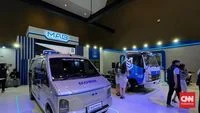
PT Mobil Anak Bangsa (MAB) has reaffirmed its strategic commitment to dominating the commercial electric vehicle (EV) segment in Indonesia. The announcement took place during its exhibition showcase at the Periklindo Electric Vehicle Show (PEVS) 2026, held at the Jakarta International Expo (JIExpo) in Kemayoran, Central Jakarta. Under the overarching theme "Electrify Your Business," the local automotive manufacturer presented a comprehensive portfolio of eco-friendly commercial solutions tailored for logistics, plantation operations, and heavy-duty mining sectors.
The strategic positioning highlights a growing industry shift toward sustainable commercial fleets. By shifting the spotlight away from consumer passenger cars, MAB aims to address the core economic and environmental challenges faced by enterprise-level fleet operators in Indonesia. The company’s exhibits at PEVS 2026 signal a maturing domestic EV ecosystem capable of supporting rigorous industrial applications.
Strategic Vision and Exhibition Highlights
Addressing industry stakeholders and media representatives at the event, MAB Chief Executive Officer Kelik Irwantono emphasized that the company has remained steadfast in its commercial focus since its inception. MAB’s participation in every iteration of the PEVS exhibition underscores its mission to deliver tangible economic value to business owners.
"The theme we carry this time is Electrify Your Business, reflecting our foundational focus on commercial vehicles," Kelik stated during the exhibition. "Our goal is to support all products that drive value-added operations and business profitability."
At PEVS 2026, MAB unveiled three core product categories designed to cater to diverse industrial requirements:
- Urban Logistics and Public Transport: MAB introduced a versatile 4×2 light truck utilizing a rolling chassis concept, which has already been deployed for operational use in Jakarta and the new capital city, Nusantara (IKN). Additionally, the company showcased a dedicated blind van tailored for last-mile logistics operations, alongside a three-wheeled cargo transport vehicle suited for urban micro-distribution.
- Agricultural and Plantation Solutions: Recognizing the unique topography and heavy-duty demands of Indonesia’s agricultural sector, MAB introduced specialized 4×4 vehicles engineered specifically for palm oil plantations, available in 5-ton and 8-ton capacities.
- Heavy-Duty Mining Applications: For the mining industry, MAB introduced robust 6×4 and 8×4 heavy trucks capable of hauling payloads of up to 55 tons, addressing the heavy-hauling demands of resource extraction while curbing carbon emissions in remote industrial sites.
Beyond Hardware: Integrated Ecosystem Solutions
In addition to expanding its vehicle lineup, MAB is shifting toward a service-oriented business model by offering an integrated ecosystem solution rather than standalone hardware sales. Kelik elaborated that the company’s current value proposition includes comprehensive aftermarket and operational support systems.
MAB is actively forging partnerships with charging station infrastructure providers to ensure seamless fleet charging capabilities. Furthermore, the company has integrated advanced fleet management services and a proprietary Mining Command Center into its sales package.
"We are coming to the market not merely to sell products, but to deliver a complete ecosystem solution to our prospective customers," Kelik explained. "We have established a mining command system where all vehicle data utilized by our clients can be monitored in real-time through our command center. This includes monitoring operational patterns, battery health metrics, and comprehensive diagnostic reporting."
This centralized monitoring approach is designed to mitigate operational risks associated with fleet electrification, offering enterprise clients high levels of reliability and data-driven maintenance scheduling.
Leadership Perspective and Market Evolution
The founder of MAB and Chairman of the Indonesian Electric Vehicle Industry Association (Periklindo), General (Ret.) Moeldoko, expressed strong approval of the company’s steadfast trajectory. He noted that MAB’s early bet on the commercial EV segment has positioned the brand as a key pioneer in the country’s green mobility transition.
"From the day MAB was founded until today, the company remains firmly committed to playing in the commercial EV space," Moeldoko remarked. "MAB serves as a practical solution in driving efficiency and cleanliness—the two primary themes of modern mobility. Our consumer base is strengthening day by day, particularly among those operating light transport, agricultural plantations, and heavy mining sectors."
Moeldoko further highlighted that while passenger cars and electric motorcycles have dominated public discourse and consumer adoption, the commercial and public transport sectors hold the true key to meaningful emissions reduction and fiscal savings for the state.
Policy Advocacy: Expanding Government Incentives to Commercial Fleets
During the media question-and-answer session, Moeldoko issued a direct appeal to the Indonesian government to broaden the national EV incentive framework. Up to this point, government subsidies, tax exemptions, and promotional policies have primarily targeted private passenger vehicles and two-wheeled motorcycles.
"Thus far, discussions regarding incentives have been exclusively linked to passenger cars and motorcycles," Moeldoko noted. "There has yet to be a policy initiative or conceptual framework proposed by the government concerning commercial vehicles or public transportation. Therefore, MAB is actively petitioning the government to consider extending incentive structures beyond passenger cars to encompass commercial fleets."
Moeldoko emphasized that commercial transport—including electric buses, logistics trucks, and utility vehicles—represents a disproportionately large share of national carbon emissions and fuel consumption. Consequently, targeted policy interventions in this segment would yield exponential macroeconomic benefits.
"Commercial vehicles, buses, and trucks are among the largest contributors to carbon emissions and simultaneously consume a substantial share of subsidized fossil fuels," Moeldoko argued. "Therefore, this sector warrants special policy attention. If the market accelerates its transition toward commercial EVs—transforming bus networks, logistics trucking, and utility fleets—we will witness a drastic reduction in carbon output, alongside a substantial decrease in government fuel subsidies."
Industry Implications and Future Outlook
The strategic positioning of MAB at PEVS 2026 illustrates a maturing industrial landscape within Indonesia’s electric vehicle sector. While consumer EV adoption has gained steady momentum through tax incentives and infrastructure development in major urban centers, the commercial and industrial segments remain the final frontier for large-scale fossil fuel displacement.
Analysts note that transitioning heavy-duty sectors—such as palm oil plantations and mining operations—to electric propulsion presents unique engineering hurdles, including the need for high torque, robust chassis durability, and reliable off-grid charging infrastructure. MAB’s introduction of rolling chassis designs, heavy-duty 4×4 plantation vehicles, and 55-ton mining trucks demonstrates that domestic manufacturers are actively engineering solutions customized to Indonesia’s geographic and industrial realities.
Furthermore, the integration of telematics and fleet monitoring systems reflects global best practices in commercial fleet management, minimizing total cost of ownership (TCO) for enterprise buyers. As the Indonesian government continues to evaluate its medium- and long-term energy transition roadmap, advocacy from industry leaders like Moeldoko and implementation pioneers like MAB will likely play a decisive role in shaping future fiscal policies regarding public transport and commercial vehicle electrification.