Toyota Hilux Rangga Redefines Indonesia’s Light Commercial Vehicle Landscape with Exceptional Versatility and Performance

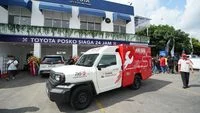
The landscape of Indonesia’s light commercial vehicle (LCV) sector has experienced a significant transformation following the introduction of the Toyota Hilux Rangga. Positioned as a versatile mobility solution tailored to the evolving demands of modern enterprises, small and medium-sized enterprises (SMEs), and public service sectors, this multi-purpose pickup truck has rapidly captured the attention of industry observers and business operators alike. Beyond traditional cargo hauling, the vehicle represents a comprehensive commercial ecosystem designed to address logistical challenges across urban and rural topographies.
As economic activities continue to rebound and expand across the archipelago, the demand for adaptable, durable, and cost-effective commercial fleets has reached unprecedented levels. PT Toyota-Astra Motor (TAM), the official distributor of Toyota vehicles in Indonesia, has strategically positioned the Hilux Rangga to bridge the gap between heavy-duty commercial trucks and conventional passenger-derived pickups. By emphasizing customizability, robust engineering, and accessible pricing, the manufacturer aims to cater to a diverse clientele ranging from individual entrepreneurs to large corporate fleet operators.
Strategic Vision and Market Positioning
The fundamental philosophy driving the commercialization of the Toyota Hilux Rangga centers on its high degree of adaptability. Modern business operations require specialized transportation solutions rather than one-size-fits-all configurations. Recognizing this shift, executive leadership at PT Toyota-Astra Motor conceptualized the vehicle not merely as an automobile, but as a modular platform capable of transforming into numerous functional forms.
During a corporate presentation detailing the vehicle’s market entry, Vice President of PT Toyota-Astra Motor, Jap Ernando Demily, emphasized the strategic intent behind the model. He noted that the Hilux Rangga transcends the conventional boundaries of a commercial vehicle by serving as a customizable business solution. From supporting micro, small, and medium enterprise (MSME) supply chains and agricultural distribution to powering public services and heavy industrial operations like mining, the platform is engineered to integrate seamlessly into diverse operational environments.
This flexibility is achieved through a collaborative approach involving local body builders and conversion specialists. By providing a standardized chassis and drivetrain architecture that readily accommodates diverse superstructures, Toyota has empowered businesses to optimize their operational expenditure. Fleet managers can commission bespoke body configurations without compromising structural integrity or warranty coverage, a critical factor in lowering the total cost of ownership over the vehicle’s lifecycle.
Engineering Capabilities and Structural Design
At the core of the Toyota Hilux Rangga’s commercial appeal are its robust physical specifications and ergonomic design choices. The vehicle boasts a maximum payload capacity of up to 1.2 metric tons, allowing operators to transport substantial volumes of goods in a single trip, thereby maximizing fuel efficiency and reducing transit times.
The cargo bed has been engineered with practicality in mind, featuring a flat deck design complemented by a three-way opening tailgate and sideboards. This configuration significantly streamlines the loading and unloading processes, whether handling palletized freight using machinery or manual loading of loose agricultural produce and retail goods. The ease of access from multiple angles minimizes turnaround times at distribution hubs and crowded marketplaces.
Unlike traditional cab-over-engine pickup designs prevalent in the entry-level commercial segment, the Hilux Rangga incorporates a semi-bonnet configuration. This modern layout places the engine compartment forward of the cabin, offering tangible benefits in terms of occupant comfort and passive safety. The bonnet design dampens noise, vibration, and harshness (NVH) levels within the cabin, reducing driver fatigue during long-distance logistics operations. Furthermore, the forward structure provides an additional crumple zone, enhancing front-end impact protection for the occupants.
Diverse Conversion Ecosystem and Public Sector Integration
The true versatility of the Hilux Rangga is most evident in the wide array of specialized conversions already developed on its platform. These adaptations reflect a deep understanding of both commercial market demands and governmental strategic initiatives aimed at improving public welfare and infrastructure.
A prominent example of this alignment with national programs is the specialized configuration designed to support the Free Nutritious Meal (Makanan Bergizi Gratis or MBG) initiative. This conversion ensures that fresh, temperature-sensitive food supplies can be transported efficiently to schools and community centers in hygienic conditions. Complementing this is the Hilux Rangga Cold Box (Moda) variant, specifically engineered for the distribution of frozen food, pharmaceuticals, and perishable goods across urban supply chains.
In the realm of industrial maintenance and logistics, the Hilux Rangga Flatdeck has been successfully deployed as a mobile maintenance vehicle. Equipped with necessary tools, generators, and replacement parts, these units serve as mobile workshops capable of servicing remote machinery, telecommunications infrastructure, and utility networks.
Public service sectors have also embraced the platform. The introduction of the ACC Mobile Service conversion provides financial inclusion and banking access to underserved communities in remote regions, bringing essential financial transactions directly to rural populations. Additionally, firefighting units utilizing the Hilux Rangga chassis have been deployed to navigate narrow residential alleys and congested urban sectors where conventional heavy fire engines cannot operate effectively.
Urban mass transit has also integrated the vehicle into its network. Beginning in November 2024, pilot testing commenced for the modification of the Hilux Rangga as an authorized public transportation fleet under the Mikrotrans Transjakarta banner. This application demonstrates the platform’s ride comfort and structural durability under continuous urban stop-and-go driving conditions, passenger boarding cycles, and strict operational timetables.
Powertrain Options and Mechanical Specifications
To accommodate varying operational requirements and budgetary considerations, the Toyota Hilux Rangga is offered with a choice of dependable internal combustion engines that comply with prevailing Euro 4 emission standards. The mechanical lineup prioritizes torque delivery, durability, and ease of maintenance, which are essential attributes for commercial vehicles operating under demanding conditions.
The diesel variant is powered by the proven 2GD-FTV 2,393 cc four-cylinder engine equipped with a Variable Nozzle Turbocharger (VNT) and a common-rail fuel injection system. This powerplant delivers a maximum output of 149 PS at 3,400 rpm. The torque characteristics vary depending on the transmission pairing: models equipped with the 5-speed manual transmission produce 343 Nm of torque between 1,400 and 2,800 rpm, whereas variants mated to the 6-speed automatic transmission generate a robust 400 Nm of torque available across a broad band from 1,600 to 2,000 rpm. This high low-end torque output is particularly advantageous for fully laden vehicles navigating steep inclines or unpaved industrial sites.
For operators preferring alternative fuel types, the petrol variant utilizes the 1TR-FE 1,998 cc four-cylinder engine featuring Dual VVT-i technology. This engine develops 139 PS of power at 5,600 rpm and a peak torque of 183 Nm at 4,000 rpm, paired exclusively with a 5-speed manual transmission. The petrol configuration provides a smoother, quieter ride profile well-suited for urban delivery routes and frequent stop-start driving scenarios.
Notably, the variant portfolio available in the Indonesian market currently excludes a four-wheel-drive (4×4) drivetrain option. Company representatives have clarified that there are no immediate plans to introduce a 4×4 version of the Hilux Rangga, as the heavy-duty four-wheel-drive commercial segment is already adequately serviced by the established Toyota Hilux model line. Although both vehicles share foundational engineering principles and utilize robust ladder-frame chassis architectures, they occupy distinct market tiers tailored to different customer segments.
Import Logistics, Pricing Strategy, and Market Availability
The market entry strategy for the Toyota Hilux Rangga involves importing the vehicles completely built up (CBU) from Toyota’s manufacturing facilities in Thailand, where economies of scale and advanced production lines ensure consistent build quality. This regional supply chain integration allows PT Toyota-Astra Motor to maintain competitive pricing structures while meeting regional quality standards.
Priced accessibly within the Indonesian market, the Hilux Rangga spans an official retail price range starting from Rp194.3 million for base utility configurations and extending up to Rp309.6 million for higher-tier variants equipped with specialized features or automatic transmissions. This pricing strategy positions the vehicle directly against established legacy commercial pickups, offering business owners a modern alternative equipped with contemporary safety features, enhanced comfort, and superior long-term residual value.
Broader Economic Implications and Industry Outlook
The introduction and rapid adoption of the Toyota Hilux Rangga carry significant implications for the broader Indonesian economy, particularly within the logistics, agricultural, and micro-enterprise sectors. As Indonesia continues to develop its national infrastructure and regional supply chains, the demand for reliable, versatile light commercial vehicles remains robust.
By providing a dependable foundation for MSME logistics and specialized public services, the vehicle contributes directly to supply chain efficiency and the formalization of small-scale commercial operations. Efficient distribution of agricultural produce reduces post-harvest losses, while mobile service conversions enhance access to vital utilities and financial infrastructure in remote regions.
Industry analysts anticipate that the presence of the Hilux Rangga will stimulate healthy competition within the Indonesian commercial vehicle market, compelling other manufacturers to enhance their product offerings, expand conversion partnerships, and improve after-sales support networks. As local body builders continue to innovate and design specialized superstructures tailored to the chassis, the versatility of the Hilux Rangga is expected to expand further, solidifying its role as a cornerstone of modern commercial mobility in Southeast Asia’s largest economy.