Suahasil Nazara Steps Into the Role of Indonesian Finance Minister Following Cabinet Reshuffle at the State Palace

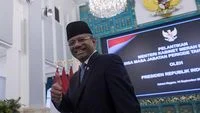
Jakarta — In a significant structural shift within the Indonesian cabinet, President Prabowo Subianto officially inaugurated Suahasil Nazara as the new Minister of Finance on Monday, September 14, 2026. The swift transition took place at the State Palace in Jakarta, following the issuance of Presidential Decree Number 97P of 2026, which simultaneously relieved Purbaya Yudhi Sadewa of his duties. The sudden departure of Purbaya and the elevation of Suahasil mark a critical juncture for Indonesia’s economic governance under the current administration, prompting close observation from domestic markets, international financial institutions, and fiscal analysts alike.
The transition at the helm of the Ministry of Finance comes at a delicate time for Southeast Asia’s largest economy. As the nation navigates complex global macroeconomic challenges, fluctuating commodity prices, and stringent domestic fiscal targets, the choice of Suahasil Nazara is viewed by many as a signal of policy continuity paired with deep institutional expertise.
A Familiar Face Assumes the Top Post
Suahasil Nazara is by no means a newcomer to the upper echelons of Indonesia’s fiscal administration. Prior to his promotion to Minister of Finance, Suahasil served as the Deputy Minister of Finance starting in October 2019. His tenure as deputy spanned two distinct presidential administrations, beginning under former President Joko Widodo and seamlessly extending into the current administration of President Prabowo Subianto.
His extensive background within the ministry provides him with an intimate understanding of the state budget, taxation frameworks, and fiscal decentralization. Before entering active government service as a structural official, Suahasil built a robust career as an academic and economist. He served as a professor at the Faculty of Economics and Business at the University of Indonesia (FEB UI) and previously coordinated the Poverty Reduction Working Group at the Tim Nasional Percepatan Penanggulangan Kemiskinan (TNPKP). This combination of rigorous academic grounding and years of practical bureaucratic execution is expected to lend immediate credibility to his leadership during a transitional economic period.
The Departure of Purbaya Yudhi Sadewa
The dismissal of Purbaya Yudhi Sadewa from the position of Minister of Finance on the exact same day as Suahasil’s inauguration has generated widespread discussion among political analysts and economic observers. While the official statements from the State Palace framed the reshuffle as part of a routine evaluation to optimize governmental performance, the abrupt nature of the change underscores the dynamic and demanding expectations placed upon the financial sector leadership.
Purbaya, who had previously held prominent roles in various economic advisory capacities and state-owned enterprise oversight, oversaw a challenging period marked by balancing state revenue generation against the imperative to sustain post-pandemic economic recovery and social protection programs. While specific internal catalysts for his replacement have not been exhaustively detailed by executive spokespersons, cabinet reshuffles of this magnitude typically reflect strategic realignments in how the executive branch aims to tackle forthcoming budgetary hurdles and investment climates.
Comparative Wealth and Asset Transparency: A LHKPN Review
In alignment with Indonesia’s transparency mandates for state administrators, public scrutiny naturally extends to the personal wealth declarations of newly appointed and recently departed high-ranking officials. Both Suahasil Nazara and Purbaya Yudhi Sadewa submitted their respective State Administrator Wealth Reports (LHKPN) to the Corruption Eradication Commission (KPK) on February 27, 2026, offering a clear window into their financial standing and asset portfolios.
Suahasil Nazara’s Asset Portfolio
According to his February 2026 LHKPN filing, Suahasil Nazara reported a total net worth amounting to Rp138.1 billion. This substantial valuation positions him as one of the wealthier members of the economic technocracy, largely accumulated through long-standing professional investments, property holdings, and corporate engagements prior to and during his tenure in public service.
Within his asset report, Suahasil declared a total of four four-wheeled motor vehicles with an aggregate valuation of Rp1.228 billion. Notably, the LHKPN record shows no ownership of motorcycles or motorized two-wheelers. The breakdown of his vehicle collection includes:
- A 2013 Toyota Camry Sedan, acquired through personal effort, valued at Rp160 million.
- A 2019 Honda Jazz Sedan, acquired through personal effort, valued at Rp220 million.
- A 2022 Honda HR-V SUV, acquired through personal effort, valued at Rp330 million.
- A 2019 Toyota Alphard Minibus, acquired through personal effort, valued at Rp518 million.
Purbaya Yudhi Sadewa’s Asset Portfolio
In contrast, Purbaya Yudhi Sadewa reported a total net worth of Rp57.4 billion in his February 2026 LHKPN submission—significantly lower than Suahasil’s total wealth, despite Purbaya maintaining a more extensive and higher-valued collection of motorized vehicles.
Purbaya’s automotive and transport portfolio was valued at a total of Rp3.606 billion, comprising six distinct units:
- A 2008 Mercedes-Benz Sedan, acquired through personal effort, valued at Rp200 million.
- A 2019 BMW SUV, acquired through personal effort, valued at Rp1.6 billion.
- A 2019 Toyota Alphard Minibus, acquired through personal effort, valued at Rp1 billion.
- A 2019 Peugeot 5008 SUV, acquired through personal effort, valued at Rp730 million.
- A 2018 Yamaha XMAX motorcycle, acquired through personal effort, valued at Rp55 million.
- A 2021 Honda Vario 125 motorcycle, acquired through personal effort, valued at Rp21 million.
The comparison highlights an interesting divergence: while Purbaya possessed a smaller overall net worth compared to Suahasil, his allocation toward luxury vehicles and diverse transport assets carried a higher aggregate monetary value.
Chronology of the September 14 Cabinet Transition
The events of Monday, September 14, 2026, unfolded rapidly at the State Complex in Central Jakarta:
- Morning (09:00 WIB): Rumors circulated across national media outlets regarding an impending mid-day cabinet reshuffle focused primarily on the economic sector.
- Mid-day (11:30 WIB): The State Secretariat officially released invitations for a presidential swearing-in ceremony at the State Palace, confirming changes within the executive line-up.
- Afternoon (14:00 WIB): President Prabowo Subianto led the official inauguration ceremony. Presidential Decree Number 97P of 2026 was read aloud, formalizing the honorable discharge of Purbaya Yudhi Sadewa and the simultaneous appointment of Suahasil Nazara as the new Minister of Finance.
- Late Afternoon (16:00 WIB): The Ministry of Finance hosted an internal handover ceremony (Sertijab) at Juanda Hall, where Suahasil Nazara formally assumed administrative control and delivered his inaugural remarks to structural officials and echelon-one directors.
Market Reactions and Economic Implications
The domestic financial markets responded to Suahasil Nazara’s appointment with a measure of cautious optimism. Because Suahasil is a known quantity to institutional investors, credit rating agencies, and multilateral lenders like the World Bank and the International Monetary Fund (IMF), his ascension is interpreted as a guarantee of institutional stability.
Economists have pointed out several primary implications of this leadership shift:
- Fiscal Discipline and Budget Credibility: Given his six-year tenure as Deputy Minister, Suahasil has been a co-architect of Indonesia’s post-pandemic fiscal consolidation path, successfully bringing the budget deficit back below the statutory 3 percent of GDP threshold ahead of schedule in prior fiscal years. Markets expect this commitment to fiscal prudence to remain a cornerstone of his ministerial policy.
- Tax Reform Continuity: The ongoing modernization of the core tax administration system, alongside efforts to broaden the domestic tax base and improve compliance through digitalization, will face no learning curve under Suahasil’s watch, as he was deeply involved in the legislative drafting and implementation of previous tax harmonization laws.
- Coordination with Bank Indonesia: Maintaining tight synergy between fiscal policy managed by the Ministry of Finance and monetary policy managed by Bank Indonesia remains vital to stabilizing the Indonesian Rupiah against global currency fluctuations and managing domestic inflationary pressures. Suahasil’s established working relationships with central bank governors are expected to facilitate smooth policy coordination.
As Suahasil Nazara steps behind the desk at the Djuanda Building, the nation watches to see how the veteran technocrat will steer the nation’s financial ship through the remainder of the decade, balancing the ambitious developmental goals of the Prabowo administration with the unyielding demands of fiscal sustainability.