Tragedy in the Highlands: Three Jayawijaya Agriculture Officials Killed in Targeted Attack While Delivering Humanitarian Aid

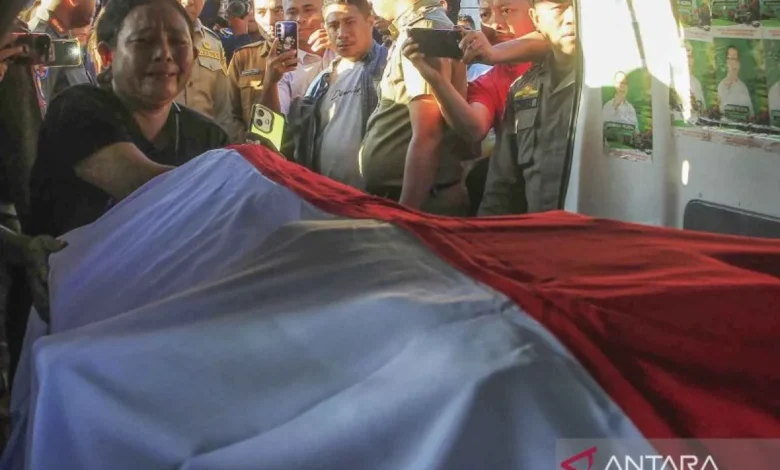
The peaceful mission to improve local livelihoods in Papua Pegunungan ended in bloodshed on Wednesday, September 9, 2026, when a team of three dedicated civil servants from the Jayawijaya Agriculture Office was ambushed and killed by an armed group. The officials were traveling through the Muliama District, en route to the Kimbim region, to facilitate the distribution of livestock and agricultural aid intended for local community development. The incident has sent shockwaves through the regional government and raised urgent questions regarding the safety of public servants operating in high-risk areas of the Indonesian highlands.
The victims, identified as Aprida Rapi, Alfonsius Albinus Mehan, and Wili Mbuik, were performing their professional duties under the auspices of the local government’s agricultural expansion program. Their deaths represent a severe blow to the humanitarian and developmental efforts currently being spearheaded by the Papua Pegunungan administration to foster economic self-sufficiency among remote communities.
Chronology of the Muliama Ambush
The attack occurred in the mid-morning hours of September 9, 2026. According to preliminary reports from the local police force, the team was traversing a rural road in the Muliama District when they were intercepted by an armed group. The tactical nature of the strike suggests a deliberate attempt to obstruct government operations in the area.
Upon receiving reports of the shooting, law enforcement personnel were dispatched to secure the perimeter and conduct an initial forensic sweep. During the investigation, police recovered three shell casings of varying calibers, a finding that indicates the use of multiple firearms and suggests a coordinated effort by the perpetrators. While the authorities are still working to piece together the exact sequence of events, initial findings indicate that the victims had little opportunity to react to the sudden escalation. The bodies were subsequently transported to Wamena for medical examination and administrative processing before being prepared for return to their respective families.
Profiles of the Fallen Public Servants
The victims were recognized as vital assets to the regional agricultural sector, each bringing specialized knowledge and a commitment to service in the Papua region.
Aprida Rapi (49): A veteran administrator, Rapi served as the Head of the Livestock Division at the Jayawijaya Agriculture Office. Originally from Makale, Tana Toraja, she had long resided in Wamena, dedicating her career to the improvement of regional food security. Her leadership in the livestock sector was instrumental in coordinating aid programs designed to boost the economic output of small-scale farmers in the district.
Alfonsius Albinus Mehan (35): A skilled veterinarian hailing from the Sikka Regency in East Nusa Tenggara, Mehan was a cornerstone of the department’s veterinary services. His role was critical in ensuring the health and viability of the livestock being distributed to the local population. Colleagues described him as a passionate professional who traveled to remote areas to provide essential medical care for agricultural animals, effectively bridging the gap between scientific practice and rural livelihood.
Wili Mbuik: A promising young civil servant (CPNS) from Rote Ndao, East Nusa Tenggara, Mbuik had recently begun his career within the Jayawijaya Agriculture Office. His presence in the team was part of the government’s initiative to integrate new talent into the field, allowing younger staff to gain experience in direct community engagement. His untimely death has been mourned as a significant loss for the future of civil service in Papua Pegunungan.
Official Responses and Condemnations
The attack has elicited sharp condemnation from the central government and human rights monitors. Minister of Agriculture Andi Amran Sulaiman expressed his profound sorrow over the incident, characterizing the victims as heroes who died in the service of their nation. In a statement released shortly after the confirmation of the deaths, the Minister emphasized the necessity of reassessing security protocols for government personnel operating in volatile zones. He urged security forces to prioritize the protection of civilian infrastructure and those tasked with delivering essential aid to the public.
The Ministry of Human Rights has also called for a transparent and swift investigation into the incident. The Ministry highlighted that the targeting of government officials—particularly those engaged in humanitarian and developmental work—constitutes a grave violation of civil safety. The police have pledged to conduct a thorough investigation, currently focusing on identifying the armed faction responsible for the attack. While the authorities have not officially named the perpetrators, the modus operandi bears the hallmarks of organized insurgent activity that has plagued parts of the highlands for years.
Contextualizing the Security Landscape
The incident in Jayawijaya occurs against a backdrop of ongoing security challenges in the Papua region. For years, the Indonesian government has struggled to balance the acceleration of regional infrastructure and economic projects with the persistent threat posed by armed groups. These groups frequently target government representatives, including civil servants, construction workers, and teachers, as a means of challenging state presence and authority.
The "Black September" context mentioned by local authorities refers to a period where security forces remain on high alert due to historically heightened activity from separatist factions. Despite efforts by the regional police and military to maintain order, the vast and rugged terrain of Papua Pegunungan continues to provide tactical advantages to those seeking to disrupt government operations. The killing of the three agriculture officials serves as a somber reminder of the limitations of conventional security measures in such challenging environments.
Implications for Regional Development
The loss of these three officials is expected to have a tangible impact on the agricultural aid pipeline in Jayawijaya. The distribution of livestock and seeds is not merely a logistical challenge; it requires trust between the government and the rural communities. The disruption of these services due to security fears could lead to a temporary stalling of agricultural projects, potentially impacting the food security and economic stability of the very communities the victims were trying to help.
Experts in regional policy note that incidents of this nature often create a "security vacuum" in rural districts. When government staff become targets, the frequency of aid distribution decreases, which in turn fuels local grievances—a cycle that armed groups often exploit. The challenge for the regional government now lies in ensuring that the mission of economic development does not falter while simultaneously upgrading the security of its workforce.
Moving Forward: Investigation and Accountability
As of late September 2026, the investigation into the Muliama shooting remains active. Forensic teams are analyzing the recovered ballistics evidence to determine the origin of the weapons used in the attack. The Papua Regional Police have signaled that they are working in coordination with local government agencies to tighten security corridors for future civil service missions.
There is a growing consensus among civil society groups in Papua that a multi-stakeholder approach is required to prevent further loss of life. This includes not only an increased military and police presence but also deeper dialogue with local community leaders who may be able to mediate or provide intelligence to prevent such tragedies.
The tragedy in Muliama serves as a stark reflection of the risks associated with state-building in the periphery of Indonesia. The memory of Aprida Rapi, Alfonsius Albinus Mehan, and Wili Mbuik will likely persist as a rallying point for calls to reform the safety standards of public sector workers in Papua. As the nation mourns, the focus remains on the pursuit of justice for the fallen and the long-term stabilization of the region, ensuring that the work they died for—the upliftment of the people of Papua Pegunungan—can eventually continue in safety and peace.
The government’s response in the coming weeks will be critical. Whether the administration opts for a hard-line security crackdown or a more nuanced approach involving local outreach will likely determine the security climate for the remainder of the year. For now, the families of the victims await the results of the investigation, seeking accountability for the senseless violence that claimed the lives of three dedicated public servants in the line of duty.