TransJakarta Announces Temporary Route Diversions for Blok M-Kota and Ancol Shuttle Services Ahead of GBK 10K Run

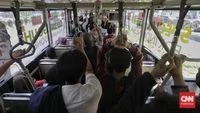
Jakarta, CNN Indonesia — PT Transportasi Jakarta (TransJakarta) has officially announced a series of temporary route diversions affecting two major services, namely Route 1 (Blok M-Kota) and the 51ST Shuttle Hari Bebas Kendaraan Bermotor (HBKB) Ancol. The operational adjustments, scheduled for Sunday, September 13, are necessitated by extensive traffic engineering policies implemented around the Gelora Bung Karno (GBK) sports complex in Senayan, Central Jakarta. These traffic interventions are designed to accommodate a high-profile 10-kilometer running event expected to draw thousands of participants and spectators alike.
The athletic competition is slated to run from 05.00 to 09.30 Western Indonesian Time (WIB), with the main event hub, start, and finish lines centralized at the Plaza Parkir Timur within the sprawling GBK complex. Given the scale of the running competition and its occupation of major thoroughfares surrounding the stadium, local law enforcement and transportation authorities have coordinated to implement strict road closures and traffic filtering systems. Consequently, public transportation operators must dynamically adapt their daily schedules to prevent bottlenecks and ensure the uninterrupted flow of mass transit across the capital.
Operational Adjustments and Official Stance
Ayu Wardhani, Head of the Public Relations and Corporate Social Responsibility (CSR) Department at TransJakarta, emphasized that these operational modifications are critical. She noted that the adjustments are implemented not only to support large-scale community and sporting events hosted in the metropolis but, more importantly, to safeguard the safety, security, and convenience of public transport commuters navigating the city during periods of heavy traffic disruption.
"Operational services will be adjusted to support ongoing public activities while ensuring the safety, security, and comfort of our customers amidst the prevailing traffic engineering measures," Ayu stated in an official release issued on Saturday, September 12, as cited by the state-owned news agency Antara.
TransJakarta management has proactively deployed communication teams across digital platforms to inform regular commuters about the changes. The company urges passengers who typically rely on the affected corridors during the early morning hours to plan their journeys meticulously and utilize digital tools to monitor real-time bus movements.
Chronology and Specific Route Alterations
The execution of the traffic engineering plan requires precise timing for public transport diversions. According to the deployment schedule released by TransJakarta, the modifications for the two targeted routes will be enforced strictly during the peak morning hours of the running event.
For Route 1, connecting Blok M and Kota, diversions will be in effect from 05.00 to 08.00 WIB. During this three-hour window, buses operating on this line will be rerouted via Corridor 9 and Corridor 13. While on these alternative paths, the service will maintain regular stops at designated transit points, including Tegal Mampang, Rawa Barat, Pasar Santa, Kota Bambu, Pancoran, Petojo, Tarakan, and Tomang Raya.
However, commuters must note a temporary suspension of service for several prominent stations along the original path. "This route will temporarily not serve the bus stops from Kebon Sirih up to ASEAN," Ayu elaborated. This means passengers attempting to board or alight within the heart of the business district along Jalan Jenderal Sudirman and Jalan M.H. Thamrin will need to seek alternative boarding points or utilize parallel transit networks.
Concurrently, the 51ST Shuttle HBKB Ancol route will experience modifications during the exact same timeframe, from 05.00 to 08.00 WIB. Buses assigned to this shuttle service will be redirected to serve the IRTI (Monumen Nasional) bus stop instead of their usual corridor paths. Much like Route 1, the Ancol shuttle will bypass all passenger boarding points stretching from Kebon Sirih to Bundaran Senayan while the traffic engineering policy remains active.
Ayu added reassurance for the wider commuting public by confirming that all other TransJakarta services not explicitly mentioned in the diversion notice will operate according to their normal Sunday schedules. Regular routes intersecting with standard Car Free Day (HBKB) protocols will continue to function seamlessly, minimizing widespread disruption to weekend mobility across Jakarta.
Background Context: The Rise of Mass Running Events in Jakarta
Road races and marathon events have experienced a massive surge in popularity across major Indonesian urban centers, particularly in Jakarta. Over the past several years, the post-pandemic recovery phase has witnessed a cultural shift toward health, wellness, and outdoor fitness. Organized running events, ranging from community fun runs to elite international marathons, have become weekly occurrences in the capital.
The Gelora Bung Karno complex, originally constructed for the 1962 Asian Games, stands as the epicenter of Indonesia’s sports culture. Its expansive perimeter roads, ample parking plazas, and proximity to major arterial roads like Jalan Jenderal Sudirman and Jalan Gatot Subroto make it an ideal venue for large-scale athletic gatherings. However, hosting these events invariably creates logistical challenges for urban planners. The convergence of thousands of runners on major city arteries necessitates sweeping road closures, which inevitably conflict with the daily operations of high-capacity surface transit systems such as TransJakarta’s Bus Rapid Transit (BRT) network.
Balancing the promotion of healthy, active lifestyles with the continuous mobility needs of a bustling metropolis requires sophisticated multi-agency coordination. The Jakarta Provincial Government, the Jakarta Transportation Agency (Dishub), the Jakarta Metro Police (Polda Metro Jaya), and state-owned enterprises like TransJakarta routinely collaborate to formulate mitigation strategies. These strategies typically involve phased road openings, advance public notifications, and dynamic route restructuring to absorb the displacement of vehicular traffic.
Broader Implications and Economic Impact
While temporary route diversions and partial corridor closures invariably cause short-term inconvenience for individual commuters, transportation experts generally view these measures as a necessary compromise for a vibrant global city. Mega-events hosted in central urban areas generate significant positive externalities. They stimulate local economic activity by drawing crowds to hospitality, culinary, and retail sectors, while also positioning Jakarta as a premier destination for sports tourism.
Furthermore, the adaptability demonstrated by public transit operators reflects the increasing maturity of Jakarta’s integrated transportation ecosystem. By implementing structured contingency plans—such as diverting buses through Corridors 9 and 13—TransJakarta minimizes systemic paralysis, ensuring that public transit remains a viable option even when primary thoroughfares are temporarily restricted.
Nevertheless, these recurrent closures underscore the ongoing challenge of spatial competition in Jakarta. As the city continues to expand its transit-oriented development (TOD) framework, urban planners face the complex task of harmonizing recreational spaces with high-density commuter corridors. The successful execution of transit adjustments during events like the GBK 10K relies heavily on public compliance and the seamless dissemination of operational updates.
Commuter Advisory and Recommendations
In light of the impending adjustments, TransJakarta has issued a formal advisory to all regular passengers. Commuters whose Sunday routines intersect with the affected corridors—particularly those traveling through central and southern Jakarta between 05.00 and 08.00 WIB—are strongly advised to adjust their travel timelines.
Travelers should proactively check service updates, alternative routes, and real-time bus tracking information through the official digital application, TJ: TransJakarta, which can be downloaded via major smartphone platforms. Utilizing these digital tools allows passengers to navigate around suspended stops, identify alternative transit corridors, and minimize potential delays.
As Jakarta continues to host dynamic public events, proactive communication and flexible urban mobility frameworks will remain critical in maintaining the delicate balance between community recreation and the daily commute of millions of residents.