Tragic Fate in the Java Sea: Balinese Brothers Among the Missing Following the Capsize of KMP Virgo Transport 8

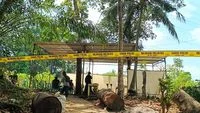
The serene village of Capunggung in Bangli Regency, Bali, has been cast into a state of profound anxiety and grief following confirmation that two local brothers are among the missing individuals in the catastrophic sinking of the Motor Passenger Vessel (KMP) Virgo Transport 8. The maritime disaster, which occurred in the treacherous waters of the Java Sea, has reignited critical conversations regarding maritime safety standards, the vulnerabilities of inter-island logistics, and the rigorous demands placed on commercial truck drivers operating across the sprawling Indonesian archipelago.
Local authorities and family members have identified the two missing siblings as I Kadek Sayoga Putra and I Putu Pramana Yoga, both working as professional truck drivers. Hailing from Bangbang Village in the Tembuku District, the brothers had embarked on a routine commercial journey that tragically intercepted one of the worst maritime incidents reported in the region this season. As rescue operations unfold and official investigations commence, families of the victims find themselves suspended in a painful limbo, grappling with inadequate communication channels and the agonizing uncertainty of search and rescue updates.
The Chronology of a Fateful Voyage
To understand the full scope of the tragedy, investigators have reconstructed the timeline leading up to the disaster. The journey of the two brothers began on Thursday, September 10. Operating a heavy-duty transport truck, I Kadek Sayoga Putra and I Putu Pramana Yoga departed from Bali, carrying a specialized cargo consisting of religious ceremonial items, ritual goods, and cultural artifacts destined for the Hindu diaspora and local communities residing in Kalimantan.
After transiting through Bali, the brothers reached the major industrial port of Surabaya in East Java, where they loaded their vehicle onto KMP Virgo Transport 8. The roll-on/roll-off (ro-ro) ferry was scheduled to navigate the Java Sea, connecting major transit hubs to the outer islands. However, the voyage took a catastrophic turn in the early hours of Sunday, September 13.
According to preliminary incident reports gathered by maritime authorities, KMP Virgo Transport 8 encountered severe distress and ultimately capsized in the Java Sea at approximately 01:30 Western Indonesia Time (WIB). The suddenness of the maritime accident left little time for organized emergency evacuations, plunging crew members, passengers, and cargo operators into the dark, turbulent waters.
In the immediate aftermath of the disaster, families back in Bali attempted to reach the brothers via cellular communication. All attempts to establish contact proved futile. Capunggung village head I Ketut Adnyana confirmed that communication lines with the two drivers went completely dead shortly after the reported time of the accident.
Family Agony and the Waiting Game
Back in their quiet rural hometown in Bangli, the parents and relatives of I Kadek Sayoga Putra and I Putu Pramana Yoga are enduring an excruciating wait for official news. The information vacuum has exacerbated the emotional toll on the family, who have received little to no direct reassurance or verified updates from emergency response coordinators stationed at the site of the disaster.
According to community leaders, local authorities and disaster response teams have reached out to the grieving family to collect vital personal documentation, including national identity cards (KTP) and family registries, to facilitate formal victim identification and passenger manifesting processes. Yet, despite the submission of these administrative requirements, days have passed without an official, definitive notification regarding the fate of the two brothers.
The local village administration has acted as a bridge between the distressed family and external agencies, advocating for transparency and prompt information dissemination. Community representatives have voiced the collective sentiment of the villagers, emphasizing that the primary hope remains anchored in miraculous survival, coupled with an urgent demand for clarity from the government agencies overseeing the search and rescue (SAR) operations.
The Broader Context of Maritime Logistics and Safety in Indonesia
The sinking of KMP Virgo Transport 8 highlights the persistent vulnerabilities inherent in Indonesia’s extensive ferry network, which serves as the economic lifeblood connecting thousands of inhabited islands. As the world’s largest archipelago, Indonesia relies heavily on ro-ro ferries and cargo vessels to transport not only passengers but also the vast majority of consumer goods, industrial supplies, and commercial vehicles.
Maritime safety experts point out that the Java Sea, while a vital commercial corridor, can present unpredictable weather patterns, sudden squalls, and hazardous sea states, particularly during seasonal transitions. Commercial truck drivers frequently undertake these grueling inter-island crossings, spending days on the road and at sea to ensure that supply chains remain unbroken. The transportation of goods from Java to Kalimantan and other outer islands forms the backbone of domestic trade, yet the personnel facilitating this commerce often operate under high-stress conditions with limited safety guarantees once onboard maritime vessels.
Furthermore, the incident raises critical questions regarding passenger and cargo manifest accuracy on inter-island ferries. In many developing maritime sectors, discrepancies in passenger registration—particularly involving truck drivers who may remain with their vehicles on the vehicle deck—frequently complicate rescue and identification operations following a disaster. Authorities often face immense challenges in determining the exact number of souls on board, leading to delayed acknowledgments of missing persons and prolonged suffering for families awaiting news.
Government Response and Ongoing Rescue Operations
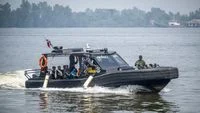
In the wake of the KMP Virgo Transport 8 disaster, national search and rescue agencies, alongside naval forces and marine police units, have mobilized extensive resources to scour the Java Sea. Operations involve deployment of search vessels, aerial reconnaissance, and coordination with commercial shipping traffic traversing the disaster zone to spot survivors, wreckage, or drifting cargo.
However, the vast expanse of the search area, compounded by shifting ocean currents and adverse meteorological conditions, presents formidable obstacles to search and rescue teams. Coordination between provincial authorities in East Java, where the voyage originated, and regional offices in Bali and Kalimantan is crucial to cross-reference passenger data, truck manifests, and survivor lists.
Despite these concerted efforts, the lack of immediate breakthroughs has intensified public scrutiny regarding communication protocols between crisis management centers and the families of victims. Stakeholders across the transportation sector are increasingly calling for streamlined communication frameworks that ensure families are notified promptly and accurately, mitigating the psychological trauma caused by prolonged uncertainty.
Economic and Social Implications for Local Communities
Beyond the immediate human tragedy, the disappearance of the two brothers underscores the deep economic ties and cultural dependencies linking Bali to outer island communities. The cargo they carried—religious paraphernalia and ceremonial goods—reflects a specialized niche market driven by the spiritual needs of Balinese migrants and transmigrants residing in provinces such as Kalimantan.
The loss of cargo and, more importantly, the potential loss of skilled breadwinners delivers a heavy economic blow to extended families in rural regencies like Bangli, where livelihoods often depend on micro-enterprises, agriculture, and independent transportation services. The social safety net for informal sector workers, including long-distance truck drivers, often remains inadequate, leaving families vulnerable in the face of catastrophic accidents.
Path Forward and Demands for Rigorous Oversight
As search and rescue missions enter critical phases, civil society organizations and transport unions are reiterating demands for stringent enforcement of maritime safety regulations across all domestic ferry routes. Key areas requiring urgent reform include mandatory adherence to maximum load capacities, rigorous pre-departure vessel inspections, mandatory safety briefings for all vehicle operators remaining on transport decks, and real-time tracking systems for commercial cargo carriers.
For the residents of Capunggung village, systemic policy debates offer little immediate comfort. Their focus remains singularly fixed on the horizon, praying for the safe return of I Kadek Sayoga Putra and I Putu Pramana Yoga, or at the very least, definitive closure that allows a grieving family to begin the healing process. Until official search coordinators release concrete findings from the Java Sea, the community remains united in anxious solidarity, bearing witness to the high human cost embedded within Indonesia’s sprawling maritime supply chains.