Sari Yuliati Ascends to Golkar Faction Secretary in DPR RI, Signaling Strategic Leadership Shift and Bolstering Party Influence

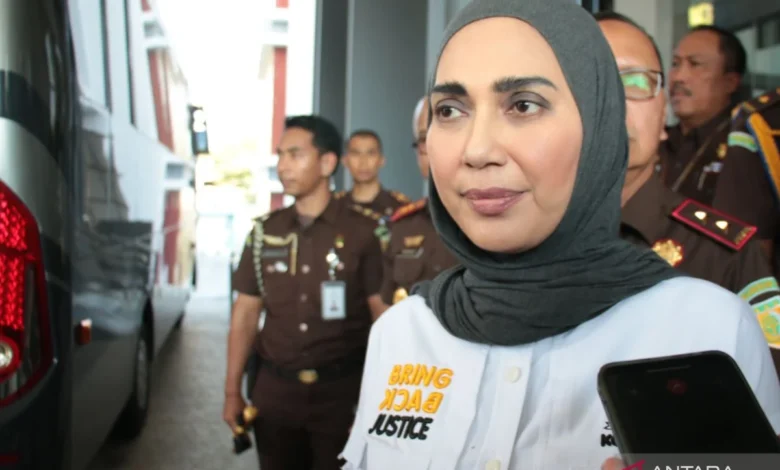
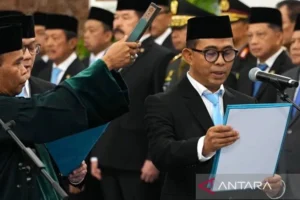
Jakarta, Indonesia – The political landscape within the Dewan Perwakilan Rakyat (DPR) RI, Indonesia’s national parliament, has seen a significant shift with the appointment of Sari Yuliati as the new Secretary of the Golkar Party Faction. This move, announced recently, places a prominent and experienced legislator in a pivotal leadership role, underscoring Golkar’s strategic maneuvering within the national legislative body. Sari Yuliati steps into this crucial position, replacing Mukhtarudin, who was recently sworn in as the Minister of Protection for Indonesian Migrant Workers (P2MI) in September, creating a vacancy that Golkar has promptly filled with a seasoned political figure.
The role of a faction secretary within the DPR RI is far from merely administrative; it is a central conduit for policy coordination, internal communication, and strategic parliamentary action for a political party. The Secretary works closely with the Faction Chairman to ensure that the party’s agenda is effectively articulated, debated, and advanced through legislative processes. This includes managing the faction’s legislative priorities, coordinating members’ positions on bills, and serving as a key liaison between the party leadership outside parliament and its representatives within. For a major party like Golkar, a perennial force in Indonesian politics, the Secretary of Faction plays a critical role in maintaining party discipline, shaping public discourse, and consolidating its influence across various commissions and parliamentary bodies. Sari Yuliati’s appointment to this high-profile post signals a profound trust from the party leadership in her capabilities and a strategic decision to place a dynamic and well-regarded figure at the heart of its parliamentary operations.
A Career Defined by Diverse Expertise and Political Acumen
Sari Yuliati is by no means a newcomer to the national political stage, having cultivated a robust career marked by consistent ascension through various party and parliamentary ranks. Before her latest elevation, she held the demanding position of Treasurer of the Golkar Party Faction in the DPR RI, a role that required meticulous financial oversight and strategic resource allocation for the party’s parliamentary activities. Concurrently, she served as the Vice Chair of Commission III, a highly influential commission responsible for law enforcement, human rights, and security—a domain where her expertise in both engineering and law has proven invaluable.
Her influence extends beyond the legislative halls of Senayan. At the end of last year, the Chairman of the Golkar Party, Bahlil Lahadalia, announced Sari Yuliati’s appointment as the General Treasurer of the Central Executive Board (DPP) of the Golkar Party for the 2024-2029 period. This position within the party’s central leadership is immensely significant, as the General Treasurer is responsible for the overall financial management and resource mobilization of the entire party, playing a critical role in its operational capacity and electoral campaigns. Holding both a key parliamentary leadership role and a top party financial position simultaneously speaks volumes about the trust and strategic importance placed upon her by the Golkar Party.
Sari Yuliati’s journey in politics began in 2004 when she joined the Angkatan Muda Partai Golkar (AMPG), the party’s youth wing, marking the initial steps of what would become an illustrious career. Her dedication and capabilities quickly became evident, leading her to occupy several crucial positions within the party structure before entering the national legislature. These roles included Treasurer of the Angkatan Muda Partai Golkar, Treasurer of the Lembaga Pengelolaan Kaderisasi Partai Golkar (Cadre Management Institute), Deputy Secretary-General of the DPP Golkar Party, and Deputy General Treasurer of the DPP Golkar Party. Each of these positions provided her with a comprehensive understanding of party mechanics, cadre development, and national political strategy, preparing her for the higher echelons of leadership.
Her electoral success further cements her standing. Sari Yuliati was first elected as a member of the DPR RI for the 2019-2024 period, representing the electoral district of Nusa Tenggara Barat (NTB) II. Her performance and connection with her constituents were strong enough to secure her re-election for the upcoming 2024-2029 term, a testament to her effective representation and popular support. This continuity in legislative service allows her to build on past experiences and pursue long-term policy objectives, reinforcing Golkar’s presence in a key regional constituency.
Academic Prowess: Bridging Engineering and Law
One of the most distinguishing aspects of Sari Yuliati’s profile is her remarkable academic background, which uniquely blends technical expertise with legal acumen. Born in Jakarta on June 2, 1976, she completed her primary and secondary education in the capital city. She then embarked on a rigorous academic path, earning a Bachelor’s degree in Civil Engineering from Trisakti University in 2000. Her pursuit of knowledge continued in the same field, leading her to complete a Master’s degree in Civil Engineering from the University of Indonesia in 2003, one of the nation’s most prestigious institutions.
However, her intellectual curiosity did not stop at engineering. Recognizing the intricate relationship between infrastructure development and legal frameworks, particularly in a developing nation like Indonesia, Sari Yuliati embarked on a Bachelor’s degree in Law at Universitas Kristen Indonesia (UKI) in 2020, with her graduation anticipated in 2025. This parallel pursuit of legal studies while actively serving as a legislator underscores her commitment to a holistic understanding of policy-making. Furthermore, she is currently pursuing a Doctoral degree in Law at Universitas Padjajaran (Unpad), one of Indonesia’s leading law faculties.
This multi-disciplinary educational background provides Sari Yuliati with a distinct advantage in her legislative roles. Her engineering background equips her with a practical, problem-solving mindset and a deep understanding of infrastructure, urban planning, and resource management—areas frequently intersecting with public policy and legislation. Her ongoing legal studies, meanwhile, provide her with a robust framework for understanding the intricacies of jurisprudence, constitutional law, and regulatory environments, which are indispensable for a legislator, especially one serving on Commission III. This rare combination allows her to approach complex policy challenges from both a technical implementation perspective and a legal compliance and fairness standpoint, making her a formidable and well-rounded contributor to national policy discussions.
A Stalwart in Commission III: Focus on Law and Justice
Sari Yuliati’s consistent presence and leadership within Commission III of the DPR RI highlight her dedication to the pillars of law, human rights, and security. During the 2019-2024 period, she served as a member of this critical commission. Her capabilities and contributions were recognized, leading to her appointment as Vice Chair of Commission III for the 2024-2029 term. This leadership role is particularly noteworthy as she stands as the sole woman among four male legislators at the helm of this crucial parliamentary body. Her unique position not only speaks to her individual merit but also subtly underscores the ongoing efforts and challenges in achieving gender parity in high-level political leadership in Indonesia.
Commission III’s mandate is extensive and profoundly impactful, covering the Ministry of Law and Human Rights, the Attorney General’s Office, the National Police, the Corruption Eradication Commission (KPK), and the Supreme Court, among other vital institutions. Legislators in this commission are tasked with overseeing the enforcement of laws, ensuring human rights protection, deliberating on judicial appointments, and scrutinizing the performance of law enforcement agencies. Sari Yuliati’s deep engagement in this commission suggests a keen interest in judicial reform, combating corruption, upholding civil liberties, and ensuring accountability within the security apparatus. Her blend of technical and legal knowledge likely enables her to critically assess proposed legislation and oversight reports, particularly those related to infrastructure projects, environmental regulations, or technological advancements, all of which often have significant legal and human rights implications. Her continued presence and leadership are expected to bring stability and a nuanced perspective to the commission’s vital work.
Roots in Nusa Tenggara Barat II: Representing the Archipelago
Sari Yuliati’s connection to her electoral district, Nusa Tenggara Barat (NTB) II, is a fundamental aspect of her political identity. Representing a diverse region composed of islands with unique socio-economic and environmental characteristics, she has long been an advocate for her constituents. Prior to her national legislative roles, her commitment to regional development and party mobilization was evident in her appointments as the Head of the Regional Coordinator for NTB Province within the DPP Golkar Party and as the Head of Golkar’s Election Winning Team for the Bali, NTB, and NTT regions. These roles demonstrate her profound understanding of regional political dynamics and her ability to build consensus and galvanize support across disparate geographical areas.
The NTB II constituency, like many in Indonesia, faces a unique set of challenges and opportunities, ranging from tourism development and agricultural productivity to disaster preparedness and access to justice. As a representative from this region, Sari Yuliati is expected to champion local interests within the national parliament, ensuring that policies formulated in Jakarta are responsive to the specific needs of her constituents. Her previous roles in regional coordination would have provided her with invaluable insights into these local issues, which she can now bring to bear in her capacity as Secretary of the Golkar Faction and Vice Chair of Commission III. Her focus on law and justice, for instance, would be highly relevant to addressing land disputes, migrant worker issues (especially given her predecessor’s new portfolio), and ensuring equitable legal access for the people of NTB.
The Golkar Leadership’s Perspective: A Vote of Confidence
The appointment of Sari Yuliati to such a critical leadership post within the Golkar Faction and her concurrent role as General Treasurer of the DPP is a clear indication of the party’s confidence in her leadership abilities and strategic importance. While no direct statements from Golkar’s Chairman, Bahlil Lahadalia, regarding this specific appointment were provided in the source material, it is logically inferable that such a significant decision would be rooted in a strong endorsement from the party’s top brass.
Party leaders would likely view Sari Yuliati as an embodiment of Golkar’s commitment to cultivating capable and diverse leadership. Her extensive experience, both within the party apparatus and in parliament, her impressive academic pursuits, and her proven electoral success make her an ideal candidate to steer the faction’s operations. Her appointment also aligns with broader political trends where parties seek to elevate individuals who can bridge generational gaps and bring fresh perspectives while maintaining institutional continuity. Furthermore, placing a woman in such a high-ranking position within the faction’s leadership and the party’s central finance committee could be seen as a deliberate effort by Golkar to enhance its image as a progressive party that values gender representation and meritocracy. Her consistent performance and unwavering loyalty to the party’s objectives would have undoubtedly played a significant role in her selection, signaling to both internal members and the broader public that Golkar is investing in strong, multifaceted leaders for its future.
Political Lineage and Enduring Influence
Beyond her individual accomplishments, Sari Yuliati’s personal life also reveals connections to a prominent political family, underscoring the interwoven nature of politics and lineage in Indonesia. She is married to Arie Wiryawan, who is the fourth son of Harun Al Rasyid. Harun Al Rasyid himself was a distinguished public servant and political figure, having served as the Governor of NTB from 1998 to 2003. Prior to that, he held the position of Administrative Mayor of South Jakarta from 1989 to 1993 and later served as a member of the DPR-RI from 2009 to 2014.
This familial connection to a seasoned politician like Harun Al Rasyid, who held significant executive and legislative roles at both regional and national levels, provides Sari Yuliati with an inherent understanding of the intricacies of governance and public service. While her career trajectory is undeniably built on her own merits and hard work, such connections often provide invaluable mentorship, a deep network, and a historical perspective on Indonesian political dynamics. It also highlights how certain families maintain a presence in public service across generations, contributing to the continuity of political discourse and leadership within the nation. This background adds another layer of depth to Sari Yuliati’s profile, suggesting a profound immersion in the political culture and an inherited appreciation for public responsibility.
Broader Implications for Golkar and Indonesian Politics
Sari Yuliati’s ascent to the Secretary of the Golkar Faction in the DPR RI carries several significant implications for both the party and the broader Indonesian political landscape. For Golkar, her appointment reinforces the party’s commitment to consolidating its influence within the legislative branch. By placing a highly capable and experienced individual in a key coordination role, Golkar ensures that its legislative agenda is pursued with vigor and strategic precision. Her dual role as General Treasurer of the DPP further integrates the party’s parliamentary and organizational strategies, potentially leading to more cohesive and effective political action. This move could also signal a generational transition within Golkar, showcasing younger, yet experienced, leaders taking on more prominent roles.
On a broader scale, Sari Yuliati serves as a compelling role model for women in Indonesian politics. Her position as the sole female leader in Commission III and now a key faction secretary demonstrates that women can reach the highest echelons of political power through dedication, intellectual rigor, and consistent performance. This could inspire greater female participation and leadership in a political system that, while making strides, still faces challenges in achieving full gender equity.
Furthermore, her unique academic background, combining engineering and law, could influence the quality of legislative output, particularly in areas requiring both technical understanding and legal foresight. As Indonesia continues its development, facing complex issues related to infrastructure, environmental sustainability, and technological governance, legislators with such interdisciplinary expertise will be increasingly crucial. Her focus within Commission III suggests a strong commitment to strengthening the rule of law, which is fundamental for good governance and investor confidence. The strategic appointment of Sari Yuliati is not merely an internal party reshuffle but a calculated move by Golkar to strengthen its parliamentary arm, nurture capable leaders, and project an image of dynamism and forward-thinking leadership in the evolving tapestry of Indonesian politics.
The political journey of Sari Yuliati, marked by continuous learning, dedicated service, and strategic appointments, positions her as a formidable force in Indonesia’s legislative future. From her early days in the Golkar youth wing to her current pivotal roles, her trajectory embodies a blend of intellectual curiosity and practical political acumen. As Secretary of the Golkar Faction, she is poised to play an instrumental role in shaping the party’s parliamentary strategy and contributing significantly to national policy-making, particularly in the critical domains of law, human rights, and security. Her multifaceted profile and strategic placement underscore Golkar’s intent to maintain its influential standing and adapt to the complex demands of modern Indonesian governance.