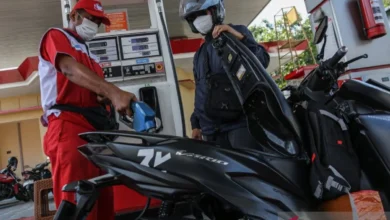
Ministry of Transportation Reveals Why Ferry Operators Hesitate to Transport Electric Vehicles Across Indonesian Waters

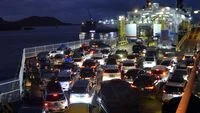
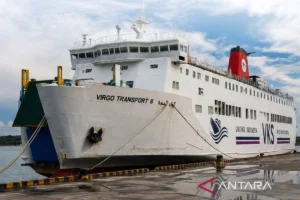
Jakarta, CNN Indonesia — The rapid surge in adoption of electric vehicles (EVs) across Indonesia has introduced novel logistical challenges, particularly concerning inter-island maritime transportation. Recently, the Indonesian Ministry of Transportation (Kemenhub) publicly addressed a growing number of complaints from vehicle owners who reported being refused passage by commercial ferry and ship operators when attempting to transport their battery-powered automobiles. According to high-ranking ministry officials, the reluctance among maritime transport providers does not stem from an outright prohibition against shipping EVs, but rather from widespread non-compliance with stringent technical safety requirements established by the government to mitigate fire risks associated with lithium-ion batteries.
The core of the issue centers on the rigorous safety protocols outlined in Circular Letter (Surat Edaran/SE) of the Director-General of Sea Transportation Number SE-DJPL 12 of 2024. Issued on April 4, 2024, this regulatory framework specifically governs the handling, placement, and emergency response readiness of Indonesian-flagged vessels tasked with carrying electric vehicles. As the electrification of Indonesia’s automotive sector accelerates—driven by government subsidies, expanding charging infrastructure, and increasing consumer demand—the intersection of automotive technology and maritime safety regulations has become a critical focal point for regulatory bodies and transport operators alike.
Understanding the Regulatory Framework and Safety Mandates
The implementation of Surat Edaran Nomor SE-DJPL 12 of 2024 was designed to bridge the gap between traditional maritime safety standards and the unique hazards posed by high-capacity lithium-ion battery packs. Unlike internal combustion engine (ICE) vehicles, electric vehicles present distinct thermal runaway risks. A battery fire burns at significantly higher temperatures, is notoriously difficult to extinguish using conventional marine firefighting equipment, and possesses the capability to reignite long after initial suppression.
To counteract these hazards, the Ministry of Transportation’s directive establishes precise operational parameters for any vessel accommodating electric cars. Crucially, the regulation mandates that electric vehicles must be parked exclusively in designated open deck areas. They are strictly prohibited from being stowed in enclosed lower car decks, where ventilation is limited and smoke or toxic gas accumulation could rapidly endanger the entire vessel.
Furthermore, the circular stipulates that any EV slated for maritime transport must have its battery state-of-charge (SoC) limited to a maximum of 50 percent prior to boarding. This threshold significantly reduces the energetic potential stored within the cells, thereby lowering the probability of spontaneous thermal runaway during transit. Additionally, shipping operators are required to equip their vessels with specialized mitigation facilities and extinguishing agents capable of managing battery-specific fires effectively.
Official Statements and the Ministry’s Response to Field Rejections
Samsuddin, the Director of Fleet and Seaworthiness at the Ministry of Transportation, confirmed that the ministry has received continuous reports from consumers regarding refusals at various ports. He emphasized that the government is actively working to clarify misunderstandings surrounding the policy through renewed socialization efforts directed at ship operators and port authorities.
"Indeed, we are still receiving information that several operators remain reluctant to transport electric vehicles," Samsuddin stated, addressing the public concerns. In response to these service user complaints, the Directorate-General of Sea Transportation has ramped up efforts to re-educate operators on the precise terms of the April 2024 circular, ensuring that technical criteria are fully comprehended and correctly implemented to uphold navigational safety standards.
"Therefore, we re-issued this circular following complaints from service users regarding several operators who were unwilling to carry them," Samsuddin added. He reiterated unequivocally that no national law or ministerial decree bans electric cars from boarding domestic ferries. Rather, the rejections observed in the field are purely the result of operators failing to meet, or lacking the capability to fulfill, the mandated safety protocols required for safe transit.
"Perhaps in this case, certain conditions outlined in the circular letter were not fully met. Consequently, the operators were unwilling to transport them," Samsuddin explained, underscoring that maritime safety remains an absolute priority that cannot be compromised for commercial convenience.
Chronology of Maritime Safety Adjustments for Electric Vehicles
The formulation of the current policy did not occur in a vacuum; it represents the culmination of escalating industry discussions as electric vehicle ownership expanded across the Indonesian archipelago. The chronological progression of this regulatory landscape highlights the government’s step-by-step approach to balancing green mobility with maritime security:
- Early Adoption Phase (2021–2022): As foreign and domestic automotive manufacturers introduced battery-electric passenger cars to the Indonesian market, initial shipment volumes were low. Most vehicles were transported via specialized car-carrier trucks or dedicated logistics firms, minimizing direct interaction with standard public passenger ferries.
- Market Expansion (2023): With the introduction of localized manufacturing facilities, tax incentives, and a broader array of affordable EV models, inter-island travel involving electric private vehicles surged. Ferry operators began noting the lack of standardized guidelines for handling lithium-ion battery hazards onboard roll-on/roll-off (Ro-Ro) vessels.
- Regulatory Intervention (April 4, 2024): Recognizing the latent safety hazards and the absence of unified operational guidelines, the Director-General of Sea Transportation officially promulgated Circular Letter Number SE-DJPL 12 of 2024. This document established the foundational rules regarding open-deck placement, 50% battery capacity limits, and emergency gear.
- Implementation and Field Friction (Mid-to-Late 2024): As the circular took effect, enforcement variations across different ports led to confusion. While some major ferry operators invested in updated training and equipment, others chose a conservative risk-management approach, outright refusing EVs due to perceived compliance burdens or lack of specialized fire suppression systems.
- Continuous Socialization and Future Legal Upgrades (Late 2024–Present): Prompted by ongoing consumer grievances, the Ministry of Transportation intensified outreach campaigns while simultaneously evaluating the transition of the current circular letter into higher-tier legal instruments.
Public Misconceptions and Operational Realities
A major challenge highlighted by the Ministry of Transportation is bridging the information gap among the general public. Many EV owners interpret a refusal by a ferry crew as arbitrary discrimination or a bureaucratic bottleneck, rather than a necessary precautionary measure based on technical compliance.
"This also needs to be understood by the public: it is not a matter of arbitrary refusal, meaning they simply refuse to carry the vehicle. It is likely that the specific safety conditions outlined in the circular letter were unfulfilled, thereby precluding transport for safety reasons," Samsuddin stressed.
For instance, checking a vehicle’s battery state-of-charge before boarding requires portable diagnostic tools or reliance on the driver’s dashboard readouts—processes that may not be systematically integrated into standard ticketing and boarding checkpoints across all regional ports. Furthermore, older Ro-Ro ferries operating in remote island routes may lack open-deck space configured to safely isolate vehicles, or they may lack the specialized thermal blankets and water-mist systems required for lithium-ion fire suppression. Consequently, prudent operators decline service rather than risk catastrophic maritime incidents.
Evolution of Legal Frameworks and International Standards
Looking toward the future, the rapid proliferation of electrification in transportation is prompting Indonesian regulators to contemplate more permanent and legally binding instruments. While a circular letter serves as an effective, agile administrative tool for immediate guidance, its legal enforcement power is subordinate to ministerial decrees and statutory laws.
To ensure long-term stability and compliance across all commercial shipping lines, the Ministry of Transportation is actively exploring upgrades to the current regulatory hierarchy. "The subsequent stage will involve issuing a Decree of the Director-General (SK Dirjen), followed potentially by a full Ministerial Regulation (Peraturan Menteri)," Samsuddin revealed regarding the projected timeline for stronger legal codification.
However, the government is deliberately avoiding an aggressive, fixed timeline for these subsequent regulatory upgrades. This measured pacing is due to the evolving nature of global maritime standards. Indonesian authorities are closely monitoring ongoing technical guidelines and policy drafts being developed by the International Maritime Organization (IMO). Because the behavior of large-format lithium-ion batteries in marine environments remains a subject of active international research, domestic policymakers prefer to align national statutes with evolving global consensus.
"So far, it still takes the form of general guidance," Samsuddin concluded, noting that international bodies are similarly navigating the complex trade-offs between maritime decarbonization and onboard safety.
Broader Economic and Logistical Implications
The tension between EV deployment and maritime safety carries significant implications for Indonesia’s broader economic landscape. As an archipelago nation heavily reliant on sea transport for commerce, tourism, and daily mobility, seamless connectivity between islands—such as Java and Sumatra, or Bali and Lombok—is vital. Any friction in vehicle transportation risks dampening consumer enthusiasm for electric vehicles, particularly among buyers who frequently travel inter-island.
For automotive manufacturers and dealers, the current landscape underscores the necessity of educating consumers on pre-trip preparations, such as monitoring battery levels before arriving at ferry terminals. Meanwhile, for maritime operators, the situation highlights an urgent need for capital investment in fleet upgrades, specialized firefighting gear, and crew training programs tailored to modern energy storage systems.
Ultimately, the Ministry of Transportation’s stance reflects a delicate balancing act. While the Indonesian government remains fully committed to its national carbon-neutrality targets and the electrification of the transport sector, passenger safety on public waterways remains an uncompromised baseline. Until operators fully adapt to the technical mandates of SE-DJPL 12/2024 and international maritime standards mature, friction at ferry ports will likely persist as a growing pain of Indonesia’s green energy transition.
Related posts: