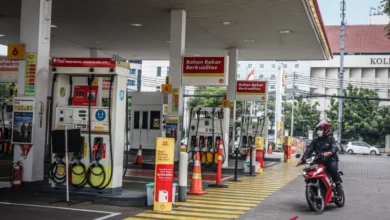
PT Pertamina Patra Niaga Projects Non-Subsidized Fuel Prices to Approach Rp20,000 Amid Escalating Global Energy Crisis


The retail petroleum landscape in Indonesia faces an unprecedented financial strain as escalating geopolitical tensions in the Middle East continue to drive global crude oil benchmarks to multi-month highs. PT Pertamina Patra Niaga, the commercial sub-holding of state-owned energy giant PT Pertamina (Persero), has projected that non-subsidized fuel prices—including popular offerings such as Pertamax and Pertamina Dex—could surge to between Rp18,000 and Rp20,000 per liter. This sobering forecast is driven by an unyielding upward trend in international oil markets, compounded by supply chain vulnerabilities that threaten to destabilize domestic energy affordability and macroeconomic stability.
The projection was officially articulated by Eko Ricky Susanto, Director of Retail Marketing at PT Pertamina Patra Niaga, during a media gathering held in Bantul Regency, Yogyakarta. According to Susanto, the persistent absence of downward corrections in global crude oil valuations leaves domestic retailers with very limited fiscal room to absorb the mounting cost of imported refined products. Consequently, consumers of premium, non-subsidized automotive fuels must prepare for the possibility of significant price adjustments in the near future if current international market trajectories persist.
Anatomy of a Global Energy Shock: The Geopolitical Catalyst
The primary driver behind this prospective domestic price hike is not localized economic policy, but rather a severe systemic shock originating from the Middle East. While previous energy supply disruptions were largely localized or manageable—such as the regional market realignments witnessed during the early stages of the Russia-Ukraine conflict—current geopolitical friction points are proving to be far more profound and disruptive to global energy architecture.
At the center of this crisis is the heightened military escalation in the Middle East, which has directly threatened critical maritime chokepoints, most notably the Strait of Hormuz. Serving as the transit conduit for a substantial portion of the world’s petroleum supply, any military disruption, real or perceived blockade, or security threat in this narrow waterway immediately registers across global energy exchanges. Susanto emphasized that the current crisis presents a significantly heavier challenge than past geopolitical flashpoints due to its direct assault on the physical availability and pricing stability of global energy commodities.
The ripple effects of the disruption in the Strait of Hormuz have triggered a widespread domino effect. Refiners, logistics operators, and international traders are currently pricing in extreme risk premiums, which ultimately translate into higher landed costs for crude oil imported by non-oil-producing emerging economies like Indonesia. For an archipelagic nation that relies on a steady stream of imported crude and refined fuels to meet domestic demand, these external shocks are transmitted directly to the domestic retail pricing structure.
International Market Movements: Brent and WTI Surge Past Thresholds
The projections outlined by Pertamina Patra Niaga are firmly anchored in recent movements across major international commodities exchanges. In global markets, crude oil benchmarks have demonstrated aggressive upward momentum, shattering psychological barriers that had held relatively firm for months.
According to market reports from major financial news agencies, international benchmark Brent crude breached the significant threshold of US$100 per barrel, marking its highest weekly close in nearly four months. Specifically, Brent futures climbed by US$1.05, or approximately 1 percent, to settle at US$108.68 per barrel. Concurrently, US benchmark West Texas Intermediate (WTI) crude experienced similar bullish pressure, advancing by 95 cents, or roughly 1 percent, to close at US$103.45 per barrel.
This end-of-week performance followed an even more dramatic mid-week surge. Just one day prior, both Brent and WTI crude oil contracts skyrocketed by more than 6 percent in a single trading session, driven by intensifying concerns over supply security in the Middle East. On a cumulative weekly basis, both major crude benchmarks posted staggering gains approaching 13 percent. Financial market analysts noted that this represented the steepest weekly percentage increase for global crude prices since mid-July, illustrating the extreme volatility and panic currently characterizing the global energy trading ecosystem.
The Historical Context: Yearning for Pre-Crisis Valuations
To contextualize the severity of the current pricing environment, energy sector stakeholders frequently look back at historical valuation bands that provided macroeconomic stability for importing nations. Prior to the accumulation of successive geopolitical crises, global crude oil traded within a much more sustainable band of US$60 to US$70 per barrel.
During the media gathering in Yogyakarta, Susanto expressed a cautious hope that international market forces might eventually correct themselves and return crude prices to these pre-crisis historical averages. However, he acknowledged that such a stabilization remains dependent on rapid de-escalation in the Middle East and the restoration of normal shipping lanes through key petroleum corridors.
"If we hope for prices to drop back to US$70 per barrel or US$60 per barrel—levels seen before the onset of the geopolitical crisis—we can only pray that this might happen in the near future," Susanto stated. He cautioned that without a rapid normalization of global supply chains and commodity pricing, the current structural pressures will continue to force aggressive pricing adjustments across downstream retail networks.
Domestic Implications and Economic Pressures
The prospect of non-subsidized fuel prices touching the Rp20,000 per liter threshold carries profound implications for the broader Indonesian economy. While subsidized fuels—such as Pertalite and Solar—remain protected by state budget interventions and government pricing policies, a significant portion of the middle class, commercial logistics fleets, and private vehicle owners rely heavily on non-subsidized variants like Pertamax, Pertamax Turbo, Pertamina Dex, and Dexlite.
When non-subsidized fuel prices experience sharp, sustained upward movements, several secondary economic effects typically manifest:
- Logistics and Transportation Cost Inflation: Commercial transport operators utilize various grades of diesel and gasoline. Higher fuel expenditures inevitably lead to increased freight and shipping costs, which are subsequently passed on to consumers in the form of higher prices for retail goods, foodstuffs, and manufactured products.
- Consumer Spending Shifts: Middle-income households facing higher fuel expenditures often curtail discretionary spending to accommodate rising transportation budgets, potentially dampening domestic retail growth and slowing down broader economic velocity.
- Fiscal Pressure on State-Owned Enterprises: While Pertamina Patra Niaga operates on commercial principles for non-subsidized products, prolonged deviations between international acquisition costs and domestic retail caps can create severe cash flow mismatches, requiring careful inventory management and hedging strategies.
Evaluating Policy Responses and Future Outlook
As the global energy landscape remains tethered to unpredictable geopolitical developments, energy authorities and market analysts continue to monitor several critical variables that could dictate the trajectory of fuel prices in Indonesia over the coming months.
Key indicators to watch include:
- Diplomatic and military developments in the Middle East, particularly concerning freedom of navigation in the Strait of Hormuz.
- Production adjustments and quota decisions by the Organization of the Petroleum Exporting Countries and its allies (OPEC+), which play a decisive role in balancing global supply deficits.
- Foreign exchange fluctuations, specifically the strength of the Indonesian Rupiah against the US Dollar, as energy commodities are universally priced in greenbacks, meaning that local currency depreciation amplifies the cost of imported crude.
For consumers and policymakers alike, the current scenario serves as a stark reminder of Indonesia’s structural vulnerability to external energy price shocks. While state-owned enterprises attempt to cushion the blow through phased adjustments and commercial balancing, the ultimate relief for Indonesian motorists and businesses will depend on the restoration of peace, stability, and predictable supply flows in the world’s most critical energy arteries. Until such stability is achieved, the Rp20,000 per liter projection stands as a sobering indicator of the high cost of global energy instability.