Understanding the Role and Mandate of the Ombudsman of the Republic of Indonesia in Safeguarding Public Services

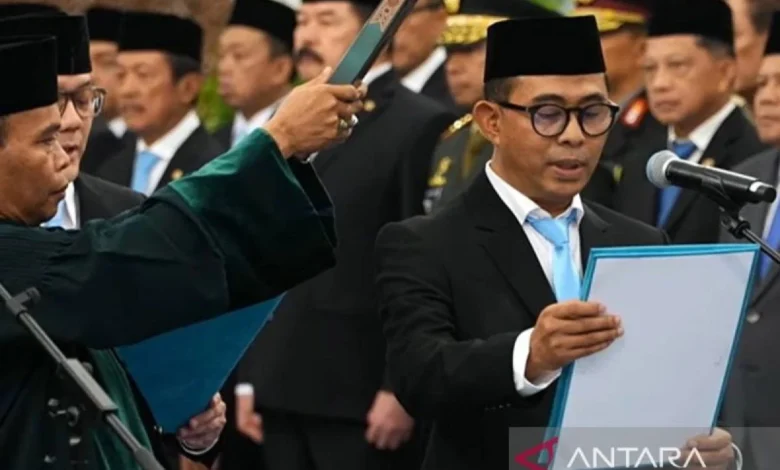
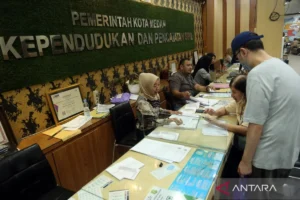
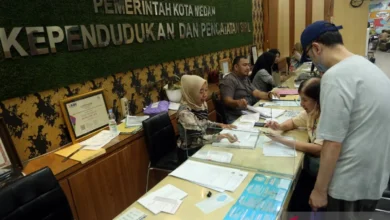
Public service remains the bedrock of the state’s interaction with its citizens, spanning critical sectors such as land administration, population records, healthcare, and education. When these services fail to meet established legal standards or when administrative processes are marred by neglect, the impact on citizens can be profound, ranging from economic loss to the erosion of trust in government institutions. Serving as the primary watchdog for these interactions, the Ombudsman of the Republic of Indonesia (ORI) stands as a vital mechanism for accountability and systemic reform. With the recent appointment of Nuzran Joher as the new Chairman of the Ombudsman by President Prabowo Subianto, the institution enters a new chapter of oversight, underscoring the government’s commitment to improving the quality of governance in the digital era.
Defining the Ombudsman and Its Legal Framework
The Ombudsman of the Republic of Indonesia is an independent state institution tasked with supervising the delivery of public services. Its jurisdiction is expansive, covering not only services provided by the central and regional governments but also those delivered by state-owned enterprises (BUMN), regional-owned enterprises (BUMD), state-owned legal entities, and even private or individual entities that have been delegated the responsibility to provide public services.
The institution derives its legitimacy from Law Number 37 of 2008 concerning the Ombudsman of the Republic of Indonesia, which was enacted on October 7, 2008. This landmark legislation established the Ombudsman as an external supervisor, distinct from the internal audit mechanisms of government agencies. By maintaining independence, the Ombudsman acts as a neutral arbiter between the state and the citizens it serves.
Central to the Ombudsman’s lexicon is the concept of "maladministration." This term encompasses a spectrum of prohibited conduct, including illegal acts, the abuse of authority for personal or secondary gain, gross negligence, and the failure to fulfill legal obligations. When such actions occur, they do not merely represent a bureaucratic error; they constitute a breach of the social contract between the state and the public, often resulting in tangible harm or the denial of fundamental rights.
Chronology and Evolution of Oversight
The history of the Ombudsman in Indonesia reflects the nation’s broader democratization process. Following the transition of the late 1990s, the need for a mechanism to curb corruption, collusion, and nepotism in public administration became paramount. Initially established as the Public Complaints Ombudsman Commission (KPPO) in 2000, it was later restructured and formalized through the 2008 Act to provide the teeth necessary for effective oversight.
In recent years, the Ombudsman has expanded its digital footprint. With the integration of the SP4N-LAPOR! (National Public Service Complaint Handling System), the institution has moved toward a more data-driven approach to monitoring. This shift allows the Ombudsman to analyze trends in public dissatisfaction, identifying "hotspots" of administrative failure across ministries and local government offices. The recent appointment of Nuzran Joher signals a strategic focus on strengthening these external oversight mechanisms, ensuring that the institution remains resilient against the complexities of modern governance.
Core Duties: Beyond Processing Complaints
The Ombudsman’s functions are multifaceted, moving beyond simple reactive complaint handling to proactive systemic improvement. These duties can be categorized as follows:
- Complaint Intake and Verification: The Ombudsman serves as a gateway for citizens to voice grievances. Upon receiving a report, the Ombudsman conducts a rigorous verification process to determine if the issue falls within its jurisdiction. This involves scrutinizing documents, requesting clarifications, and ensuring that the complainant has exhausted internal complaint mechanisms within the offending agency.
- Investigation and Resolution: If a case warrants investigation, the Ombudsman employs formal procedures—regulated by the Ombudsman Regulation Number 58 of 2023—to reach a resolution. This may involve mediation, where the complainant and the agency seek an amicable settlement, or conciliation to rectify administrative errors.
- Proactive Investigation (Own Motion): A critical power of the Ombudsman is the ability to launch investigations on its own initiative. This is particularly important in cases where systemic corruption or widespread incompetence is suspected, but individual citizens may be hesitant or unable to file formal reports due to fear of reprisal or lack of awareness.
- Preventative Oversight: Rather than waiting for errors to occur, the Ombudsman conducts regular assessments of public service standards. By reviewing Standard Operating Procedures (SOPs) and conducting site visits, the Ombudsman works to identify vulnerabilities that could lead to maladministration before they cause harm.
- Collaborative Governance: The institution coordinates with other state bodies, such as the Corruption Eradication Commission (KPK) and the State Civil Service Agency (BKN), to ensure a unified approach to institutional integrity. This inter-agency cooperation is essential for addressing the root causes of poor service delivery, which often span multiple departments.
Powers and Legal Implications of Recommendations
The Ombudsman possesses significant legal authority to compel compliance. During investigations, it has the power to summon officials, demand documentation, and require formal testimony. If an agency fails to rectify its errors, the Ombudsman can issue a "Recommendation."
These recommendations carry weight; they are not merely suggestions but are binding in their requirement for a formal response. Recommendations may include the rehabilitation of a citizen’s rights, the provision of financial compensation for damages caused by administrative failure, or the suspension of an official found to be in gross violation of their duties. Furthermore, the Ombudsman provides strategic policy advice to the President and regional heads, proposing amendments to regulations that may inadvertently foster maladministration.
Practical Guide: How Citizens Can Engage
The Ombudsman emphasizes that it is a "last resort" mechanism. Before approaching the Ombudsman, citizens are expected to have engaged with the specific public service provider’s own grievance mechanism. This ensures that the institution focuses on cases where the government has failed to self-correct.
To file a report, citizens must provide:
- Verified Identity: Ensuring accountability for the report.
- Comprehensive Chronology: A clear timeline of events, including interactions with the agency in question.
- Evidence of Previous Effort: Proof that the complainant has attempted to resolve the issue with the agency directly and that the agency either ignored the request or provided an unsatisfactory response.
Analysis of Broader Impact
The existence of the Ombudsman has profound implications for the Indonesian bureaucracy. By creating an external accountability loop, the institution reduces the "impunity gap" that often plagues administrative offices. When public servants know that their actions are subject to review by an independent body, the likelihood of arbitrary decision-making decreases.
Furthermore, the Ombudsman plays an essential role in fostering a culture of integrity among the youth. In an era where digital information is ubiquitous, the Ombudsman encourages the next generation of civil servants to prioritize transparency and ethical conduct as the foundations of their professional identity.
However, challenges remain. The Ombudsman must continuously balance its workload against its resources. As the scope of public services continues to expand into digital and privatized sectors, the Ombudsman must evolve its technical capabilities to monitor these increasingly complex domains. For instance, recent investigations into the correctional system and the oversight of the Ministry of Immigration and Correctional Affairs highlight the institution’s role in addressing sensitive and high-stakes administrative environments.
Conclusion
The Ombudsman of the Republic of Indonesia acts as the essential guardian of the citizen-state relationship. By holding the government accountable to its own standards, the institution protects the public from the inefficiencies and abuses that threaten the rule of law. With a renewed leadership and a commitment to utilizing modern tools like the SP4N-LAPOR! system, the Ombudsman is well-positioned to drive significant improvements in public service quality. For the average citizen, the Ombudsman is more than an office; it is a vital safeguard, ensuring that the rights of the public are upheld and that the bureaucracy serves the interests of the people, not the other way around. As Indonesia moves forward, the synergy between an active, informed citizenry and an empowered, vigilant Ombudsman will remain a cornerstone of effective and democratic governance.