DPR Open to Amending Indonesia Anti-Corruption Law Amid Calls to Redefine State Losses and Target Trade Manipulation

The Indonesian House of Representatives (DPR RI) has signaled a formal willingness to deliberate revisions to Undang-Undang Nomor 20 Tahun 2001, the landmark legislation on the Eradication of Criminal Acts of Corruption, commonly known as the Tipikor Law. This potential legislative overhaul comes at a critical juncture as lawmakers navigate concurrent discussions on the much-debated Asset Recovery Bill, while responding to fresh policy directives and academic assessments regarding the modernization of Indonesia’s anti-corruption framework.
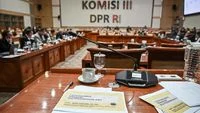
Ahmad Sahroni, Deputy Chairman of Commission III of the DPR RI—which oversees legal affairs, human rights, and security—confirmed that the parliament is actively open to exploring amendments to the nearly quarter-century-old statute. Speaking at the parliamentary complex in Senayan, Jakarta, Sahroni outlined that the legislature intends to conduct structured consultations and gather expert testimony from various stakeholders, researchers, and legal practitioners before officially tabling the amendment draft.
The discourse surrounding the potential revision of the Tipikor Law is multifaceted, driven by a convergence of high-level government initiatives, economic policy adjustments, and international legal harmonization standards. As Indonesia recalibrates its anti-corruption strategies under the administration of President Prabowo Subianto, lawmakers and executive officials are facing mounting pressure to ensure that national legislation aligns with modern economic realities, international conventions, and newly enacted domestic legal codes.
Background Context and the Genesis of the Amendment Discourse
The momentum toward revising the Tipikor Law did not emerge in a vacuum. It follows a series of high-level strategic policy reviews initiated by the National Economic Council (DEN), led by veteran statesman Luhut Binsar Pandjaitan. The DEN recently presented a comprehensive policy study to President Prabowo Subianto, containing a controversial yet heavily debated recommendation: to reevaluate or potentially remove the strict criterion of "state financial loss" (kerugian keuangan negara) as the absolute benchmark within the legal definition of corruption.
Proponents of this view argue that an exclusive focus on quantifiable state financial losses can sometimes criminalize administrative miscalculations or standard bureaucratic inefficiencies, while failing to capture complex, modern forms of economic sabotage that bypass traditional state coffers but severely damage the national economy.
Following the presentation of this study, Luhut Binsar Pandjaitan convened with Coordinating Minister for Law, Human Rights, Immigration, and Corrections Yusril Ihza Mahendra to harmonize the executive branch’s legal reform agenda. Minister Yusril subsequently threw his weight behind the proposed legislative overhaul, arguing that the Tipikor Law—which has remained largely untouched since its last major amendment in 2001—is overdue for a comprehensive review to ensure seamless integration with the newly adopted Criminal Code (KUHP) and the Criminal Procedure Code (KUHAP), both of which are slated for implementation.
Furthermore, Yusril emphasized the critical need to align Indonesia’s domestic anti-corruption statutes with the United Nations Convention Against Corruption (UNCAC). Although Indonesia ratified the UNCAC nearly two decades ago via Law Number 7 of Service Year 2006, legal experts have long noted lingering discrepancies between domestic statutes and international enforcement standards, particularly regarding transnational asset tracing, illicit enrichment, and systemic white-collar crimes.
Integrating the Asset Recovery Bill and the Chronology of Deliberations
The legislative calendar for Commission III is currently dominated by deliberations on the Asset Recovery Bill (RUU Perampasan Aset), a priority piece of legislation designed to allow the state to seize assets linked to criminal activity without necessarily securing a prior criminal conviction of the owner in specific circumstances, such as the death, flight, or incapacitation of the suspect, or where assets are clearly unexplained.
The DPR has conducted numerous Public Hearings (RDPU) regarding the Asset Recovery Bill, inviting a broad spectrum of stakeholders, including anti-corruption activists, academic researchers, and legal practitioners. Sahroni noted that the timing of the Tipikor Law review must be meticulously coordinated with the ongoing deliberations of the Asset Recovery Bill. Lawmakers are currently evaluating whether the remaining legislative timeframe allows for an integrated study that addresses both the President’s directives on state losses and the structural mechanics of asset forfeiture.
"Whether it is feasible within the remaining timeframe to follow up on and study what the President has conveyed remains to be seen. We will observe developments," Sahroni stated, emphasizing the NasDem Party’s pragmatic approach to legislative prioritization.
Expanding the Scope of Corruption: The Inclusion of Under-Invoicing
One of the most notable proposals gaining traction within the broader discussion to amend the Tipikor Law is the explicit criminalization of "under-invoicing"—a deceptive trade practice where companies or individuals manipulate commercial documents to underreport the value, price, quantity, or volume of traded goods. This maneuver is frequently employed to evade customs duties, dodge corporate taxes, launder money, and illegally siphon capital out of the country.
Sahroni has emerged as a vocal proponent of incorporating under-invoicing into the revised definition of corruption under the upcoming statutory amendments. He asserted that this illicit practice directly undermines state revenue and economic stability, aligning with the serious concerns raised by President Prabowo Subianto regarding trade integrity and fiscal leakage.
"I fully support the proposal to include under-invoicing in the Tipikor Law. This is highly necessary for consideration because this fraudulent practice has also become a serious concern for President Prabowo," Sahroni remarked.
Economic data from various trade watchdogs and international financial integrity organizations have long highlighted trade misinvoicing as a primary vehicle for illicit financial flows out of developing nations. By framing severe trade manipulation not merely as a customs or tax violation, but as a form of corruption that harms the state’s economic foundation, lawmakers hope to equip law enforcement agencies with more potent legal tools to prosecute sophisticated corporate criminals.
Implications and Broad Analytical Perspectives
The potential revision of the Tipikor Law carries profound implications for Indonesia’s legal landscape, investment climate, and anti-corruption architecture. Legal scholars and civil society organizations have offered varied perspectives on the initiative, reflecting a healthy tension between modernizing economic governance and safeguarding rigorous anti-corruption safeguards.
Proponents of the reform argue that updating the 2001 statute is an economic imperative. Modern commerce has evolved exponentially over the past twenty-four years, giving rise to digital transactions, complex supply chain manipulations, and cross-border financial engineering that the framers of the original Tipikor Law could not have fully anticipated. Harmonizing the law with the new KUHP and UNCAC standards is seen as a necessary step to eliminate legal gray areas, reduce redundancy, and enhance the predictability of the judicial process.
Conversely, anti-corruption watchdogs have expressed cautious vigilance. Civil society groups have historically raised concerns that any legislative effort to alter or dilute the definition of "state financial loss" must be handled with extreme transparency to prevent the unintended weakening of the Corruption Eradication Commission (KPK) and other prosecuting agencies. They argue that while administrative errors should indeed be distinguished from intentional corruption, weakening accountability mechanisms could potentially create legal loopholes exploited by corrupt actors.
Moreover, the successful synchronization of the Tipikor Law with the Asset Recovery Bill is viewed by institutional analysts as a critical milestone. If drafted effectively, the combination of a modernized anti-corruption definition, strict trade compliance mandates like the criminalization of under-invoicing, and robust non-conviction-based asset forfeiture could significantly disrupt the financial incentives driving high-level corruption in Indonesia.
Next Steps in the Legislative Process
As the executive branch and the legislature continue their preliminary consultations, the formal trajectory of the Tipikor Law amendment will depend heavily on the outcomes of ongoing expert roundtables and inter-ministerial coordination led by Minister Yusril Ihza Mahendra and supported by parliamentary leaders like Ahmad Sahroni.
Commission III is expected to finalize its preliminary assessment reports in the coming weeks, determining whether the amendment will be officially inducted into the priority national legislative program (Prolegnas). As Indonesia navigates this complex intersection of economic reform, legislative modernization, and international legal compliance, the ultimate shape of the revised Tipikor Law will serve as a defining test of the state’s resolve to balance robust law enforcement with sustainable, modern economic development.
Related posts: