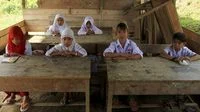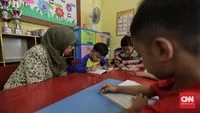
The landscape of national education financing in Indonesia is undergoing a significant transformation with the official expansion of the Program Indonesia Pintar (PIP), commonly known as the Smart Indonesia Program. Minister of Primary and Secondary Education Abdul Mu’ti announced that for the first time in the history of the national assistance initiative, students enrolled in Kindergartens (TK) and Early Childhood Education (PAUD) programs will be included as direct beneficiaries. This landmark policy shift represents a concerted effort by the administration to secure educational access and equity from the earliest developmental stages of a child’s life.
During a comprehensive briefing outlining the achievements and milestones of the Ministry of Primary and Secondary Education over the past two years, held at the Ministry headquarters in Senayan, Central Jakarta, Minister Mu’ti elaborated on the scope of this new initiative. He emphasized that the inclusion of kindergarten students is a direct policy breakthrough initiated under the directive of the President to ensure that financial barriers are systematically dismantled long before children reach primary school age.
Historic Inclusion of Kindergarten and Early Childhood Learners
The integration of kindergarten pupils into the PIP framework addresses a long-standing gap in early childhood support systems. Historically, government educational assistance programs in Indonesia have heavily concentrated on primary and secondary school levels, where the immediate risk of dropping out due to economic constraints was most visibly quantified. However, educational economists and child development experts have long argued that foundational learning begins well before primary school, and financial barriers can prevent children from lower-income families from accessing quality early childhood education entirely.
Under the newly minted allocation plan for the upcoming academic period, the government has earmarked specific funds to support 888,000 kindergarten students across the archipelago. By extending financial assistance to children at the kindergarten and early childhood education level, the Ministry aims to alleviate the early financial burdens faced by vulnerable families, encouraging consistent school attendance and setting a strong foundation for future academic engagement.
Comprehensive Overview of the 2025 and 2027 PIP Allocations
The broader reach of the Program Indonesia Pintar continues to expand across all traditional educational tiers. Based on the operational data for the year 2025, the national assistance program has successfully disbursed educational funds to approximately 19 million students nationwide, backed by a total state budget allocation reaching Rp13.43 trillion.
A granular breakdown of the recipient statistics across various educational levels highlights the extensive reach of the program:
- Primary School (SD): 10.43 million students
- Junior High School (SMP): 4.42 million students
- Senior High School (SMA): 2.10 million students
- Vocational High School (SMK): 2.05 million students
Looking ahead to the strategic targets set for the year 2027, Minister Mu’ti outlined projections indicating that the total number of PIP beneficiaries is expected to scale up to 19.48 million students. This projected total explicitly incorporates the newly added cohort of 888,000 kindergarten students. Current operational tracking indicates that ongoing distribution efforts have already successfully reached 13.6 million eligible students, reflecting steady progress toward meeting the government’s comprehensive educational safety net objectives.
Financial Breakdown and Benefit Structures Across Tiers
To ensure transparency and address the distinct cost structures associated with different educational stages, the Ministry has established a standardized tiered financial assistance model. The annual PIP disbursement amounts vary according to the educational level of the recipient:
- Kindergarten (TK) and Primary School (SD): Rp450,000 per student annually
- Junior High School (SMP): Rp750,000 per student annually
- Senior High School (SMA) and Vocational High School (SMK): Rp1,8 million per student annually
Crucially, the scope of the Program Indonesia Pintar is not restricted strictly to the formal educational sector. Recognizing that many children and young adults from economically disadvantaged backgrounds pursue alternative pathways to learning, the program extends its financial safety net into nonformal education structures.
Participants enrolled in the Community Learning Activity Centers (PKBM), which manage equivalency education programs such as Paket A, Paket B, and Paket C, are also eligible for financial assistance. Students within these nonformal equivalency tracks receive an annual disbursement of Rp1,8 million, matching the highest tier allocated to formal senior secondary students. Minister Mu’ti underscored the importance of this parity, noting that educational equity must encompass all learning pathways recognized by the state, regardless of whether they follow a conventional classroom format.
Operational Mechanics and Safeguards of the PIP Distribution
The Program Indonesia Pintar functions as a targeted financial intervention designed explicitly to assist school-aged children originating from impoverished or near-poor households. The primary objective is twofold: to defray the direct and indirect costs associated with schooling and to actively prevent students from dropping out of the educational system due to sudden economic shocks or chronic financial deprivation.
The distribution of assistance is executed through direct cash transfers deposited into designated student accounts, minimizing bureaucratic friction and reducing the potential for misuse. To maintain the integrity of the distribution process, applications for PIP cannot be initiated independently by individual students or their guardians. Instead, beneficiary identification relies on a rigorous data-driven pipeline involving systematic administrative data integration, institutional proposals, and thorough verification protocols conducted by educational institutions and relevant government agencies.
Once a student is officially verified and designated as a beneficiary of the program, they receive a dedicated student savings account known as Simpanan Pelajar (SimPel), accompanied by a debit card or ATM facility. This mechanism not only facilitates the transparent withdrawal of funds but also promotes early financial literacy among students and their families.
Permissible Utilization of Funds and Socioeconomic Implications
The utilization of PIP funds is strictly regulated to ensure that the financial assistance directly supports the academic continuity and developmental needs of the recipient. Beneficiaries and their families are authorized to allocate the disbursed funds toward a wide array of educational necessities. Permissible expenditures include the purchase of textbooks, notebooks, and essential stationery; acquiring school uniforms, shoes, and required personal protective gear; covering daily transportation expenses incurred traveling between home and school; supplementing nutritional needs through pocket money; paying for supplementary courses within formal educational settings; and funding specialized practical training fees or mandatory internships.
From a macroeconomic and social policy perspective, the expansion and sustained funding of the Program Indonesia Pintar carry profound implications for Indonesia’s human capital development index. Education economists note that early childhood and basic education interventions yield the highest long-term returns on investment for developing economies. By cushioning low-income families against the cost of education, the program directly mitigates intergenerational poverty cycles.
Furthermore, the integration of kindergarten students into the financial aid architecture addresses critical equity gaps during the most formative windows of cognitive development. Early childhood education enrollment rates have historically displayed a stark disparity between high-income and low-income demographics. By subsidizing the entry barrier for nearly one million kindergarten pupils, the government is actively engineering a more level playing field where disadvantaged children are not left behind before they even step foot into a primary school classroom.
As the Ministry of Primary and Secondary Education continues to refine its administrative processes and scale its financial distributions toward the 2027 targets, the ultimate success of the program will hinge on the efficiency of data verification and the collaboration between regional educational offices, schools, and community networks. The institutionalization of support for the youngest learners signals a maturing social welfare framework dedicated to securing the educational future of every Indonesian child, regardless of their socioeconomic background.
Related posts: