Driven by Passion and Industry Ambition: Pertamina Mandalika Racing Series 2026 Cements Indonesia’s Stature in Global Motorsport and Economic Growth

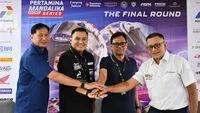
The Pertamina Mandalika Racing Series (Pertamina MRS) 2026 has officially transcended its role as a mere national motorcycle racing championship, firmly establishing itself as a vital catalyst for athlete development, automotive industry innovation, and regional economic revitalization in Lombok, Nusa Tenggara Barat. As the grand final weekend reached its pivotal second day at the state-of-the-art Pertamina Mandalika International Circuit, industry leaders, government officials, and motorsport stakeholders converged to underscore the critical importance of a sustainable national racing ecosystem. This comprehensive competitive framework is increasingly viewed as the primary pipeline for propelling Indonesian riders onto the global stage, while simultaneously driving tourism and empowering local micro, enterprises in the surrounding region.
The Grand Final Showdown at Mandalika
Against the backdrop of the picturesque yet challenging 4.3-kilometer circuit, Saturday marked a high-stakes turning point for the final round of the 2026 season. Riders across multiple competitive classes battled fiercely for championship glory, navigating the sweeping corners and technical layouts that have previously hosted elite international series such as MotoGP and the MOTUL FIM Superbike World Championship (WorldSBK).
The event’s chronology has been meticulously structured to mirror professional international racing standards. Free practice sessions and high-intensity qualifying rounds earlier in the week tested the mechanical limits of the machines and the tactical acumen of the riders. By Saturday, the atmosphere reached a crescendo as championship contenders pushed their limits in pursuit of national supremacy. The successful execution of this grand final not only crowns the season’s ultimate champions but also provides an invaluable pressure-test for local race officials, marshals, and technical support teams, ensuring that Indonesia’s motorsport infrastructure remains aligned with global benchmarks.
Fostering National Talent and Industrial Synergy
At the core of the Pertamina MRS 2026 vision is the deliberate cultivation of domestic talent. With Indonesia boasting one of the highest motorcycle adoption rates per capita in the world, the sport of motorcycle racing enjoys a deeply embedded culture and a massive, enthusiastic demographic base. However, bridging the gap between grassroots riding passion and professional international competitiveness has historically required robust institutional backing and structured championship pathways.
Muhammad Baron, Vice President of Corporate Communication at PT Pertamina (Persero), emphasized that the state-owned energy company’s involvement extends far beyond traditional corporate sponsorship. Pertamina views its multifaceted support as a nation-building initiative aimed at cementing an entire motorsport ecosystem.
"Pertamina stands alongside automotive enthusiasts, dedicated communities, and fellow sponsors to collaboratively transform aspirations into reality," Baron stated in an official release. "We aspire to be active witnesses to the remarkable evolution of Indonesia’s automotive landscape and the phenomenal talents who will represent our nation on the international stage in the years to come."
Baron further underscored that this long-term commitment aligns seamlessly with Pertamina’s overarching mission as a national energy champion dedicated to creating sustainable value for society. Beyond fostering athletic excellence, the championship serves as a rigorous testing ground for home-grown technological innovation. Notably, all competing teams throughout the Pertamina MRS 2026 season utilized Pertamax Turbo, a premium high-octane fuel formulated by Indonesian engineers.
"Pertamax Turbo is the fuel of choice for this prestigious competition, a formulation that has even been trusted to power the Safety Car in international events like MotoGP," Baron asserted. "This is undeniable proof that products created by the nation’s own children possess world-class quality and can perform under the most demanding competitive pressures."
Building World-Class Infrastructure and Professional Standards
The realization of a championship of this caliber requires seamless coordination among circuit operators, sporting regulators, and commercial partners. Donny Mahardjono, Operations Director of the Mandalika Grand Prix Association (MGPA), pointed out that elevating Indonesian motorsport demands stringent adherence to international safety, logistical, and operational standards.
"The Pertamina MRS represents the absolute apex of national motorcycle racing in Indonesia," Mahardjono explained. "It is far more than just a sequence of races; it is a comprehensive incubator and a defining momentum designed to systematically nurture riders, racing teams, and all operational personnel involved in the sport."
Mahardjono elaborated that MGPA’s primary responsibility centers on delivering world-class facilities, maintaining track safety protocols, and deploying highly trained human resources capable of executing international-grade event management. By embedding local support staff within a professional racing environment, the association aims to transfer crucial knowledge and operational expertise, ensuring that Indonesian motorsport professionals become globally competitive in logistical execution, race control, and technical scrutineering.
Echoing this sentiment, Eddy Saputra, CEO of PRIDE Motorsport, highlighted that long-term continuity remains the single most critical factor in sustainable athletic development. From its inception, the Pertamina MRS framework was purposefully engineered to provide Indonesian riders with a predictable, high-level competitive calendar where they can progressively hone their craft, transition between displacement classes, and attract commercial backing.
Economic Multiplier Effect and Tourism Integration
While the roar of engines dominates the asphalt of the Mandalika circuit, the reverberations of the Pertamina MRS 2026 extend far beyond the racetrack perimeter. The influx of thousands of visitors—including competing teams, technical crews, media personnel, domestic race fans, and international tourists—has generated a substantial economic surge for the local community in Lombok.
Hotels, homestays, restaurants, transport providers, and local micro, small, and medium enterprises (MSMEs) have all reported significant upticks in business activity throughout the race week. This economic vitality underscores the strategic importance of sports tourism as a key driver of regional development.
Hafiz Agung Rifai, Acting Deputy for Event Organization Development at the Ministry of Tourism, noted that the integration of premier sporting events with Lombok’s natural and cultural attractions reinforces the region’s status as one of Indonesia’s designated Super Priority Tourism Destinations. The presence of world-class infrastructure in Mandalika provides the government with a powerful instrument to diversify the national tourism portfolio and extend tourist visit durations throughout the calendar year.
"Through the execution of impeccably managed events, we are successfully attracting domestic and international visitors, stimulating grassroots economic activity, and driving sustainable destination awareness," Hafiz stated. "We view this championship as an invaluable medium to amplify our national tourism branding while delivering immediate, tangible financial benefits to the local populace."
Hafiz expressed strong optimism that the Pertamina MRS will maintain its permanent fixture within the national sporting and tourism calendar, ensuring that the economic dividends continue to compound for local residents in the years ahead.
Broader Implications and Future Outlook
The successful staging of the Pertamina MRS 2026 grand final serves as a compelling case study in cross-sector collaboration. By uniting state-owned enterprise leadership, circuit management expertise, private race promoters, government tourism policies, and grassroots automotive communities, the initiative has successfully bypassed historical fragmentation within the national sporting landscape.
Looking forward, the implications of this integrated model are profound. For aspiring Indonesian riders, the championship offers a clear, credible stepping stone toward Asia-level and world-class competitions, reducing the traditional barriers to entry that have historically hindered talented youth from remote regions. For the broader automotive and energy sectors, the event validates the capability of domestic industries to manufacture high-performance products that meet international technical criteria.
Ultimately, the Pertamina Mandalika Racing Series 2026 has proven that when infrastructure, corporate social responsibility, athletic ambition, and tourism policy align harmoniously, national sports competitions can evolve into powerful engines of national pride, industrial advancement, and equitable economic prosperity.