Gerindra Fraction Pushes for Consensus Over Voting in Upcoming MPR Plenary for Vice Presidential Succession

The political landscape in Jakarta has entered a delicate and highly scrutinized phase as the People’s Consultative Assembly (MPR) prepares for a pivotal plenary session scheduled for December 11. At the heart of the impending parliamentary proceedings is the mechanism by which a new vice president of the Republic of Indonesia will be selected to succeed Gibran Rakabuming Raka. Amid diverse perspectives regarding parliamentary procedure, the Great Indonesia Movement (Gerindra) Party fraction within the MPR has firmly insisted that the succession process should prioritize deliberation to reach a consensus—locally known as musyawarah mufakat—rather than immediately resorting to a majority vote.
The debate touches upon foundational constitutional principles, legislative frameworks, and the institutional identity of Indonesia’s highest legislative body. As political coalitions maneuver behind the scenes, the question of how to fill the vice-presidential vacancy has ignited a broader conversation about democratic norms, legislative efficiency, and the spirit of Indonesia’s state ideology, Pancasila, which places a heavy emphasis on consensus-driven decision-making.
Constitutional Framework and the Gerindra Stance
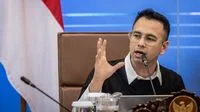
Speaking at the parliamentary complex, Habiburokhman, the Chairman of the Gerindra Fraction in the MPR, articulated his party’s uncompromising stance on the matter. While acknowledging that existing statutory regulations provide frameworks for voting, Habiburokhman asserted that casting ballots should not be treated as the mandatory or exclusive method for filling a leadership vacuum at the highest levels of executive power.
"The reference is found in Article 8, paragraph 2 of our constitution [the 1945 Constitution], which does not lock this selection process exclusively to voting, but rather opens up the opportunity for consensus to be pursued first," Habiburokhman stated on Thursday.
According to Gerindra, the preference for consensus is not merely a political preference grounded in convenience, but a mandate supported by multiple layers of Indonesian law. In addition to the constitutional provisions, the mechanism of musyawarah mufakat is explicitly regulated under the Law on the People’s Consultative Assembly, House of Representatives, Regional Representative Council, and Regional Legislative Councils (commonly known as the UU MD3), as well as the internal Rules of Procedure (Tata Tertib) of the MPR.
Habiburokhman argued that voting should only be invoked as a secondary, fallback measure—a tool to be utilized solely in the event that exhaustive deliberations fail to produce a unanimous or unified decision among all MPR members. To underscore his point regarding the institutional philosophy of the assembly, he employed a rhetorical distinction regarding the very name of the institution.
"This institution is named the MPR, the People’s Consultative Assembly, not the MVR. If it were MVR, it would be the People’s Voting Assembly, right? It is not that," he remarked.
Chronology of the Succession Process and Preparations
The process leading up to the December 11 plenary session has been marked by meticulous behind-the-scenes preparation, procedural mapping, and inter-party negotiations. The vacancy necessitating this extraordinary session stems from the departure of Gibran Rakabuming Raka, whose exit from the vice-presidency triggered constitutional mechanisms requiring the MPR to convene and select a successor.
Under Article 8 of the 1945 Constitution, when the office of the president, vice president, or both concurrently become vacant, specific protocols dictate how the succession must be managed. When a vice-presidential vacancy occurs independently, the President is required to nominate two candidates within a stipulated timeframe, after which the MPR convenes to elect the new vice president from those nominees.
Recognizing the gravity and constitutional sensitivity of the task, the MPR established a dedicated Ad Hoc Team to navigate the procedural hurdles and draft the operational guidelines for the upcoming election. This committee has been tasked with hammering out the finer details of the plenary session, including the exact rules of engagement, verification of candidates, and the structural flow of the December 11 meeting.
The upcoming week will prove decisive. The Ad Hoc Team is scheduled to convene for intensive three-day meetings spanning Monday, Tuesday, and Wednesday to finalize the procedural framework. These deliberations will determine how tightly the assembly will pursue consensus before permitting any alternative mechanisms, such as voting, to take center stage.
The Procedural Debate: Consensus Versus Voting
While Gerindra has voiced a clear preference for consensus, the implementation of musyawarah mufakat in a large, highly politicized legislative body comprising hundreds of members with diverse partisan loyalties presents significant logistical and political challenges.
Weighing in on the operational realities of the process, the Chairman of the MPR Ad Hoc Implementation Team, Benny Kabur Harman, noted that the definitive decision regarding the final mechanism may not be formally codified until the very day of the plenary session itself. Benny emphasized that achieving a genuine consensus requires an absolute commitment from every single member of the MPR, a high threshold that demands continuous negotiation up to the moment the gavel falls.
"No, it could happen right during the plenary session on Monday before the selection takes place. So, pursuing consensus is not unconstitutional; it is entirely constitutional as well," Benny explained.
Political analysts note that while musyawarah mufakat is deeply rooted in Indonesia’s political tradition and aligns with the philosophical foundations of Pancasila’s fourth precept—democracy guided by the inner wisdom of deliberations amongst representatives—it can occasionally lead to prolonged stalemates if major political factions hold irreconcilable differences. Conversely, immediate reliance on voting offers procedural clarity and swiftness, but risks deepening partisan divisions and alienating minority factions within the assembly.
Broader Implications for National Stability and Governance
The debate over the election mechanism carries significant implications for the broader political ecosystem in Indonesia. The seamless transition of executive power is critical for maintaining investor confidence, ensuring policy continuity, and preserving public trust in state institutions.
As the December 11 plenary approaches, all eyes remain fixed on the parliamentary complex in Senayan. The ability of the MPR leadership and faction leaders to navigate this procedural crossroads through harmonious negotiation will serve as a litmus test for the maturity of Indonesia’s contemporary democratic institutions. Whether the assembly ultimately selects the new vice president through a unified consensus or through the more clinical process of a parliamentary vote, the outcome will set a vital precedent for constitutional succession management in the years to come.