Ford Indonesia Adopts Niche Strategy to Navigate Increasingly Competitive Automotive Market Amidst Global Brand Expansion

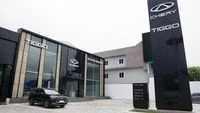
The Indonesian automotive landscape is undergoing a profound transformation, characterized by an unprecedented influx of new players, particularly from China, which has fundamentally altered the competitive dynamics of the domestic market. In response to this crowded environment, Ford, through its authorized distributor RMA Indonesia, has opted for a highly focused business strategy. Rather than attempting to compete across every vehicle category, the American automotive giant is doubling down on its core identity as a manufacturer of rugged, off-road, and lifestyle-oriented vehicles.
This strategic pivot comes as consumer choices have expanded significantly. With a plethora of new brands offering aggressive pricing and diverse product portfolios, Ford’s leadership has determined that maintaining a distinct brand character is essential for survival and long-term viability in the Southeast Asian nation.
The Strategic Philosophy of Focus
Regional Director of RMA Indonesia, Scott McCormack, highlighted during a press engagement in Jakarta that Ford’s approach is rooted in the recognition of its unique market position. "Ford is fundamentally an American brand synonymous with off-road capabilities and recreational utility," McCormack stated. "We are not aiming to be everything to everyone. We are looking for the specific consumer who seeks that distinct character and capability."
By concentrating on a "niche" segment, Ford is insulating itself from the intense price wars currently taking place in the entry-level and mid-size passenger car segments, where volume-driven manufacturers are battling for market share. Instead, Ford is targeting the premium enthusiast market, leveraging the reputation of iconic nameplates such as the Ranger Raptor and the Everest SUV.
Historical Context and the Return to Indonesia
To understand the current positioning of Ford in Indonesia, it is necessary to examine the company’s complex history in the region. Ford’s journey in Indonesia has been marked by strategic shifts, including a significant withdrawal and a triumphant return.
- 2008: RMA Indonesia begins its operations in the country, focusing primarily on Global Fleet Sales, establishing the foundation for service and logistics.
- 2016: A pivotal year for the brand, as Ford officially ceased its retail sales operations in Indonesia, leaving behind a loyal customer base but no new vehicle supply.
- 2016 (Post-Withdrawal): RMA Indonesia is officially appointed as the authorized partner for Ford’s service and spare parts, ensuring that existing owners were not left without support.
- 2022: A milestone year for the brand as Ford made its official return to the Indonesian new vehicle market, with RMA Indonesia serving as the distributor.
- 2026: Ford continues to scale, recently inaugurating its 34th dealership in Jakarta, signaling a commitment to a robust physical presence.
This timeline demonstrates that Ford’s current growth is not a sudden expansion but a calculated restoration of its brand footprint, built upon a foundation of after-sales reliability.
The Dual-Market Strategy: Retail and Commercial
Ford’s current business model is divided into two distinct pillars: the retail segment and the commercial/fleet segment.
In the retail space, the company focuses on high-performance and premium vehicles. The Ranger Raptor—a vehicle synonymous with extreme off-roading—and the Everest Platinum cater to consumers who demand high-spec vehicles for lifestyle, adventure, and personal status. This strategy acknowledges that while these models represent a smaller portion of total market volume compared to mass-market SUVs, they command higher margins and enjoy stronger brand loyalty.
Conversely, for the commercial sector, the company utilizes the standard Ranger and the Ranger Super Duty. These vehicles are marketed as workhorses, designed to support the operational needs of Indonesia’s mining, plantation, and infrastructure companies. By diversifying its approach, Ford minimizes its reliance on a single economic driver, balancing the volatility of retail demand with the stability of corporate fleet contracts.
Addressing the Competitive Landscape
The Indonesian automotive market has become significantly more complex over the past five years. Industry data suggests that the entry of various Chinese manufacturers—offering high-tech, feature-rich, and competitively priced electric and internal combustion engine vehicles—has forced traditional players to rethink their value propositions.
McCormack acknowledged that the current competitive environment is vastly different from when Ford first entered the market. "You look at any major auto show today compared to five years ago, and you see brands you didn’t even know existed," he noted.
However, Ford’s management remains steadfast in its belief that "trying to be successful in all segments" is a recipe for failure in the current climate. By prioritizing brand integrity—specifically, the "Built Ford Tough" ethos—the company aims to create a barrier to entry that is difficult for competitors to replicate through price alone.
The Critical Importance of After-Sales Service
Recognizing that a premium vehicle requires a premium ownership experience, Ford has heavily invested in its "Ford 360 Care" program. In a market where consumers are often wary of "orphan" brands or limited parts availability, the company has made the accessibility of spare parts and high-quality maintenance a cornerstone of its marketing strategy.
The expansion of its dealer network to 34 locations is a direct response to customer feedback regarding service accessibility. By ensuring that a Ford owner in major urban centers or near industrial hubs has a reliable service point, the company is actively working to dismantle the "parts scarcity" stigma that plagued many non-Japanese manufacturers in the past.
Future Outlook and Upcoming Engagement
Looking ahead, Ford is preparing to further solidify its market presence through active participation in industry events. The brand is scheduled to showcase its latest lineup at the Gaikindo Auto Week (GAW) 2026, held from November 20–29 at the ICE BSD in Tangerang. This participation is expected to serve as a platform for the company to demonstrate its commitment to the Indonesian market and to engage directly with the enthusiast community.
Furthermore, internal discussions regarding the potential for local manufacturing in Indonesia are ongoing. While no definitive timeline for a local factory has been confirmed, the fact that Ford is "studying the matter deeply" suggests that the company views Indonesia as a long-term strategic pillar in the ASEAN region rather than a temporary market.
Analytical Implications: The "Niche" as a Moat
From an analytical perspective, Ford’s shift to a niche-focused strategy is a defensive, yet highly intelligent, maneuver. In an era of commoditization, where many vehicles are becoming increasingly similar in terms of technology and design, Ford is banking on "tribal" branding—the idea that the Ranger or Everest owner is buying into a specific identity, not just a mode of transport.
The risks, however, remain. By focusing on a smaller market segment, the company leaves itself vulnerable to fluctuations in the specific industries that utilize the Ranger (such as mining). Furthermore, as other manufacturers begin to introduce their own "rugged" or "off-road" specialized models, Ford will face increased pressure to innovate its product features to maintain its premium status.
Ultimately, Ford’s success in Indonesia will depend on its ability to maintain this delicate balance: providing the technical support required for heavy-duty fleet operations while simultaneously delivering the aspirational, high-end experience that the retail segment demands. By successfully navigating these two worlds, Ford is effectively carving out a space in the Indonesian automotive market that is as resilient as the vehicles it sells.