Advanced Driver Assistance Systems are Redefining Automotive Safety Standards in the Modern Era

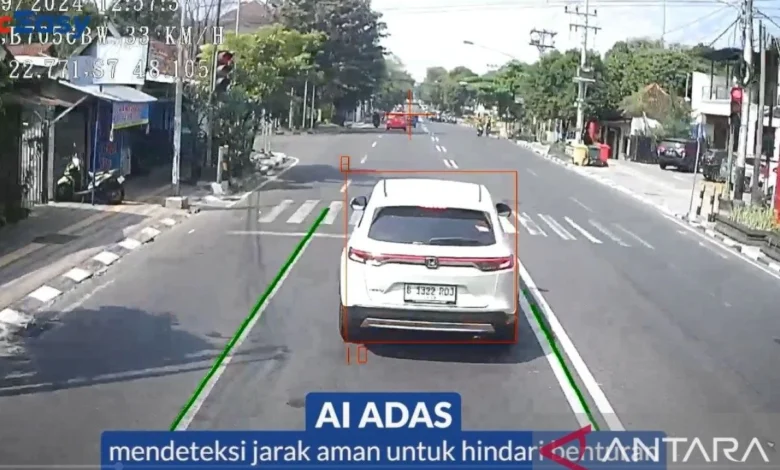
The automotive landscape is undergoing a profound transformation, shifting from a focus on mechanical efficiency and interior luxury to a paradigm centered on active collision avoidance and intelligent driver support. As global road safety organizations update their testing protocols, Advanced Driver Assistance Systems (ADAS) have emerged as the primary mechanism for reducing traffic fatalities. These integrated suites of sensors, cameras, and radar technology are no longer exclusive to luxury vehicles; they are becoming the baseline expectation for safety in the modern mass-market vehicle segment.
The integration of ADAS—a suite of electronic systems that assist drivers in the driving process—marks a departure from passive safety features like airbags and crumple zones. Instead of mitigating the impact of a collision, ADAS is designed to prevent the collision from occurring in the first place. By leveraging real-time data processing, these systems can intervene through automated braking, steering adjustments, and audible or visual warnings, creating a "safety net" that complements human decision-making.
The Evolution of Global Safety Protocols
The proliferation of ADAS is largely driven by evolving regulatory standards and independent testing mandates. The European New Car Assessment Programme (Euro NCAP), a global benchmark for automotive safety, implemented a significant shift in its testing methodology starting in 2026. This new framework moves beyond traditional crash testing, which measures structural integrity, and introduces a rigorous assessment of how vehicles interact with their surroundings.
Under the 2026 protocols, vehicles are evaluated on their ability to detect and respond to vulnerable road users, including pedestrians and cyclists, in complex, real-world scenarios. This transition signifies a move toward "active safety," where the car’s capability to predict a hazard and initiate an emergency response is as critical as its ability to survive a crash. Consequently, automotive manufacturers are under immense pressure to integrate sophisticated sensor suites to achieve high safety ratings, which are increasingly influential in consumer purchasing decisions.
Core Technologies Driving the Safety Revolution
At the heart of the ADAS revolution are several key technologies that act as the vehicle’s sensory nervous system:
- Forward Collision Warning (FCW) and Automatic Emergency Braking (AEB): These systems use radar and cameras to monitor the distance between the host vehicle and the vehicle ahead. If the system detects an imminent collision, it alerts the driver; if the driver fails to respond, the AEB system engages the brakes autonomously.
- Lane Keeping Assist (LKA) and Lane Centering: Using cameras to monitor lane markings, these systems apply corrective steering torque if the vehicle begins to drift out of its lane without an active turn signal.
- Adaptive Cruise Control (ACC): This system maintains a set speed while automatically adjusting the vehicle’s pace to keep a safe following distance from the car in front, significantly reducing driver fatigue during long-distance highway travel.
- Blind Spot Monitoring (BSM): Utilizing ultrasonic sensors or side-facing radar, BSM alerts drivers to the presence of vehicles in their peripheral blind spots, effectively mitigating accidents during lane change maneuvers.
The Role of Sensor Fusion
The efficacy of these systems relies heavily on "sensor fusion"—the integration of data from multiple sources to create a coherent picture of the vehicle’s environment. Modern vehicles now employ a combination of high-resolution cameras, millimeter-wave radar, and increasingly, LiDAR (Light Detection and Ranging). While cameras provide excellent visual identification of road signs and lane markers, radar is superior at determining the distance and speed of objects in adverse weather conditions. The synchronization of these sensors allows the vehicle’s computer to make split-second decisions that would be impossible for a human driver to replicate under stress.
Implications of the 2026 Euro NCAP Results
The impact of the new testing standards was clearly demonstrated in September 2026, when Euro NCAP released its first batch of results under the new 2026 protocol. The assessment of vehicles such as the AION UT, Geely E2, and Leapmotor B05, all of which achieved five-star ratings, underscores a significant industry trend: the democratization of high-end safety technology. Manufacturers, particularly from emerging markets, are prioritizing these systems to compete on a global scale. By achieving top-tier safety ratings, these companies are signaling to the market that sophisticated active safety is no longer a premium add-on but a fundamental requirement.
Addressing the Misconception of Autonomy
Despite the rapid advancement of ADAS, industry experts and regulatory bodies, including the National Highway Traffic Safety Administration (NHTSA), are emphatic that these systems do not constitute "self-driving" technology. A persistent, and potentially dangerous, public misconception is that ADAS allows for unsupervised driving.
NHTSA categorizes these features as driver-assistance, not driver-replacement. In Levels 1 and 2 of the Society of Automotive Engineers (SAE) automation hierarchy, the human driver is required to remain fully engaged, with their hands on the wheel and eyes on the road. The system acts as a supervisor, but the driver retains full legal and operational responsibility for the vehicle.
The limitations of these systems are significant. Adverse weather, such as heavy rain, fog, or snow, can obscure sensor vision. Furthermore, poorly maintained road infrastructure, such as faded lane markings or obscured signage, can confuse the vehicle’s image processing algorithms. Recognizing these limitations is crucial for the safe operation of modern vehicles.
The Human-Machine Interface (HMI) Challenge
As vehicles become more intelligent, the interaction between the driver and the machine—the Human-Machine Interface (HMI)—has become a focal point of engineering research. If a system provides too many warnings, it leads to "alert fatigue," where the driver ignores the system. Conversely, if a system is too subtle, the driver may fail to notice a genuine hazard. Designing an intuitive HMI that keeps the driver informed without causing distraction is a critical challenge that manufacturers are currently addressing through sophisticated software updates and user-centric design.
Economic and Societal Impact
The transition toward ADAS-equipped vehicles has far-reaching economic implications. While the initial cost of manufacturing vehicles increases due to the integration of sensors and processors, the long-term societal benefits are expected to be substantial. The reduction in accidents translates to lower healthcare costs, decreased traffic congestion resulting from minor fender-benders, and reduced insurance premiums for safer vehicles.
Government agencies worldwide are recognizing this potential. In many regions, regulatory bodies are moving toward mandating specific ADAS features—such as AEB—as standard equipment. This legislative push is accelerating the adoption rate, ensuring that even entry-level vehicles are equipped with life-saving technology.
The Future of Automotive Safety
Looking ahead, the next phase of development will likely involve "Vehicle-to-Everything" (V2X) communication, where cars will share data with other vehicles, traffic infrastructure, and pedestrians’ mobile devices. This interconnected ecosystem will further enhance the capability of ADAS, allowing cars to "see" around corners or receive warnings about traffic accidents miles ahead.
However, as the industry moves toward higher levels of automation, the responsibility remains firmly with the human operator. The integration of ADAS should be viewed as an evolution of the driving experience—a collaborative partnership between human judgment and machine precision. As vehicles become more capable of protecting their occupants, the importance of driver training and awareness of system limitations will only grow in significance.
In summary, the proliferation of ADAS is the most significant development in automotive safety in the 21st century. By combining advanced sensor arrays with robust computational power, manufacturers are creating vehicles that are not only more convenient but, more importantly, are actively participating in the mission to eliminate road fatalities. As the 2026 standards continue to raise the bar, the automotive industry is entering a new era where technology and human vigilance work in tandem to secure a safer future on the road.