Iran’s Currency Under Global Scrutiny Amidst Geopolitical Tensions and Economic Realities

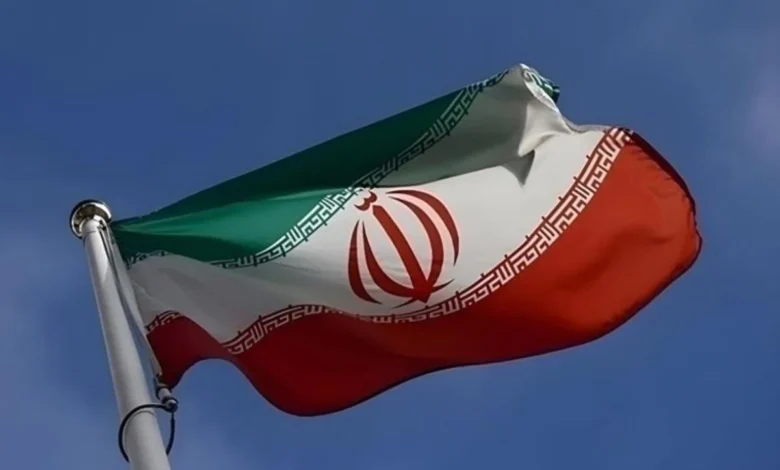
The Iranian currency, the rial, has recently found itself at the forefront of global attention, a focal point amplified by escalating geopolitical tensions and the intricate landscape of international economic policies. The United States, under President Donald Trump’s administration, has intensified its economic pressure on Iran, implementing stringent measures including tariffs of up to 25 percent against nations engaging in business collaborations with the Islamic Republic. This aggressive stance has reverberated through Iran’s economic structures, leading to significant repercussions, most notably a sharp devaluation of its national currency. Recent reports have indicated that the Iranian rial has experienced a dramatic decline, with its exchange rate against the Euro reportedly reaching historic lows. This precipitous fall underscores the profound economic strain that sanctions and persistent inflation have imposed on the Iranian economy.
Despite the official pronouncements and the alarming fluctuations in the rial’s value on international markets, a curious phenomenon emerges when one ventures into Iran’s bustling traditional bazaars or navigates its modern shopping centers. The term "rial" is conspicuously absent from the everyday lexicon of transactions. Instead, local populations commonly employ the term "toman" when discussing the prices of goods and services. This widespread adoption of "toman" is a direct consequence of Iran’s exceptionally high inflation rate. To simplify price communication and circumvent the cumbersome use of excessively large numbers, the Iranian populace has adopted an alternative calculation system based on the toman.
This divergence between the official currency and the de facto unit of exchange raises pertinent questions: what precisely is the official currency of Iran, and what are the fundamental distinctions between the rial and the toman that frequently befuddle both international tourists and seasoned economic observers? This comprehensive review delves into these intricacies, synthesizing information from various credible sources to provide a clear understanding of Iran’s monetary landscape.
The Official Monetary Unit of Iran: The Rial
Legally and administratively, the rial (IRR) is recognized as Iran’s official currency. It is the currency that underpins all banking activities, is denominated on official government documents, and is officially displayed on price tags in modern retail establishments. The Central Bank of Iran (CBI) is the issuing authority for the rial, and its international code is IRR.
The Dual Reality: Rial vs. Toman in Daily Transactions
While the rial holds legal tender status, its practical application in the daily lives of Iranians is often overshadowed by the pervasive use of the toman. In everyday commerce, from the smallest street vendor to larger retailers, prices are overwhelmingly quoted and understood in tomans. This linguistic shift is not merely a matter of colloquial preference; it is a pragmatic adaptation to a challenging economic environment.
The core of the toman’s appeal lies in its simplified representation of value. One toman is equivalent to 10,000 rials. This means that effectively, the toman represents the rial with four zeros removed. This simplification dramatically eases the mental arithmetic involved in pricing and transactions, preventing the need to constantly grapple with vast numerical figures. For instance, a price that would officially be listed as 600,000 rials might be casually referred to as 60 tomans in a marketplace conversation. This discrepancy, while seemingly straightforward, has historically been a significant source of confusion for foreigners visiting Iran.
Historical Context and the Erosion of the Rial’s Value
The rial has been Iran’s official currency for an extended period, its lineage tracing back to the Pahlavi dynasty. However, the economic pressures of recent decades, particularly the impact of international sanctions and internal economic management, have led to a chronic and severe inflationary environment. This persistent inflation has relentlessly eroded the purchasing power of the rial, making large nominal values commonplace and cumbersome for everyday transactions.
Iran’s Redenomination Initiative: Transitioning to the Toman
Recognizing the widespread confusion and the need to streamline its national currency system, the Iranian government, through the Central Bank of Iran, initiated a significant currency reform. This reform, officially known as redenominasi, began its rollout in 2020 and is slated for a more comprehensive and gradual implementation between 2025 and 2026.
The primary objective of this redenominasi is to officially replace the rial as the main unit of currency with a new version of the toman, effectively cutting off four zeros from the existing rial. Under this new scheme, 10,000 old rials will be equal to one new toman. This new toman will further be subdivided into smaller denominations, with one toman comprising 100 qirans. The qiran, while a historical term, is being reintroduced as the sub-unit of the new toman.
During this transitional phase, both the old rial banknotes and the new toman currency will remain in circulation concurrently. New banknotes issued by the CBI are already reflecting this change, often displaying smaller nominal values alongside a faint, ghosted representation of the removed zeros. This approach aims to facilitate a gradual adjustment for the public and to mitigate any abrupt shocks to the economic system. The ultimate goal is to create a more manageable and internationally recognizable currency system.
Factors Contributing to the Weakness of the Iranian Currency
The precarious state of the Iranian rial is a multifaceted issue, influenced by a confluence of domestic and international factors.
International Sanctions:
The most significant external pressure on the Iranian economy, and consequently its currency, stems from the re-imposition and stringent enforcement of international sanctions, particularly by the United States. These sanctions target key sectors of the Iranian economy, including its vital oil and gas industry, its financial institutions, and its access to international trade and finance. By restricting Iran’s ability to export oil and engage in global financial transactions, sanctions severely limit foreign currency inflows, thereby weakening demand for the rial and driving up its exchange rate against major global currencies.
- Historical Timeline of Sanctions:
- Pre-2010: Initial UN Security Council sanctions were imposed in response to Iran’s nuclear program.
- 2010-2015: The US and EU significantly expanded sanctions, targeting Iran’s energy and financial sectors.
- 2015 (JCPOA): The Joint Comprehensive Plan of Action (JCPOA) led to the lifting of many sanctions in exchange for limitations on Iran’s nuclear activities.
- 2018: The US unilaterally withdrew from the JCPOA and reimposed sweeping sanctions, leading to a sharp decline in the rial.
- Post-2018: Further sanctions and diplomatic tensions have continued to exert pressure.
High Inflation:
Iran has grappled with persistently high inflation rates for years, a situation exacerbated by the sanctions. Inflation erodes the purchasing power of a currency, leading to a continuous need for more units of currency to purchase the same goods and services. When inflation is high and unchecked, it can trigger a vicious cycle: the currency weakens, making imports more expensive, which in turn fuels further inflation.
- Inflation Data: While official figures can vary, inflation rates in Iran have frequently been in the double digits, often exceeding 20-30 percent annually in recent years. This sustained inflationary pressure directly devalues the rial.
Economic Mismanagement and Structural Issues:
Domestic economic policies, including government spending, monetary policy, and structural rigidities within the economy, also play a crucial role. Inefficient state-owned enterprises, a lack of diversification in the economy beyond oil, and challenges in attracting foreign direct investment can all contribute to economic instability and currency weakness.
Geopolitical Uncertainty:
The volatile geopolitical climate surrounding Iran, including regional conflicts and tensions with international powers, creates an environment of uncertainty. This uncertainty can deter investment, lead to capital flight, and negatively impact investor confidence, all of which can translate into downward pressure on the currency.
Implications of Currency Weakness
The sustained weakness of the Iranian rial carries significant implications for the nation and its people.
- Rising Cost of Living: For ordinary Iranians, the devaluation of the rial means that imported goods become significantly more expensive. This directly impacts the cost of essential items such as food, medicine, and technology, leading to a decline in living standards and increased hardship for households.
- Reduced Purchasing Power: The ability of individuals and businesses to purchase goods and services both domestically and internationally is diminished.
- Economic Uncertainty and Instability: A volatile currency fosters economic uncertainty, making it difficult for businesses to plan for the future, invest, and expand. This can stifle economic growth and job creation.
- Impact on International Trade: While a weaker currency can theoretically make exports cheaper and more competitive, the impact of sanctions often complicates this dynamic. Furthermore, the inability to access international financial systems hinders the ability to conduct trade smoothly.
- Social Unrest: Economic hardship and a declining standard of living can contribute to social discontent and potential unrest.
The Path Forward: Redenomination and Beyond
The redenominasi of the Iranian currency is a significant step, aiming to address the practical difficulties caused by high inflation and a cumbersome currency system. However, it is crucial to understand that redenominasi, by itself, does not solve the underlying economic problems. The success of this transition will largely depend on the government’s ability to address the root causes of inflation and currency depreciation, including managing fiscal policy, stabilizing the economy, and navigating the complex international sanctions regime.
The international community will continue to monitor Iran’s economic performance closely. The interplay between geopolitical events, the effectiveness of sanctions, and Iran’s domestic economic management will ultimately shape the future trajectory of the Iranian currency and the well-being of its citizens. The transition from rial to toman, while a necessary practical adjustment, is merely one facet of a much larger and more complex economic narrative unfolding in Iran.
This article was compiled using information from the original ANTARA news report, supplemented by broader economic data and contextual analysis of Iran’s currency situation.
Related posts: