Former Hungarian Foreign Minister Peter Szijjarto Joins Chinese EV Giant BYD, Underscoring Growing Bilateral Ties


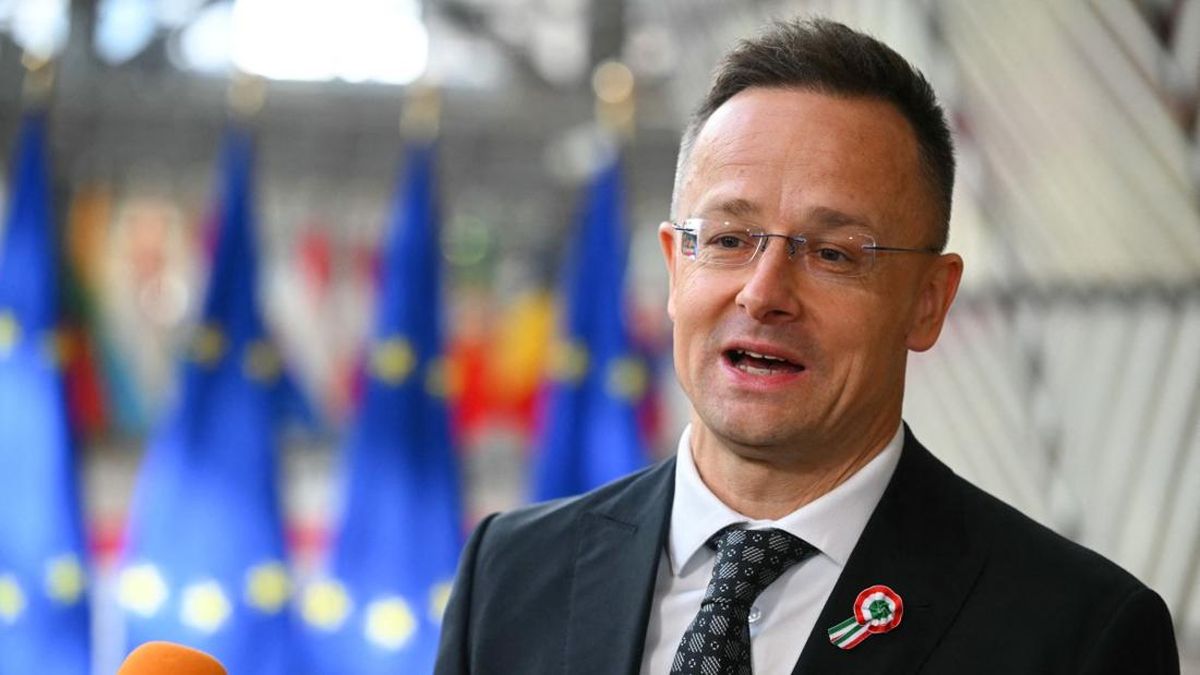
Peter Szijjarto, the former Minister of Foreign Affairs and Trade of Hungary, announced on July 15, 2026, his departure from his parliamentary seat to join Chinese electric vehicle (EV) behemoth BYD. The move, reported by SHobserver, signals a significant personal career transition for the 47-year-old politician and underscores the deepening strategic partnership between Hungary and China in the burgeoning new energy vehicle sector.
Szijjarto, who has been a Member of the National Assembly of Hungary since 2002 and served as Foreign Minister from 2014 until May of the current year, shared the news via his Facebook page. He characterized the transition as a move to an "extremely prestigious" international role within one of the world’s leading companies.
"BYD is one of the most successful companies in the automotive industry over the past 20 years and a global leader in the manufacturing of new energy vehicles," Szijjarto stated, as quoted by carnewschina.com. He elaborated on his new responsibilities, saying, "Starting today, I will be an executive responsible for the group’s external relations and the expansion of new business lines."
This high-profile appointment is more than just a career change for a former minister; it serves as a potent symbol of Hungary’s strategic embrace of China’s electric vehicle ambitions. BYD, already a dominant force in the global EV market, is making a significant investment in Europe, with Hungary at the forefront of its expansion plans.
Hungary as a European EV Hub
The strategic alignment between Hungary and BYD is cemented by the latter’s substantial investment in the country. In 2024, BYD commenced the construction of its first European production facility for electric vehicles in Szeged, located in southern Hungary. This facility is poised to be a cornerstone of BYD’s European manufacturing network, with a projected production capacity of 300,000 units. Beyond manufacturing, BYD is also establishing its European headquarters in Budapest, further solidifying its commitment to the region.
The groundwork for this collaboration was laid in the preceding year when the Hungarian government and BYD formalized a strategic cooperation agreement. This pact specifically included the establishment of BYD’s European headquarters and a new research and development center in Budapest. During the signing of this agreement, then-Prime Minister Viktor Orbán articulated his vision for Hungary’s role in the global automotive transformation. He emphasized that the world was undergoing a paradigm shift driven by new technologies and evolving consumer demands. Orbán highlighted China’s leadership in EV technology, positioning the strategic partnership with BYD as a crucial engine for Hungary’s economic growth and a pathway for the nation to lead in the new era of automotive technology.
A Vision for Mutual Growth and Technological Advancement
The commitment to this vision was reiterated in April of the current year by Prime Minister Magyari. He expressed his aspiration to foster collaborations that would see local Hungarian companies become integral partners to major international players like BYD and CATL, as well as other significant investors. "I am convinced that we will certainly be able to achieve mutually beneficial cooperation," Magyari stated, underscoring the government’s proactive approach to attracting and integrating global technological leaders.
Szijjarto’s move to BYD, therefore, can be seen as a culmination of Hungary’s long-term strategy to position itself as a key gateway for Chinese new energy vehicle companies into the European market. This strategy has been in motion for several years, with a growing number of companies within China’s new energy vehicle supply chain establishing a presence in Hungary.
Beyond original equipment manufacturers (OEMs) like BYD, which is building a significant EV production base and European headquarters, other players are also investing. Nio, another prominent Chinese EV maker, has established a European energy plant in Hungary focused on battery swap station manufacturing and research and development. This diversification indicates a broader trend of Chinese EV ecosystem development within the country.
Deepening Supply Chain Integration
The integration extends to the critical component suppliers, particularly in the battery sector. Major power battery manufacturers such as CATL, EVE Energy, and Sunwoda have all embarked on building battery factories in Hungary. These investments are not only vital for supplying the EV assembly plants but also contribute significantly to job creation and technological transfer within Hungary.
The influx of these Chinese EV and battery manufacturers represents a substantial foreign direct investment for Hungary. It aligns with the country’s economic diversification goals and its ambition to become a regional leader in advanced manufacturing. The strategic location of Hungary in Central Europe, coupled with its skilled workforce and supportive government policies, has made it an attractive destination for these capital-intensive industries.
Analyzing the Implications
Szijjarto’s transition from a high-ranking government official to a key executive at a major Chinese corporation has several implications.
Geopolitical Significance: The appointment highlights the increasingly close ties between Hungary and China. This relationship has been characterized by strong economic cooperation, particularly in the strategic sectors of energy and technology. Szijjarto’s personal involvement can be seen as a testament to the Hungarian government’s continued commitment to fostering these bilateral relations.
Economic Impact: The presence of BYD and other Chinese EV manufacturers is expected to bring substantial economic benefits to Hungary. These include job creation, increased exports, and the development of a more sophisticated industrial ecosystem. The establishment of R&D centers also promises to boost innovation and technological capabilities within the country.
Market Dynamics: BYD’s expanding European manufacturing footprint, with Hungary as a central hub, will intensify competition within the European EV market. This could lead to more competitive pricing and a wider array of EV options for European consumers. It also positions BYD to better navigate potential trade barriers and tariffs by having local production facilities within the European Union.
Political Landscape: Szijjarto’s move also raises questions about the revolving door between public service and private industry, a phenomenon often scrutinized in political discourse. However, in this context, it also signifies a politician leveraging his deep understanding of Hungarian policy and his established network to facilitate international business operations. His role in external relations for BYD will likely involve navigating regulatory environments and fostering government relations across various European markets, a task for which his previous experience is invaluable.
A Timeline of Engagement
The relationship between Hungary and Chinese EV manufacturers has been developing over several years, with key milestones marking the increasing depth of cooperation:
- 2022-2023: Initial discussions and feasibility studies for major Chinese EV manufacturers exploring European production sites. Hungary emerges as a prime candidate due to its strategic location and favorable investment climate.
- 2023: Formal signing of strategic cooperation agreements between the Hungarian government and key Chinese EV players, including BYD and CATL. This period marks a significant acceleration of investment commitments.
- 2024: BYD begins construction of its first European EV production facility in Szeged, Hungary. Other battery manufacturers like CATL and EVE Energy also commence or expand their plant constructions. Nio establishes its European energy hub.
- Early 2026: Szijjarto announces his resignation from parliament to join BYD, signaling a new phase of high-level engagement and operational leadership from former government officials.
- July 15, 2026: Szijjarto officially takes up his new role at BYD.
Official Reactions and Future Outlook
While specific official reactions from the current Hungarian government to Szijjarto’s appointment have not been detailed in the provided text, the broader context suggests continued governmental support for such investments. The government has consistently framed these partnerships as crucial for Hungary’s economic future and its position in the global automotive industry.
The trend of Chinese EV manufacturers establishing manufacturing bases and R&D centers in Hungary is expected to continue. This strategic positioning allows these companies to serve the European market more effectively, reduce logistical costs, and potentially circumvent import duties. For Hungary, it means significant job creation, technological advancement, and a strengthening of its industrial base in a rapidly evolving global sector.
Peter Szijjarto’s move to BYD is not merely a personal career decision; it is a powerful indicator of the evolving geopolitical and economic landscape, where strategic partnerships are forged to drive innovation and market leadership in critical future industries. The former minister’s new role will undoubtedly be closely watched as he navigates the complexities of expanding a global EV giant within the European Union.