Astra Daihatsu Motor Reports Strong Retail Sales Growth in First Half of 2026, Capturing Increased Market Share


Astra Daihatsu Motor (ADM) concluded the first half of 2026 with a robust performance in retail sales, demonstrating a significant upward trend that mirrors the improving landscape of the national automotive market. The Japanese automaker’s Indonesian subsidiary achieved a notable sales volume of 12,725 units in June 2026, marking a substantial 27 percent increase compared to the 10,001 units sold during the same period in the previous year. This impressive growth underscores Daihatsu’s expanding appeal and its successful navigation of the competitive Indonesian automotive sector.
The positive trajectory of Daihatsu’s sales is set against a backdrop of a revitalized national automotive market. In June 2026, the overall Indonesian automotive market recorded retail sales of 74,507 units. This figure represents a healthy increase of approximately 19.6 percent from the 62,292 units sold in June 2025. The collective upswing indicates a growing consumer confidence and a renewed appetite for vehicle purchases across the archipelago, driven by various economic factors and potentially a surge in demand following a period of market recalibration.
Daihatsu’s ability to outperform the market average, as evidenced by its 27 percent sales growth versus the national average of 19.6 percent, has translated into a tangible expansion of its market share. In June 2026, Daihatsu’s market share climbed to 17.1 percent, a notable improvement from the 16.1 percent recorded in the same period of the preceding year. This gain of one percentage point, while seemingly modest, is significant in the highly competitive automotive industry and reflects the success of ADM’s strategic initiatives and product offerings.
Key Sales Drivers and Model Performance
The sustained sales momentum for Daihatsu in June was predominantly propelled by its flagship models, which continue to resonate strongly with Indonesian consumers. The Gran Max Series emerged as the primary sales engine, accounting for an impressive 53 percent of the total retail sales. This highlights the enduring demand for Daihatsu’s versatile commercial vehicles, which are essential for a wide range of businesses and small enterprises across Indonesia. The Gran Max’s popularity is likely attributed to its reliability, fuel efficiency, and adaptability to various commercial needs, making it a cost-effective solution for entrepreneurs and logistics providers.
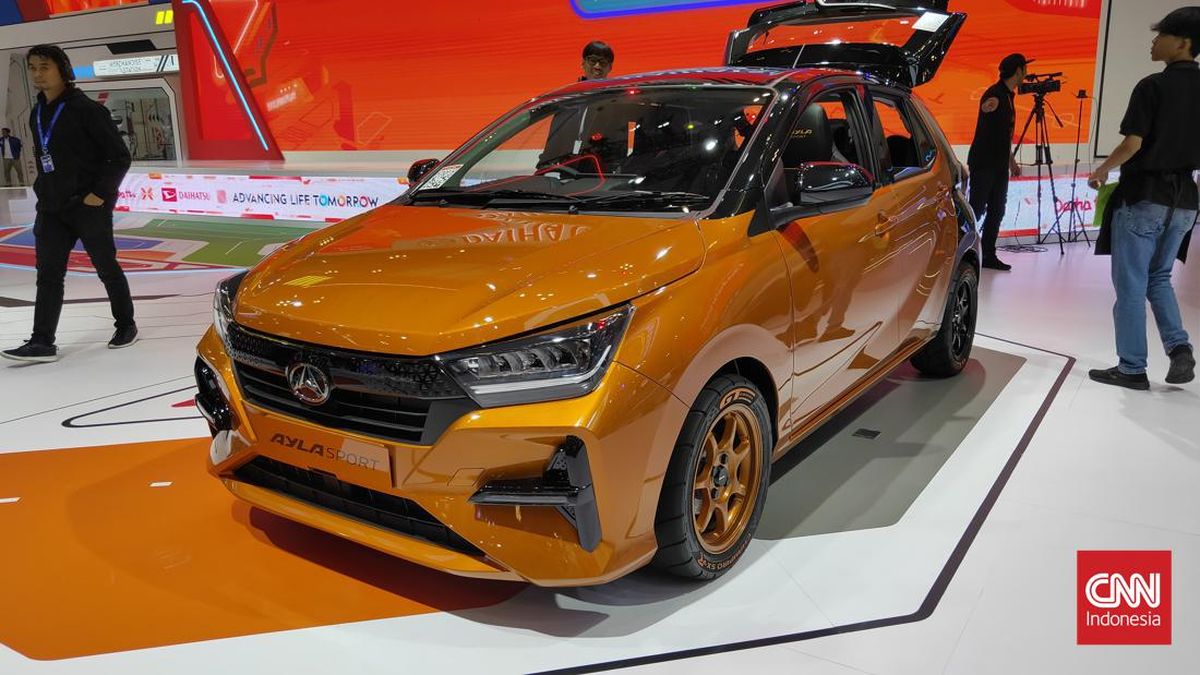
Following closely, Daihatsu’s entry-level segment, encompassing the Sigra and Ayla under the Low Cost Green Car (LCGC) classification, contributed a substantial 30 percent to the overall sales. These models have consistently been popular choices for first-time car buyers and families seeking affordable yet functional transportation. Their appeal lies in their competitive pricing, fuel economy, and compliance with government regulations for LCGCs, which often include tax incentives, further enhancing their attractiveness.
The Terios, Daihatsu’s compact SUV offering, also played a significant role in the company’s sales performance, contributing 10 percent to the total. This indicates a steady demand for sport utility vehicles in the Indonesian market, catering to consumers who prioritize higher ground clearance, a more commanding driving position, and a blend of utility and comfort.
This sales composition clearly illustrates that Daihatsu’s commercial vehicle line and its family-oriented passenger cars remain the foundational pillars supporting the company’s sales in Indonesia. The continued strength of the Gran Max Series and the LCGC models suggests that Daihatsu has a keen understanding of the core needs of the Indonesian market, focusing on practical, value-driven solutions.
Market Leadership in the Affordable Segment
Daihatsu has also asserted its dominance in the sub-Rp300 million vehicle segment, a crucial price bracket that captures a significant portion of the Indonesian car-buying population. The company’s claim to leadership in this segment is a testament to its strategic focus on affordability, efficiency, and comprehensive after-sales support.
Rokky Irvayandi, Marketing Director & Corporate Function Director of ADM, emphasized that this market position is a direct result of ADM’s commitment to offering vehicles that are not only budget-friendly but also economical in terms of fuel consumption and overall ownership costs. This strategy is further bolstered by an extensive network of after-sales service centers, ensuring that Daihatsu owners have convenient access to maintenance and repair services across the nation.
"We are grateful to conclude the first semester of 2026 with an increased market share of 17.1 percent," stated Rokky Irvayandi in an official press release on Monday, July 20th. "This achievement is a manifestation of customer trust, who continue to choose Daihatsu as their mobility solution."
His statement highlights the paramount importance of customer satisfaction and loyalty in driving Daihatsu’s success. The company views its vehicles not merely as modes of transportation but as integral components of their customers’ daily lives and economic activities.
Future Outlook and Strategic Imperatives
Looking ahead, ADM remains committed to its customer-centric approach, promising to continuously introduce products that align with the evolving needs of the Indonesian populace. The company also intends to further strengthen its sales and after-sales service network, making its offerings even more accessible to a broader customer base.
"Moving forward, we will continue to introduce products that meet the needs of the Indonesian people, supported by sales and after-sales services that are increasingly accessible, so that Daihatsu can continue to provide the best value for customers," Irvayandi added.
This forward-looking statement suggests a proactive strategy focused on product development, market penetration, and customer service enhancement. Daihatsu’s continued investment in its Indonesian operations indicates a long-term commitment to the market and a belief in its future growth potential. The company’s ability to adapt to changing consumer preferences, technological advancements, and regulatory landscapes will be critical in maintaining its competitive edge.
Broader Economic and Market Implications
The robust performance of Astra Daihatsu Motor and the broader Indonesian automotive market in the first half of 2026 carries several important implications. Firstly, it signals a positive economic climate, with increased consumer spending power and a greater willingness to invest in major purchases like vehicles. This can have a ripple effect on related industries, including manufacturing, finance, and retail.
Secondly, Daihatsu’s success in the affordable vehicle segment underscores the significant purchasing power of the middle and lower-middle income demographics in Indonesia. The company’s strategy of catering to this segment with value-for-money products appears to be a highly effective formula for sustained market leadership.
The consistent demand for commercial vehicles like the Gran Max also points to a vibrant and growing small and medium-sized enterprise (SME) sector in Indonesia. These businesses are crucial for job creation and economic development, and the availability of reliable and affordable commercial vehicles is vital for their operations and expansion.
Furthermore, Daihatsu’s increased market share suggests a potential shift in consumer preferences or a successful execution of marketing and sales strategies compared to its competitors. The automotive industry is characterized by intense competition, and any gain in market share, especially at the expense of rivals, indicates a strong competitive advantage.
The company’s emphasis on an extensive after-sales network is also a critical factor. In a vast archipelago like Indonesia, accessibility to service and parts is a significant consideration for car buyers. Daihatsu’s investment in this area not only enhances customer satisfaction but also builds brand loyalty, which is essential for long-term success.
Context of the Indonesian Automotive Market
The Indonesian automotive market is one of the largest in Southeast Asia and is highly sensitive to economic fluctuations, government policies, and consumer trends. Historically, the market has seen periods of rapid growth followed by plateaus, influenced by factors such as interest rates, inflation, and the availability of financing.
The introduction of LCGC vehicles several years ago was a significant policy intervention aimed at boosting domestic production and making car ownership more accessible to a wider population. Daihatsu, along with other manufacturers, has capitalized on this segment, with models like the Sigra and Ayla becoming volume sellers.
The increasing popularity of SUVs and multi-purpose vehicles (MPVs) also reflects a growing middle class with a demand for more versatile and feature-rich vehicles. Daihatsu’s offerings in these segments, such as the Terios, have helped it to diversify its product portfolio and cater to a broader range of consumer needs.
The automotive industry is also undergoing a global transformation driven by electrification and new mobility solutions. While the current report focuses on traditional internal combustion engine vehicles, it is likely that ADM, like its parent company Toyota, is closely monitoring and planning for the integration of hybrid and electric vehicles into its Indonesian lineup in the future. The success of these future initiatives will depend on factors such as charging infrastructure, government incentives for EVs, and consumer adoption rates.
For now, Daihatsu’s strategy of focusing on affordability, reliability, and a strong distribution network for its existing product range appears to be a winning formula, enabling it to navigate the current market dynamics effectively and secure its position as a leading automotive player in Indonesia. The company’s performance in the first half of 2026 provides a strong indication of its resilience and its ability to adapt to the evolving demands of the Indonesian automotive landscape.
Related posts: