Ministry of Education to Revitalize Mboeng State Elementary School in East Manggarai Following Viral Social Media Attention

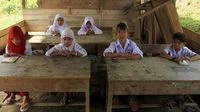
The Ministry of Primary and Secondary Education has formally announced that Sekolah Dasar Negeri (SDN) Mboeng, located in East Manggarai Regency, East Nusa Tenggara (NTT) province, is scheduled for a comprehensive infrastructural overhaul within the current year. This high-profile intervention comes in direct response to widespread public discourse and viral discussions across various social media platforms. Netizens and education advocates previously highlighted a striking juxtaposition at the institution: while the school had recently been outfitted with modern digital learning tools—specifically a Smart TV—its physical architecture remained severely dilapidated, characterized by crumbling walls and makeshift classrooms that posed structural risks to students and faculty members.
The plight of SDN Mboeng captured national attention when images and reports detailing its infrastructural deficiencies circulated online. The public debate centered on the paradox of introducing advanced educational technology into an environment struggling with basic infrastructural viability. In an effort to address these concerns transparently, the Directorate of Elementary Schools under the Ministry of Primary and Secondary Education mobilized an inspection team to conduct an on-site evaluation, verify the validity of the social media reports, and outline a targeted blueprint for immediate structural rehabilitation.
Comprehensive On-Site Assessment and Immediate Action
Moch. Salim Somad, Director of Elementary Schools at the Ministry of Primary and Secondary Education, confirmed that a specialized delegation was dispatched directly to the remote region. The objective of the mission was to assess the true magnitude of the damage and formulate an actionable plan to repair both heavily damaged and emergency structures.
According to official school statistics, SDN Mboeng currently serves a total of 84 students. These pupils are organized into six distinct learning groups, guided and instructed by a dedicated workforce of 10 education personnel, including teachers and administrative staff. Despite the commitment of the academic staff, the school’s day-to-day operations are heavily constrained by compromised spatial resources.
Out of the total building footprint, the school maintains five permanent structures; however, two of these primary classrooms have sustained heavy structural damage, rendering them unsafe and unusable for educational activities. To accommodate the students and prevent disruptions to the academic calendar, the school administration, alongside the local community, was forced to erect and utilize four makeshift emergency classrooms. These temporary structures, often characterized by inadequate ventilation, fragile walls, and limited protection against severe weather conditions, underline the urgent need for a permanent engineering solution.
Furthermore, historical context gathered during the ministry’s inspection revealed that a significant portion of the existing temporary and semi-permanent structures currently in use were built through community self-reliance initiatives, reflecting the dedication of local parents and community leaders who mobilized their own limited resources to ensure their children did not miss out on formal schooling.
The Digitalization Paradox: Smart TVs and Electrical Infrastructure
A central point of contention in the social media discourse surrounding SDN Mboeng was the distribution of a modern Smart TV to a school grappling with severe infrastructural decay. Critics questioned the policy of prioritizing technological advancement over fundamental brick-and-mortar safety.
Addressing this critique, Director Salim Somad clarified the administrative and logistical rationale behind the allocation of the digital device. According to the ministry’s official Education Management Data System, commonly known as Dapodik, SDN Mboeng was officially registered as having an active electrical power source. Because the school met the baseline technical prerequisite for electronic integration, it was designated as an eligible recipient of the learning support hardware designed to modernize pedagogical methods.
Salim emphasized that the integration of digital educational tools and the physical revitalization of school infrastructure should not be viewed as mutually exclusive policies or competing priorities. Instead, the ministry maintains that these two initiatives operate in tandem as part of a synchronized strategy to elevate the overall standard of educational delivery across Indonesia.
"Digitalization in schools is progressing, and the physical rehabilitation of school facilities is being executed simultaneously," Salim stated, framing the dual approach as an essential mechanism to prepare rural students for a technology-driven global economy while guaranteeing their physical safety on campus.
Broader Regional Context: Educational Infrastructure in East Nusa Tenggara
The structural challenges faced by SDN Mboeng are emblematic of broader infrastructural hurdles historically encountered in parts of East Nusa Tenggara and other remote regions across the Indonesian archipelago. Geographical isolation, challenging archipelagic logistics, and limited local fiscal capacity have long hampered the equitable distribution of high-quality public school facilities.
Recognizing these systemic challenges, the central government has scaled up its budgetary commitment to educational equity in the region. Ministry data indicates that the revitalization program for educational facilities in East Nusa Tenggara possesses a remarkably expansive scope. Up through the targeted completion year of 2026, the sweeping infrastructural campaign is slated to touch 1,487 educational units across the province.
Financial allocations to achieve this objective reflect a profound national priority. Salim highlighted that the funding envelope dedicated to these regional improvements is set to scale up significantly. For the fiscal year 2026, the allocated budget for school revitalizations in NTT alone reaches an estimated Rp1.2 trillion. This substantial financial injection aims to systematically eradicate emergency-status classrooms, replace obsolete permanent buildings, and construct standardized educational facilities that comply with national safety and health regulations.
Implications for National Education Policy and Equity
The swift governmental response to the digital-versus-physical debate at SDN Mboeng underscores a broader evolution in how public administration responds to public accountability driven by social media scrutiny. By turning an online critique into a catalyst for direct administrative action, the Ministry of Primary and Secondary Education has reinforced its pledge to transparency and responsiveness.
Moving forward, the situation at SDN Mboeng serves as a case study for the complexities of bridging the digital divide in developing regions. While equipping rural classrooms with advanced tools such as Smart TVs is vital for fostering digital literacy and aligning regional students with national curricula standards, it must be underpinned by a resilient physical foundation.
Ministry officials reiterated that the overarching national agenda remains firmly anchored in three core pillars: structural safety, educational quality, and equitable access. By ensuring that schools in remote and disadvantaged areas receive both the modern digital tools required for contemporary learning and the safe, durable architectural spaces necessary for human well-being, the government hopes to dismantle long-standing educational disparities.
As the engineering and construction teams prepare to break ground on the SDN Mboeng revitalization project this year, the academic community, parents, and students anticipate a transformed learning environment. The convergence of targeted physical repairs and ongoing technological support is projected to establish a secure, modern, and inclusive educational ecosystem, ensuring that geographic isolation no longer serves as a barrier to academic excellence for the children of East Manggarai.