Pupuk Indonesia Strengthens Subsidized Fertilizer Distribution for Fisheries Sector in Pangkep to Boost Aquaculture Productivity

PT Pupuk Indonesia (Persero) is intensifying its efforts to optimize and secure the distribution of subsidized fertilizers tailored for the fisheries and aquaculture sector in Pangkep Regency, South Sulawesi. This strategic initiative is designed to ensure that local fish farmers and cultivators receive their designated quotas efficiently, transparently, and in strict accordance with government regulations.
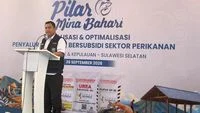
The renewed focus on the region’s aquatic agricultural needs was prominently highlighted during the Pilar Mina Bahari event, held on Saturday, September 26, 2026. The high-profile gathering served as a crucial platform for alignment among state-owned enterprises, regional government leaders, ministry officials, and local aquaculture communities. As marine and freshwater aquaculture forms the economic backbone of many coastal communities in Pangkep, ensuring a reliable supply of inputs like fertilizers is vital for maintaining food security, regional economic stability, and sustainable livelihoods.
Main Facts and Operational Framework
At the core of Pupuk Indonesia’s operational mandate is the seamless execution of government-backed subsidy programs. Regional CEO 4 of Pupuk Indonesia, Wisnu Ramadhani, emphasized during the event that the state-owned enterprise maintains an unwavering commitment to safeguarding the availability of subsidized fertilizers. The distribution protocols are meticulously aligned with pre-determined national allocations to prevent shortages and eliminate logistical bottlenecks that historically plagued agricultural and aquacultural supply chains.
"Pupuk Indonesia is fully committed to ensuring the availability of subsidized fertilizers in exact accordance with established allocations, thereby effectively fulfilling the operational needs of fish cultivators," Wisnu stated during the proceedings. He further underscored that the company continuously strengthens coordination channels with regional governments and all relevant stakeholders. This multi-layered collaboration guarantees that distribution mechanisms adhere strictly to regulatory frameworks, ensuring that every grain of subsidized fertilizer reaches its intended beneficiary.
Unlike standard agricultural subsidies, fertilizers earmarked for the fisheries sector are subject to specialized criteria. They are strictly designated for fish cultivators who are formally organized into recognized fish cultivation groups and registered within the electronic Rencana Definitif Kebutuhan Kelompok (e-RPSP) system managed by the Ministry of Marine Affairs and Fisheries (KKP).
To enforce absolute transparency and eliminate identity fraud or leakage in the supply chain, the redemption process relies on a stringent verification system. Beneficiaries must present their official resident identity cards (KTP) and complete transactions through the digital iPubers application. This technological integration ensures precise tracking of recipients and accurate recording of transactional data. Furthermore, to prevent industrial-scale hoarding or misallocation, specific operational limits are enforced—such as a maximum land area threshold of two hectares for fishpond enlargement and grow-out activities.
Comprehensive Allocation and Realization Data for 2026
Pangkep Regency occupies a strategic position in South Sulawesi’s aquaculture landscape, making it a focal point for government intervention. For the fiscal year 2026, the regency has been granted a substantial subsidized fertilizer quota specifically tailored for the fisheries sector, totaling 27,156 metric tons.
This comprehensive allocation is diversified across four primary nutrient categories designed to support various aquatic environments and species:
- Urea: 10,519 metric tons
- NPK Phonska: 5,950 metric tons
- Organic Fertilizer: 7,246 metric tons
- SP-36: 3,441 metric tons
Progress reports tracking the distribution timeline indicate steady movement, though considerable work remains as the fiscal year progresses. As of September 24, 2026, cumulative realization data shows that 11,562 metric tons—representing approximately 43 percent of the total annual allocation—have been successfully distributed to verified cultivators. A breakdown of this realized volume reveals specific utilization patterns: 4,969 metric tons of Urea, 790 metric tons of organic fertilizer, and 475 metric tons of SP-36.
Pupuk Indonesia continues to apply pressure across the entire distribution ecosystem—ranging from industrial producers and regional logistics coordinators to local distributors and end-user fish farmers—to ensure absolute compliance. Stakeholders are required to maintain strict operational discipline, fostering a transparent environment where resources are utilized exclusively for their intended purposes.
Chronology and Stakeholder Alignment via Pilar Mina Bahari
The timing of the Pilar Mina Bahari event on September 26, 2026, was strategically chosen to address mid-year distribution evaluations and accelerate delivery before the final quarter of the fiscal cycle. Over the preceding months, administrative and logistical hurdles had occasionally slowed down the flow of subsidized inputs from regional warehouses to remote coastal ponds.
By convening key decision-makers under the banner of the Pilar Mina Bahari initiative, Pupuk Indonesia sought to bridge communication gaps between bureaucratic institutions and grassroots operators. The event facilitated direct dialogues addressing localized distribution challenges, administrative verification delays in the e-RPSP system, and digital literacy hurdles concerning the iPubers application among traditional fish farmers.
The collaborative atmosphere of the forum allowed regulatory bodies to reaffirm their dedication to the program. Speaking at the event, the Director General of Aquaculture at the Ministry of Marine Affairs and Fisheries, Tb Haeru Rahayu, stressed that the substantial national allocations granted to the fisheries sector must be utilized with maximum efficiency by qualified recipients.
"The allocated subsidized fertilizers for the fisheries sector must be harnessed optimally by eligible beneficiaries who meet all established regulatory criteria," Tb Haeru Rahayu remarked. He noted that diligent application of these inputs is paramount not only for sustaining continuous aquaculture production cycles but also for driving tangible improvements in the socio-economic welfare of coastal communities dependent on fish farming.
Echoing this sentiment, the Regent of Pangkep, Muhammad Yusran Lalogau, brought a local governance perspective to the discussion. He underscored the critical importance of absolute precision in public assistance distribution, asserting that government interventions lose their efficacy if they fail to reach the most deserving grassroots constituents.
"It is imperative to ensure that all forms of government assistance and support, including subsidized fertilizers, are delivered precisely to the right targets," Bupati Muhammad Yusran Lalogau emphasized. He added that bolstering synergy between local government apparatuses, state enterprises, and community leaders is non-negotiable if subsidy programs are to deliver transformative, long-term benefits to the populace of Pangkep Regency.
Broader Economic Implications and Sectoral Analysis
The systematic optimization of subsidized fertilizer distribution in Pangkep carries profound implications for regional and national economic stability. Aquaculture in South Sulawesi is not merely a localized subsistence activity; it is a major economic driver contributing significantly to regional gross domestic product (GDP) and national seafood export volumes. Commodities such as milkfish (chanos chanos) and giant tiger prawns (penaeus monodon), which heavily dominate Pangkep’s coastal aquaculture ponds (tambak), require balanced primary productivity in water bodies, where appropriate fertilization stimulates essential phytoplankton growth.
Historically, fluctuations in global fertilizer prices have posed severe cost burdens on independent fish cultivators, frequently squeezing profit margins and threatening the viability of small-scale operations. By maintaining a steady influx of subsidized inputs, the government helps stabilize operational costs, mitigating the risk of production slumps that could otherwise trigger inflationary pressures on seafood prices in domestic markets.
Furthermore, the stringent governance framework enforced through digital mechanisms like the iPubers application and e-RPSP registration represents a broader evolution in Indonesia’s public policy administration. Transitioning away from paper-based, opaque distribution models toward digitized, verifiable tracking systems minimizes opportunities for fiscal leakage, embezzlement, and illegal cross-border smuggling of subsidized goods. While initial adoption phases often encounter friction due to technological barriers among rural farmers, long-term systemic integration promises a more resilient and accountable welfare distribution architecture.
As Pupuk Indonesia and its institutional partners continue to monitor the final quarters of 2026, the success of the Pangkep model will likely serve as a benchmark for other aquaculture-heavy regions across the Indonesian archipelago. Ensuring that the remaining 57 percent of Pangkep’s allocated quota is safely distributed before year-end will require sustained logistical coordination, active community engagement, and rigorous enforcement of administrative compliance. Through these concerted measures, the state aims to secure both ecological sustainability and economic prosperity for the nation’s vital fisheries sector.
Related posts: