Optimal Tire Pressure Management: Essential Guidelines for Vehicle Safety and Performance

The maintenance of correct tire pressure remains one of the most overlooked aspects of routine vehicle care, despite being a critical factor in automotive safety, fuel efficiency, and mechanical longevity. Many motorists continue to rely on subjective estimations—often referred to as the "feeling" method—to determine if their tires are adequately inflated. This practice, while common, is scientifically flawed and potentially hazardous. Precise tire pressure is not merely a suggestion; it is a technical requirement dictated by complex engineering parameters established by vehicle manufacturers to ensure optimal handling, braking performance, and structural integrity.
The Engineering Necessity of Correct Inflation
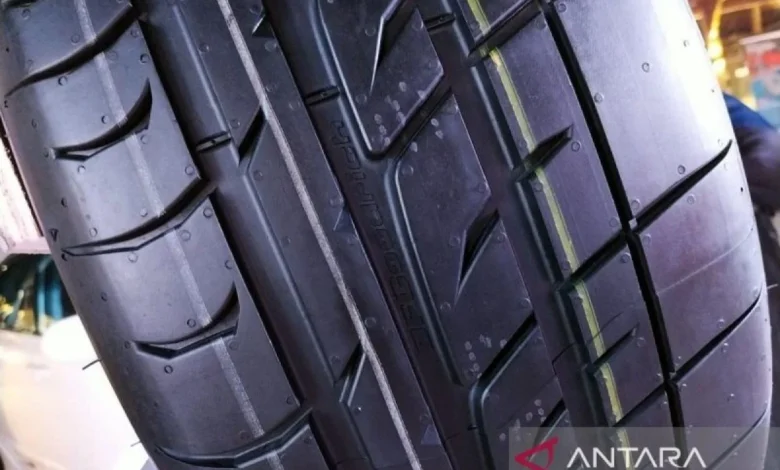
Tires are the only point of contact between a vehicle and the road surface, serving as the primary interface for traction, steering, and braking forces. When a tire is under-inflated, the sidewalls flex excessively, leading to heat buildup that can cause internal structural damage or, in extreme cases, a blowout. Conversely, over-inflation reduces the contact patch, diminishing the tire’s ability to grip the road, which compromises stability and results in uneven tread wear.
The reliance on intuition is a dangerous habit. Modern vehicle dynamics are calibrated based on specific tire pressures. Deviating from these specifications alters the tire’s footprint, impacting the vehicle’s Electronic Stability Control (ESC) and Anti-lock Braking System (ABS) efficiency. According to automotive safety researchers, a tire operating at 25% below its recommended pressure can increase the risk of a crash by up to three times compared to a properly inflated tire.
Decoding Manufacturer Recommendations: Myths vs. Reality
A pervasive misconception among vehicle owners involves the information printed on the tire sidewall. Many motorists interpret the "Max Pressure" rating stamped on the tire by the manufacturer as the recommended operating pressure. In reality, the figure, such as "MAX PRESSURE 44 PSI," represents the structural limit of the tire under maximum load capacity. It is not, and should never be used as, the operating pressure for daily driving.
Vehicle manufacturers, such as Toyota and Yamaha, conduct extensive testing to determine the ideal pressure for a specific chassis, taking into account vehicle weight, suspension geometry, and intended usage. These values are officially documented in the vehicle’s owner’s manual and are typically displayed on a placard located on the driver-side door jamb, inside the fuel filler door, or within the glove compartment. Adhering to these factory-specified values is the only way to ensure the vehicle performs as intended.
Guidelines for Motorcycles: Precision in Dynamics
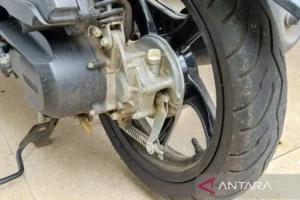
Motorcycles, due to their limited contact patches, are particularly sensitive to tire pressure fluctuations. For daily commuting, standard automatic and underbone motorcycles typically require between 29 and 30 PSI for the front tire and 31 to 33 PSI for the rear.
Yamaha Indonesia provides a standard baseline for many of its models, often suggesting 29 PSI for the front and 32 PSI for the rear. However, these figures are not universal. Because motorcycles carry a significant portion of the rider’s weight—and potentially a passenger’s weight—on the rear wheel, the rear tire pressure often requires a higher setting. Manufacturers frequently provide dual recommendations: one for solo riding and one for riding with a pillion passenger. Ignoring these adjustments significantly impacts the bike’s lean angle, turn-in speed, and overall stability during cornering.
Passenger Vehicles: Balancing Load and Pressure
For automobiles, including sedans, hatchbacks, and MPVs, the standard pressure range typically falls between 30 and 35 PSI. However, the automotive landscape is diverse. SUVs and light trucks, which possess higher centers of gravity and greater curb weights, often require higher pressures to support their load.
Toyota Astra Motor and other major manufacturers emphasize that these ranges are starting points. When a vehicle is fully loaded with passengers and cargo, the internal tire pressure must be adjusted to compensate for the additional downward force. As a general rule, increasing pressure by 2 to 4 PSI over the standard "normal" recommendation is common practice for heavy loads, but this must be done strictly within the limits prescribed by the vehicle’s manufacturer. Failure to adjust pressure for a loaded vehicle results in "squatting," where the tire sidewalls are overly stressed, leading to accelerated deterioration.
The Physics of Temperature and Pressure
A critical, often ignored variable in tire maintenance is thermal expansion. Air, like most gases, expands when heated. As a vehicle travels, friction between the tire and the road, combined with the continuous flexing of the tire structure, generates significant heat. This causes the internal pressure to rise—often by 3 to 5 PSI during a long journey.
Because of this, industry experts at companies like Michelin advocate for the "cold inflation" method. Tire pressure should always be checked when the tires have been stationary for at least three hours or have traveled less than two kilometers. Checking pressure after a long drive will result in a "hot reading," which is artificially high. If a driver attempts to "correct" this by releasing air, the tire will be significantly under-inflated once it cools down, leading to the dangers associated with low-pressure operation.
Broader Economic and Environmental Implications
The impact of maintaining proper tire pressure extends beyond individual vehicle safety; it has tangible economic and environmental consequences. Under-inflated tires increase rolling resistance, which forces the engine to work harder to maintain speed. Studies have shown that driving on under-inflated tires can reduce fuel efficiency by approximately 3% to 5%. Over the course of a year, this equates to a significant increase in fuel expenditure for the average motorist.
Furthermore, tires that are not maintained according to specifications reach the end of their lifecycle much faster. The resulting increase in tire waste contributes to environmental challenges, as worn-out tires are notoriously difficult to recycle. By simply utilizing a reliable pressure gauge and checking the vehicle’s placard once a month, owners can extend the life of their tires, improve fuel economy, and contribute to a safer road environment.
Chronology of Maintenance Best Practices
To ensure consistent performance, vehicle owners should adopt a disciplined maintenance routine:
- Monthly Verification: Establish a schedule to check all four tires (and the spare, if equipped) at least once a month.
- Cold Pressure Check: Perform measurements only in the morning or after the vehicle has remained parked for several hours.
- Reference the Placard: Always rely on the manufacturer’s sticker located on the vehicle’s frame, rather than the numbers on the tire sidewall.
- Visual Inspections: While visual checks are insufficient for measuring pressure, they are useful for detecting punctures, uneven wear patterns, or cracks in the rubber.
- Adjust for Load: Before embarking on long trips with a full vehicle, consult the owner’s manual for the correct "heavy load" pressure setting.
Conclusion
The evolution of modern vehicle technology has made driving safer, yet the fundamental requirement of pneumatic tire pressure remains a constant in vehicle maintenance. Whether operating a motorcycle or a heavy SUV, the responsibility for safety rests on the driver’s commitment to these basic, data-driven practices. By abandoning the "feeling" method in favor of precision measurements, motorists can optimize their vehicle’s performance, enhance safety on the road, and achieve better long-term economic value from their tires. Ignoring these simple metrics is a risk that modern vehicle engineering—and the laws of physics—simply do not accommodate.