Queen Máxima Concludes Influential Four-Day Working Visit to Indonesia, Championing Financial Inclusion and Health Across Archipelagic Nation

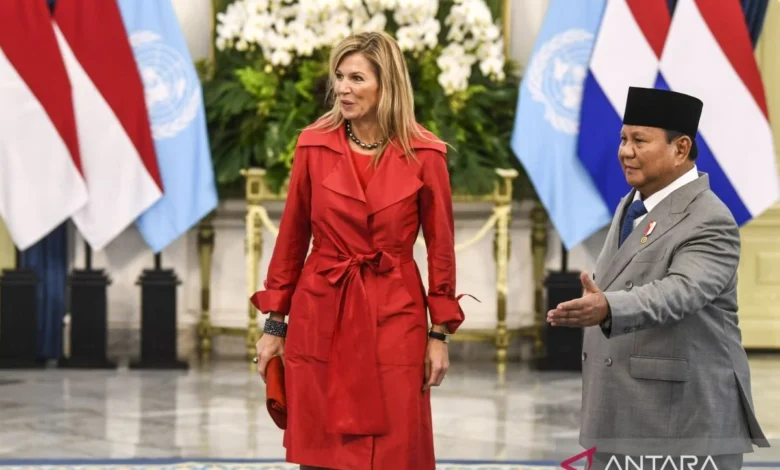
Jakarta, Indonesia – Her Majesty Queen Máxima of the Netherlands has successfully concluded a significant four-day working visit to Indonesia, spanning from Monday, November 24, to Thursday, November 27, 2025. This pivotal visit underscored her dedicated role as the United Nations Secretary-General’s Special Advocate (UNSGSA) for Inclusive Finance for Development, a capacity in which she tirelessly champions financial health and resilience globally. Throughout her intense itinerary, Queen Máxima engaged with a diverse array of stakeholders, from policymakers and financial regulators to local entrepreneurs and low-income communities, focusing on advancing financial inclusion and well-being as critical drivers for sustainable economic development across the vast Indonesian archipelago.
The UNSGSA Mandate: A Global Push for Financial Empowerment
Queen Máxima’s visit was not conducted in her capacity as Queen of the Netherlands, but rather as the UNSGSA, a role she has held since 2009. In this capacity, she works globally to foster financial systems that are accessible, affordable, and useful for everyone, especially the poor and vulnerable. Her mandate involves advocating for financial inclusion as a means to achieve the United Nations Sustainable Development Goals (SDGs), which range from eradicating poverty (SDG 1) and achieving gender equality (SDG 5) to promoting decent work and economic growth (SDG 8) and reducing inequalities (SDG 10). Financial inclusion, in the UNSGSA’s view, extends beyond merely having a bank account; it encompasses access to a full range of appropriate financial services, including savings, credit, insurance, and payments, along with the financial literacy to use them effectively and responsibly. The concept of "financial health" is central to her advocacy, emphasizing not just access to services, but the ability of individuals and households to manage their daily finances, cope with shocks, and invest in their future. Indonesia, with its vast population and unique geographical challenges, presents a crucial context for demonstrating how targeted financial inclusion initiatives can yield significant societal benefits.
Indonesia’s Journey Towards Inclusive Finance
Indonesia has made remarkable strides in expanding financial inclusion over the past decade. According to the World Bank’s Global Findex database, the percentage of adults with an account at a financial institution or through a mobile money provider rose significantly, driven by digital innovation and government commitment. However, substantial gaps remain, particularly among women, rural populations, and micro, small, and medium-sized enterprises (MSMEs). The National Strategy for Financial Inclusion (SNKI), launched by the Indonesian government, aims to further narrow these gaps by promoting digital financial services, strengthening financial literacy, and facilitating access to finance for underserved segments. The SNKI sets ambitious targets for increasing financial inclusion, recognizing its potent role in poverty alleviation, economic stability, and fostering entrepreneurship. Queen Máxima’s visit served as an international endorsement of these efforts, while also providing an opportunity to highlight areas where further innovation and policy support are needed. Her previous four visits to Indonesia in her UNSGSA capacity (in 2012, 2016, and 2018) underscore her long-standing engagement with the country’s financial inclusion journey, building a foundation of understanding and trust that informs her current recommendations. Her 2020 visit with King Willem-Alexander, as Queen of the Netherlands, showcased the broader bilateral ties between the two nations, but this latest visit firmly centered on her specialized UN role.
A Detailed Chronology of Engagements: Fostering Financial Resilience
The four-day itinerary was meticulously planned to provide Queen Máxima with a comprehensive overview of Indonesia’s financial inclusion landscape, from grassroots initiatives to high-level policy discussions.
Tuesday, November 25: Grassroots Impact in Central Java
Queen Máxima commenced her working visit in Central Java, a region rich in economic activity and cultural heritage, but also home to communities with varying levels of financial access. Her first stop was a garment factory in Sragen Regency. This visit was highly symbolic, as the textile and garment industry is a major employer of women, who often face unique challenges in managing their finances, accessing formal credit, and building savings. During her engagement, the Queen observed the working conditions and interacted with female employees, discussing their experiences with financial products and services, such as digital wage payments, micro-savings schemes, and basic financial literacy programs offered by their employers or local financial institutions. Officials at the factory highlighted the positive impact of digital salary payments on employee financial management, reducing reliance on cash and improving security.
Following Sragen, the Queen traveled to Solo (Surakarta), a city renowned for its vibrant batik industry. Her visit to Kampung Batik Laweyan provided a direct insight into the challenges and opportunities faced by micro and small entrepreneurs in traditional sectors. Here, she engaged with batik artisans and small business owners, particularly women, who often struggle to access formal financing for working capital or expansion. Discussions revolved around the role of microfinance institutions, digital payment platforms, and e-commerce solutions in helping these entrepreneurs manage their businesses, reach broader markets, and achieve greater financial stability. Local cooperative leaders emphasized the need for tailored financial products that understand the seasonal nature of their businesses and the importance of financial education to prevent predatory lending.
The day concluded with a significant event at Pura Mangkunegaran, Solo, where Queen Máxima attended a gathering organized by Women’s World Banking. This global non-profit is dedicated to designing and delivering financial services for low-income women. At the event, the Queen participated in candid conversations with young people, university students, and burgeoning entrepreneurs. The discussions delved into their personal experiences with financial products and services, the role of digital technologies in their financial lives, and their aspirations for financial independence. Participants shared insights on the usability of mobile banking apps, the challenges of saving for future goals, and the importance of financial literacy education from an early age. The event underscored the critical link between financial inclusion and youth empowerment, as well as the immense potential of women as drivers of economic growth when adequately supported with financial tools.
Wednesday, November 26: Policy Dialogue and Innovative Solutions in Greater Jakarta
The second day of the working visit focused on Jakarta and its surrounding areas, shifting to higher-level policy discussions and examining innovative solutions for housing and corporate responsibility. Queen Máxima began her day at the local United Nations office in Jakarta, where she co-chaired a roundtable discussion with various development organizations. This session brought together representatives from UN agencies, international NGOs, and local development partners to discuss collaborative strategies for accelerating financial inclusion in Indonesia. Topics included harmonizing efforts, sharing best practices, addressing regulatory gaps, and leveraging technology to reach remote populations. Participants emphasized the importance of data-driven policy-making and integrated approaches that consider financial inclusion alongside health, education, and environmental goals.
Later, the Queen visited the International Finance Corporation (IFC), a member of the World Bank Group, in Jakarta. The IFC plays a crucial role in promoting private sector development in emerging markets. Her discussions with IFC officials centered on the development of innovative lending products and investment strategies that contribute to both economic growth and improved financial health. This included exploring financing mechanisms for MSMEs, green financing initiatives, and the role of blended finance in mobilizing private capital for development projects. The IFC highlighted its commitment to supporting financial institutions in Indonesia to expand their reach and offer more inclusive products.
A highlight of the day was the visit to Gran Harmoni Cibitung, a subsidized housing complex in Bekasi Regency, West Java. This complex is notable for providing affordable, low-emission homes to low- and middle-income communities, addressing a critical need for housing in rapidly urbanizing areas. Queen Máxima toured the facilities, engaging directly with residents and representatives of first-time homebuyers. She visited a resident’s home, gaining firsthand insight into the impact of affordable housing on family well-being and financial stability. A particularly innovative aspect of the complex was its "bank sampah" (waste bank), which offers residents a unique way to pay their housing installments by collecting and depositing recyclable waste. This initiative not only promotes financial discipline but also fosters environmental awareness and sustainability. The Queen observed the process of collecting and weighing waste, and the subsequent crediting of residents’ accounts. She also witnessed the signing of home purchase agreements for dozens of prospective homeowners, a moment symbolizing the realization of a major financial goal for many Indonesian families. This model of integrating financial access with environmental sustainability drew significant praise for its ingenuity and potential for replication.
The day concluded with Queen Máxima visiting Deloitte Indonesia in Jakarta. Here, she engaged with business leaders and employers to discuss how the private sector can contribute to the financial health of their employees and clients. The conversation focused on corporate wellness programs, financial literacy workshops for employees, responsible lending practices, and the development of client-centric financial products. Deloitte representatives underscored the growing recognition among corporations that employee financial well-being is directly linked to productivity, retention, and overall business success.
Thursday, November 27: Policy Synthesis and Presidential Dialogue
The final day of Queen Máxima’s visit was dedicated to high-level policy engagement and synthesizing the insights gathered throughout her trip. She participated in a crucial financial literacy agenda session with key Indonesian financial authorities: the Otoritas Jasa Keuangan (OJK – Financial Services Authority), Bank Indonesia (BI – Central Bank), and the Kementerian Keuangan (Kemenkeu – Ministry of Finance). This meeting underscored the government’s holistic approach to financial inclusion, recognizing that access must be coupled with robust financial education and consumer protection. Discussions covered strategies for improving financial literacy across various demographics, leveraging digital platforms for educational outreach, and strengthening regulatory frameworks to ensure market stability and consumer trust. Officials from OJK highlighted initiatives to protect consumers from predatory lending and fraud in the rapidly evolving digital financial landscape.
The culmination of the visit was a highly anticipated meeting with President Prabowo Subianto at Istana Merdeka (Merdeka Palace) in Jakarta. During this important encounter, Queen Máxima formally conveyed her findings, observations, and impressions from her extensive engagements across Indonesia. The discussion likely covered policy recommendations stemming from her UNSGSA mandate, potential areas for enhanced cooperation between Indonesia and the UN/Netherlands in financial inclusion, and strategies for accelerating progress towards the SDGs. The meeting included a private one-on-one session followed by a luncheon, providing an invaluable opportunity for high-level dialogue on Indonesia’s strategic direction in financial inclusion and its broader implications for regional and global development. President Subianto is expected to have reaffirmed Indonesia’s commitment to advancing financial inclusion as a cornerstone of its national development agenda, acknowledging the invaluable insights provided by the UNSGSA.
Broader Impact and Future Implications
Queen Máxima’s latest visit to Indonesia is expected to yield several significant impacts. Firstly, it provides a powerful international spotlight on Indonesia’s efforts and challenges in financial inclusion, potentially attracting further investment and technical assistance. Her advocacy often translates into concrete policy recommendations that can be adopted by national governments and financial regulators. The discussions with OJK, BI, and Kemenkeu are likely to inform future regulatory adjustments and national financial inclusion strategies, particularly concerning digital financial services, consumer protection, and financial literacy campaigns.
Secondly, by highlighting innovative local initiatives like the "bank sampah" for KPR (home loan) payments, the visit inspires and encourages the replication of creative solutions that integrate financial inclusion with other development objectives, such as environmental sustainability. This synergy demonstrates how financial tools can be leveraged for broader societal benefits.
Thirdly, the direct engagement with diverse communities—from garment workers and batik artisans to housing residents and youth—reinforces the human-centric approach to financial inclusion. It underscores that policies must be designed with the real-life needs and challenges of ordinary citizens in mind, fostering greater trust in formal financial systems.
Finally, the consistent engagement by Queen Máxima in her UNSGSA role with Indonesia over the years signifies a long-term commitment to the country’s development trajectory. Her visits serve not just as fact-finding missions, but as catalysts for sustained dialogue, collaboration, and progress towards a more financially inclusive and prosperous Indonesia. The exchange of ideas and best practices with international bodies like the UN and IFC further strengthens Indonesia’s position as a leader in innovative financial inclusion strategies within the ASEAN region and beyond. As Indonesia continues its path toward becoming a high-income nation, ensuring that all segments of its population have access to and can effectively utilize financial services will be paramount, a vision strongly supported by the UNSGSA’s tireless advocacy.
Related posts: