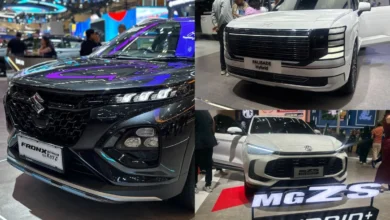
Advanced Driver Assistance Systems are Redefining Automotive Safety Standards in the Modern Era

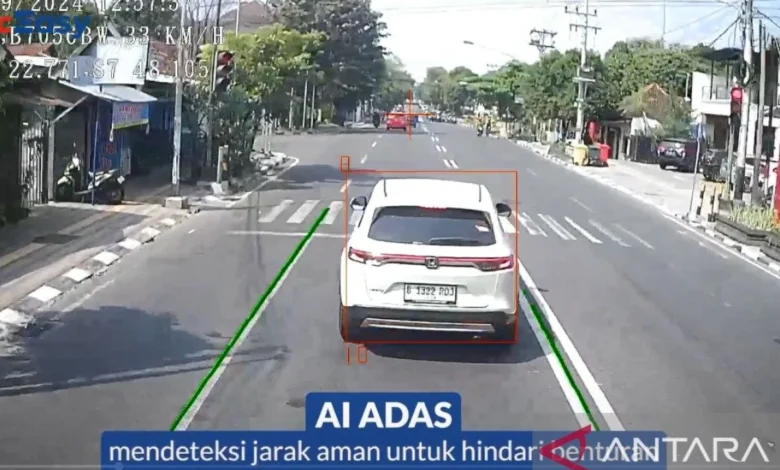
The automotive landscape is undergoing a profound transformation, shifting from a focus on passive protection—such as airbags and reinforced chassis—to an era of active prevention. Advanced Driver Assistance Systems (ADAS) have emerged as the cornerstone of this evolution, fundamentally altering how vehicles interact with their surroundings. No longer reserved for luxury vehicles, these sophisticated electronic suites are becoming ubiquitous in mainstream passenger cars, driven by a confluence of rigorous global safety regulations, rapid sensor innovation, and heightened consumer demand for accident mitigation technologies.
At its core, ADAS represents a sophisticated network of hardware and software designed to augment human perception. Utilizing an array of cameras, ultrasonic sensors, radar, and increasingly, LiDAR, these systems monitor the vehicle’s periphery in real-time. This data-driven approach allows the vehicle to provide haptic, visual, or auditory warnings, and in critical scenarios, intervene directly through automated braking or steering adjustments.
The Evolving Landscape of Global Safety Protocols
The integration of ADAS has been accelerated by the tightening of international vehicle safety benchmarks. The European New Car Assessment Programme (Euro NCAP) has led this charge, recently unveiling a more stringent testing protocol for 2026. This updated framework shifts the focus from purely crash-survivability to "preventative safety."
Under the 2026 standards, vehicles are no longer judged solely by how well they protect occupants during an impact. Instead, they are rigorously evaluated on their ability to avoid collisions entirely. This involves testing how effectively a vehicle interacts with vulnerable road users, such as cyclists and pedestrians, across a diverse range of environmental conditions. This regulatory shift acts as a catalyst for manufacturers, who must now prioritize the inclusion of high-fidelity sensor suites to secure top-tier safety ratings.
Anatomy of the Modern Safety Suite
To understand why ADAS has become the industry standard, one must examine the specific functionalities that comprise these systems:
- Forward Collision Warning (FCW) and Automatic Emergency Braking (AEB): These systems act as a secondary pair of eyes. While FCW alerts the driver to an imminent collision with a preceding vehicle or obstacle, AEB takes the initiative to apply braking force if the driver fails to respond, significantly reducing the kinetic energy of potential impacts.
- Adaptive Cruise Control (ACC): By maintaining a set distance from the vehicle ahead, ACC reduces the cognitive load on drivers during long-distance travel, effectively mitigating fatigue-related errors.
- Lane Keeping Assist (LKA) and Lane Centering: These systems utilize optical sensors to track road markings, applying subtle steering torque to ensure the vehicle remains within its lane, thus preventing unintentional lane departures.
- Blind Spot Monitoring (BSM): Utilizing side-facing radar, BSM mitigates the risks associated with the "blind spot" phenomenon, providing alerts when a vehicle is detected in an adjacent lane during overtaking maneuvers.
A Data-Driven Shift: The 2026 Euro NCAP Benchmark
The impact of these regulations is already visible in the global market. In September 2026, the first results under the updated Euro NCAP protocols were released, revealing a notable shift in the automotive hierarchy. The AION UT, Geely E2, and Leapmotor B05—all representing the rapidly advancing Chinese automotive sector—achieved five-star ratings. This achievement underscores that high-level safety technology is no longer the exclusive domain of premium European or American brands, but a fundamental requirement for global competitiveness.
This trend is further supported by industry data. According to the National Highway Traffic Safety Administration (NHTSA), while human error remains the leading cause of traffic accidents, the implementation of AEB alone is estimated to reduce rear-end collisions by approximately 50%. However, these systems are designed as assistants, not replacements for human agency.
The Limitations of Autonomy: The Human-in-the-Loop Reality
Despite the sophistication of ADAS, a critical distinction must be maintained between "assisted driving" and "autonomous driving." Regulators, including the NHTSA, have been emphatic in their messaging: ADAS does not equate to a self-driving vehicle.
The technology is subject to physical and environmental limitations. Sensors may struggle in extreme weather conditions, such as heavy fog, torrential rain, or blinding glare, which can compromise the clarity of camera-based inputs. Furthermore, degraded road markings or complex urban infrastructure can challenge the reliability of lane-keeping systems. Consequently, the driver retains the legal and ethical responsibility for the vehicle at all times.
The industry currently operates within a framework defined by the Society of Automotive Engineers (SAE) levels of automation. Most modern ADAS functions fall under Level 1 (driver assistance with either steering or acceleration/braking) or Level 2 (partial automation where the system can handle both, but the driver must remain fully attentive). The jump to Level 3 and beyond involves significant technical and legislative hurdles that remain the subject of intense ongoing research.
Economic and Technological Drivers
The proliferation of ADAS is also a byproduct of economies of scale. As the costs of radar modules, cameras, and processing power decrease, manufacturers can integrate these components into entry-level models. This democratization of safety is a major competitive advantage. Consumers are increasingly using safety ratings as a primary metric for vehicle selection, forcing automakers to innovate rapidly to keep pace with both competitors and regulatory expectations.
Moreover, the integration of Artificial Intelligence (AI) is providing the "intelligence" layer to these sensors. AI algorithms are now capable of classifying objects with higher precision—distinguishing between a plastic bag, a child, or a stationary vehicle. This increased semantic understanding of the driving environment is what separates modern ADAS from the primitive collision-avoidance systems of the early 2010s.
Broader Implications for Infrastructure and Society
The widespread adoption of ADAS carries significant implications for urban planning and public health. As vehicles become "smarter," there is an expectation that they will eventually communicate with smart traffic infrastructure—a concept known as Vehicle-to-Everything (V2X) communication. If a vehicle can "talk" to a traffic light or a pedestrian’s mobile device, the potential for accident prevention increases exponentially.
However, the rapid rollout of these technologies also raises concerns regarding data privacy and the security of automotive software. As cars become sophisticated computers on wheels, the cybersecurity threat surface expands. Regulatory bodies are beginning to draft guidelines not only for how these systems perform on the road, but also how they handle the vast amounts of telemetry data they collect.
The Path Forward: A Collaborative Future
The consensus among industry experts, including representatives from the Ministry of Transportation and global safety organizations, is that technology is the most viable path toward the "Vision Zero" goal—a future with zero traffic-related fatalities. By mitigating the effects of human error, distraction, and fatigue, ADAS serves as a vital bridge between current human-driven vehicles and the fully autonomous future.
Yet, the success of this transition depends on public education. There is a persistent danger that drivers may become over-reliant on these systems, leading to a false sense of security. As ADAS continues to evolve, the burden of safety will remain a shared responsibility. Manufacturers must continue to refine the transparency and reliability of these systems, while drivers must maintain a rigorous understanding of their vehicle’s capabilities and, crucially, its limitations.
In summary, the rise of ADAS is not merely a marketing trend or a luxury upgrade; it is a fundamental shift in the design philosophy of the modern automobile. As the automotive industry moves through the latter half of this decade, the focus will remain on refining these electronic "co-pilots" to ensure that as vehicles become more capable, the roads become safer for every participant, from the driver to the pedestrian. The era of the intelligent vehicle has arrived, and its primary objective remains clear: to prevent the preventable.