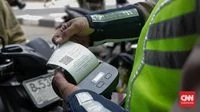
The Indonesian National Police Traffic Corps, widely known as Korlantas Polri, has officially commenced the nationwide Operasi Patuh 2026. Running simultaneously across the archipelago from October 26 through November 8, this intensive two-week enforcement campaign targets eleven specific categories of traffic infractions. The overarching objective of the operation is to foster greater road discipline, curb rising traffic violation rates, and ultimately mitigate the incidence and severity of traffic accidents on Indonesian thoroughfares.
With maximum fines reaching up to IDR 750,000, traffic authorities are deploying a comprehensive enforcement strategy that combines cutting-edge electronic surveillance systems with traditional on-the-ground police checks. As urban mobility continues to expand and vehicle density increases exponentially in major metropolitan areas like Jakarta, Surabaya, Medan, and Bandung, the enforcement of rigorous driving standards has become an urgent priority for public safety officials.
Comprehensive List of Targeted Infractions and Associated Fines
During the fourteen-day operational window, traffic police personnel and automated surveillance networks will zero in on behaviors that pose significant safety hazards to motorists, pedestrians, and passengers alike. The targeted infractions and their respective legal consequences under the Indonesian Road Traffic and Transportation Law include:
- Using a mobile phone while driving: Distracted driving remains one of the leading causes of modern traffic accidents. Motorists caught operating cellular devices without hands-free equipment face a maximum fine of IDR 750,000, stipulated under Article 283.
- Disobeying road markings or traffic signs: Failure to adhere to lane divisions, directional arrows, and regulatory signs carries a maximum penalty of IDR 500,000, pursuant to Article 287 paragraph (1).
- Running red lights: Traffic signal violations present severe collision risks at urban intersections. Violators are subject to a maximum fine of IDR 500,000 under Article 287 paragraph (2).
- Driving against the flow of traffic: Wrong-way driving, particularly prevalent among motorcyclists seeking shortcuts, incurs a maximum fine of IDR 500,000, governed by Article 287 paragraph (1).
- Exceeding designated speed limits: Speeding significantly reduces reaction times and increases the severity of impacts. Violators caught breaking speed limits face a maximum fine of IDR 500,000, outlined in Article 287 paragraph (5).
- Breaching busway lanes: Unauthorized entry into designated bus rapid transit lanes disrupts public transportation schedules and creates bottlenecks. This offense warrants a maximum fine of IDR 500,000 under Article 287 paragraph (1).
- Using non-compliant vehicle registration plates (TNKB): Tampering with, obscuring, or using unauthorized license plates—frequently done to evade electronic traffic cameras—carries a maximum fine of IDR 500,000, according to Article 280.
- Failing to wear seatbelts: Both drivers and front-seat passengers must utilize seat safety restraints. Non-compliance results in a maximum fine of IDR 250,000, referenced under Article 289.
- Riding motorcycles without SNI-certified helmets: Motorcyclists and pillion passengers not wearing helmets meeting the Indonesian National Standard (SNI) face a maximum fine of IDR 250,000, mandated by Article 291 paragraph (1).
- Carrying excess passengers on motorcycles: Motorcycles lacking sidecars are restricted to a single passenger. Transporting more than one pillion rider incurs a maximum fine of IDR 250,000 under Article 292.
- Parking on pedestrian walkways: Obstructing sidewalks forces pedestrians onto active roadways, heightening accident risks. This infraction carries a maximum fine of IDR 250,000, stipulated under Article 275 paragraph (1).
Operational Methodology: Balancing Electronic Law Enforcement with Manual Checks
A cornerstone of Operasi Patuh 2026 is the heavy reliance on the Electronic Traffic Law Enforcement (ETLE) system. This digital infrastructure utilizes high-resolution cameras installed at strategic junctions and mobile units to capture violations in real-time, minimizing direct confrontations between officers and motorists while enhancing transparency.
However, the leadership of Korlantas Polri has clarified that traditional manual ticketing remains an active component of the operation. Head of Korlantas Polri Brigadier General Aries Syahbudin emphasized that while ETLE serves as the primary mechanism, manual enforcement will be utilized whenever necessary to address blatant and hazardous infractions that automated systems might miss or where physical intervention is required.
Furthermore, Brigadier General Aries underscored that police personnel deployed in the field are instructed to prioritize educational, persuasive, and humanistic approaches. Officers are expected to engage with the public constructively, explaining the rationale behind traffic regulations rather than immediately resorting to punitive measures, unless the violation directly threatens public safety.
Echoing this sentiment, Metro Jaya Police Chief Commissioner Dadang Hartanto affirmed that law enforcement in the capital region would deploy a dual strategy combining ETLE and conventional ticketing. Nevertheless, Commissioner Dadang stressed that punitive enforcement is strictly positioned as a measure of last resort.
"Law enforcement is used as a final step; truthfully, this is not our primary desire," Commissioner Dadang stated. "However, once an action becomes dangerous and disrupts public safety, enforcement must be carried out using both conventional methods and ETLE."
Background and Context of Road Safety Challenges in Indonesia
The launch of Operasi Patuh 2026 arrives against a backdrop of ongoing challenges regarding road safety management across Indonesia. Despite continuous infrastructure improvements and expanded public transportation networks, traffic-related incidents remain a critical public health concern. Data compiled by transportation authorities consistently highlight human error—such as impatience, fatigue, distraction, and a general disregard for basic safety protocols—as the primary contributing factor in the vast majority of road mishaps.
In recent years, the integration of digital monitoring systems like ETLE has revolutionized how traffic laws are enforced in urban centers. By reducing opportunities for subjective interpretations during traffic stops, electronic enforcement has largely improved administrative accountability. Nonetheless, compliance outside major metropolitan zones remains uneven, necessitating periodic, high-visibility campaigns such as Operasi Patuh to reinforce behavioral norms nationwide.
Broader Implications for Urban Mobility and Public Behavior
The two-week enforcement blitz is anticipated to yield several significant outcomes for urban mobility and civil discipline. Beyond the immediate collection of fines and issuance of warnings, the operation serves as a psychological deterrent designed to curb reckless driving habits that contribute to urban congestion and roadway fatalities.
Transport policy analysts note that sustained enforcement campaigns, when coupled with public awareness initiatives, can gradually shift societal attitudes toward road safety. By targeting specific high-risk behaviors—such as wrong-way driving and mobile phone usage—Korlantas Polri aims to address the root causes of severe traffic collisions rather than merely penalizing minor administrative oversights.
As Operasi Patuh 2026 progresses through its scheduled timeline ending on November 8, motorists across Indonesia are strongly advised to verify their vehicle documentation, ensure compliance with safety equipment standards, and strictly adhere to traffic signals and markings to avoid legal penalties and contribute to safer roadways for all users.