Korlantas Polri Officially Launches Operasi Patuh 2026 Targeting 11 Traffic Violations with ETLE and Manual Fines


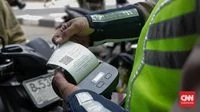
Jakarta, CNN Indonesia — The Indonesian National Police’s Traffic Corps, commonly known as Korlantas Polri, has officially initiated Operasi Patuh 2026, a nationwide traffic compliance operation conducted simultaneously across the archipelago from October 26 to November 8. This comprehensive two-week enforcement campaign specifically targets 11 distinct categories of traffic infractions, employing a dual enforcement strategy that encompasses both electronic traffic law enforcement (ETLE) and traditional manual ticketing by officers deployed in the field.
The primary objective of the nationwide operation is to drastically reduce traffic fatalities, curb reckless driving behaviors, and instill a lasting culture of discipline among motorists traversing Indonesia’s increasingly congested urban and rural thoroughfares. As vehicular volume continues to surge alongside economic development, law enforcement agencies face mounting pressure to address systemic safety deficits on national roadways through both technological integration and targeted human intervention.
Core Enforcement Strategies: Balancing Technology and Discretion
During the official rollout of Operasi Patuh 2026, Head of Korlantas Polri Brigadier General Aries Syahbudin emphasized that the overarching enforcement methodology will heavily prioritize the utilization of Electronic Traffic Law Enforcement (ETLE). The digital infrastructure, which relies on strategically positioned high-definition closed-circuit television (CCTV) cameras capable of automated license plate recognition and infraction detection, aims to minimize subjective interactions between motorists and law enforcement personnel, thereby enhancing transparency and reducing opportunities for procedural discrepancies.
Despite the heavy reliance on digital monitoring systems, Brigadier General Aries clarified that the police force retains the operational prerogative to deploy manual ticketing mechanisms when circumstances warrant immediate intervention. Furthermore, officers operating in the field have been instructed to balance strict legal enforcement with an educational, persuasive, and humanistic approach. The operational philosophy dictates that while compliance is mandatory, community engagement and public awareness remain critical pillars for long-term behavioral transformation.
Echoing this sentiment, Metro Jaya Police Chief Commissioner Dadang Hartanto reinforced that law enforcement within the capital region and its surrounding satellite cities will seamlessly integrate conventional and electronic modalities. Commissioner Dadang underscored that punitive measures, whether delivered digitally or via physical citations, are treated strictly as a measure of last resort. The police force, he noted, fundamentally seeks to avoid punitive fines whenever possible, reserving concrete enforcement actions exclusively for situations where motorist negligence directly jeopardizes public safety or severely disrupts the orderly flow of traffic.
"This law enforcement is implemented as a final step, which we honestly prefer not to utilize under normal circumstances," Commissioner Dadang stated during an operational briefing. "However, once behavior crosses the threshold into endangering others and compromising overall safety, active intervention becomes mandatory. This intervention is executed through conventional means as well as through the integration of ETLE systems."
Detailed Breakdown of the 11 Targeted Infractions and Associated Sanctions
Operasi Patuh 2026 focuses heavily on moving violations and structural non-compliance that historically contribute to high-severity traffic accidents across Indonesia. The legal framework governing these penalties is strictly anchored in Law Number 22 of 2009 concerning Traffic and Road Transport. Motorists found in violation of the designated statutes face financial penalties reaching up to Rp750,000, depending on the severity and inherent danger associated with the specific infraction.
The complete enumeration of the 11 targeted violations, alongside their corresponding maximum statutory fines and legal foundations under the 2009 traffic law, provides a clear benchmark for public compliance:
- Utilizing a mobile telephone or electronic communication device while operating a motor vehicle: Carries a maximum financial penalty of Rp750,000, governed by Article 283. Authorities identify distracted driving as one of the fastest-growing contributors to urban rear-end collisions and pedestrian strikes.
- Violating established road markings or traffic signs: Carries a maximum fine of Rp500,000, pursuant to Article 287 paragraph (1). This includes improper lane merging, ignoring directional arrows, and bypassing designated holding lines at intersections.
- Disregarding or running red traffic signals: Carries a maximum fine of Rp500,000, stipulated under Article 287 paragraph (2). Intersection collisions resulting from signal non-compliance frequently yield high-velocity side-impact crashes with severe physiological trauma.
- Driving against the designated flow of traffic (counter-flow or wrong-way driving): Carries a maximum fine of Rp500,000, enforced via Article 287 paragraph (1). Wrong-way driving, frequently observed among desperate motorcyclists seeking to bypass congestion, presents an extreme head-on collision hazard.
- Exceeding established legal speed limits: Carries a maximum fine of Rp500,000, regulated by Article 287 paragraph (5). Speed enforcement is bolstered by both handheld radar guns utilized by patrol units and automated average-speed calculation cameras integrated into the ETLE network.
- Unauthorized entry and transit through dedicated bus rapid transit lanes (busway): Carries a maximum fine of Rp500,000, governed by Article 287 paragraph (1). Breaching busways not only disrupts public mass transit schedules but also creates unpredictable obstacles for high-capacity commuter buses.
- Operating a vehicle with non-compliant vehicle registration plates (TNKB – Tanda Nomor Kendaraan Bermotor): Carries a maximum fine of Rp500,000, based on Article 280. This provision specifically targets motorists who manipulate, obscure, or alter their official license plates—including the deployment of mechanical plate-flippers or physical covers—in a deliberate attempt to evade automated ETLE detection.
- Failure to utilize a standard safety belt (seatbelt) for both the driver and the front-row passenger: Carries a maximum fine of Rp250,000, pursuant to Article 289. Unbelted occupants face exponential risks of ejection during rollover accidents or sudden deceleration events.
- Failure to wear a SNI-certified (Standard Nasional Indonesia) motorcycle helmet: Carries a maximum fine of Rp250,000, stipulated under Article 291 paragraph (1). The regulation mandates secure fastening under the chin to ensure the protective headgear remains properly positioned during an impact.
- Transporting more than one passenger on a standard motorcycle (riding three or more on a two-wheeled vehicle without a sidecar): Carries a maximum fine of Rp250,000, governed by Article 292. Overloading two-wheeled vehicles significantly compromises steering stability, braking efficiency, and balance.
- Parking or stopping motorized vehicles on pedestrian footpaths (trotoar): Carries a maximum fine of Rp250,000, enforced via Article 275 paragraph (1). This infraction directly infringes upon pedestrian mobility, forcing vulnerable foot traffic—including children, the elderly, and individuals with disabilities—to walk directly into active vehicular lanes.
Background Context and Institutional Evolution of Traffic Enforcement
The implementation of Operasi Patuh 2026 arrives at a critical juncture for Indonesia’s national transportation infrastructure. Over the past decade, Korlantas Polri has systematically shifted its operational paradigm away from traditional, ad-hoc roadside checkpoints toward integrated technological surveillance. The large-scale rollout of the Electronic Traffic Law Enforcement (ETLE) system, which began incrementally in major metropolitan areas such as Jakarta, Surabaya, and Bandung before expanding nationwide, represents a fundamental effort to modernize police operations and curb systemic opportunities for corruption.
Historically, traditional traffic stops conducted manually by patrol officers frequently faced public criticism regarding transparency and procedural consistency. By emphasizing automated photographic and video evidence, the Indonesian National Police has sought to rebuild public trust while simultaneously expanding its capacity to monitor thousands of intersections simultaneously. However, the complete transition to a purely digital enforcement model has faced practical limitations, particularly in secondary cities, rural jurisdictions, and regarding complex behavioral infractions—such as vehicle overloading, altered registration plates, or distracted driving involving subtle hand movements—that often require the discerning judgment of a human officer on the ground.
Consequently, campaigns like Operasi Patuh 2026 serve as periodic enforcement surges designed to re-anchor public awareness. By combining the unyielding vigilance of digital cameras with the proactive presence of patrol officers, the police corps attempts to maximize deterrence during high-mobility holiday seasons, transitional weather periods, or phases marked by statistical spikes in traffic accidents.
Socio-Economic Implications and Public Safety Analysis
Traffic accidents continue to exert a profound human and economic toll on the nation. According to multi-year statistical tracking by transportation safety analysts, human error accounts for the vast majority of vehicular incidents on Indonesian roads, dwarfing environmental factors or mechanical failures. Infractions such as distracted driving, excessive speed, and the blatant disregard for basic safety gear—such as helmets and seatbelts—translate directly into preventable fatalities, permanent physical disabilities, and significant healthcare expenditures.
The strict enforcement of regulations targeting obscured license plates and unauthorized busway usage also addresses broader urban mobility challenges. In dense urban environments like Jakarta, the integrity of dedicated public transport corridors is vital for maintaining the efficiency of mass transit networks. When private motorists routinely breach these lanes, the resulting gridlock undermines commuter confidence in public alternatives, subsequently driving more private vehicles onto already overburdened roads. Similarly, cracking down on sidewalk parking restores a baseline level of pedestrian safety, aligning national traffic enforcement with modern urban planning principles that prioritize non-motorized transport and universal accessibility.
As Operasi Patuh 2026 unfolds across the country through November 8, transport experts and civil society organizations will closely monitor its impact on accident rates and driver compliance metrics. While the immediate deterrent effect of increased police visibility and automated ticketing is well-documented, institutional stakeholders emphasize that sustainable road safety ultimately depends on continuous public education, infrastructure improvement, and an enduring cultural shift toward mutual respect among all road users.