Bahlil Lahadalia Confirms Fuel Queues in South Sulawesi Resolved After Intervention and Highlights Subsidy Misuse Through Illegal Tank Modifications

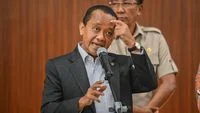
Energy and Mineral Resources Minister Bahlil Lahadalia has officially confirmed that the concerning fuel queues previously observed at various gas stations across South Sulawesi have been successfully mitigated and fully resolved. Speaking to members of the press at the Presidential Palace complex in Jakarta on Thursday, the minister stated that normal operational flow has been restored to the affected public refueling stations, commonly known as SPBU. The resolution comes on the heels of intense public scrutiny following days of gridlock, heavily congested roadways, and growing frustration among motorists who struggled to access basic petroleum products. Minister Bahlil noted that he has formally briefed President Prabowo Subianto on the situation, outlining both the immediate measures taken to normalize distribution and the underlying structural issues that triggered the crisis in the first place.
The emergence of these unusually long lines had sparked widespread concern regarding fuel security and distribution efficiency in the eastern region of Indonesia. Local motorists reported waiting for hours just to secure standard fuel allocations, leading to localized traffic paralysis near major thoroughfares housing high-volume service stations. While initial public anxiety pointed toward a potential supply shortage or systemic logistical failure within the state energy ecosystem, government investigations revealed a much more complex picture involving consumer behavior, regulatory loopholes, and deliberate exploitation of subsidized energy pricing.
Root Causes of the South Sulawesi Fuel Bottlenecks
According to the Ministry of Energy and Mineral Resources, the severe congestion at service stations was fundamentally driven by a massive migration of consumers shifting their purchasing preferences away from non-subsidized petroleum variants toward government-subsidized alternatives. This behavioral shift placed unprecedented pressure on local fuel terminals and retail outlets, which are designed to handle specific daily quotas aligned with historical consumption patterns. The sudden, exponential surge in demand for subsidized fuel quickly exhausted routine inventories, creating severe supply deficits before replenishment trucks could arrive from regional distribution hubs.
However, the ministry emphasized that shifting consumer preferences alone could not fully account for the severity of the backlog. Further investigative findings brought to light a sophisticated scheme orchestrated by bad actors seeking to exploit price differentials between subsidized and commercial-grade fuels. Minister Bahlil explicitly pointed fingers at specific individuals who manipulated their vehicles to siphon disproportionate volumes of subsidized fuel at the expense of the broader public.
Exploitation Tactics: Modified Tanks and Luxury Vehicles
In his detailed briefing to journalists, Minister Bahlil highlighted alarming discoveries made by law enforcement agencies during inspections of the congested service stations. Investigators uncovered widespread tampering with commercial and personal vehicle fuel systems designed to bypass standard purchasing limits. Rather than relying on standard factory specifications, these unscrupulous individuals systematically altered their vehicles to accommodate massive fuel capacities.
Some vehicles were found to be equipped with custom-built or expanded storage tanks capable of holding anywhere from 700 liters to a full ton of fuel in a single refueling session. Most glaringly, these extensive modifications were frequently identified in high-end, luxury automobiles, including prominent SUV models like the Mitsubishi Pajero. These vehicles, typically associated with higher-income demographics, were observed repeatedly occupying station pumps to hoard subsidized energy products intended primarily for lower-income motorists, public transportation fleets, and small-scale economic operators.
This illicit practice, colloquially known as "fuel hoarding" or "ping-ponging," allows perpetrators to purchase subsidized fuel at government-mandated low rates and subsequently divert those products for industrial use, agricultural machinery, or illegal resale at inflated market rates. The sheer volume consumed by these modified vehicles drastically accelerated the depletion of daily station quotas, depriving ordinary citizens of their fair share and generating artificial scarcity across the region.
Chronology and Official Response
The sequence of events leading up to the ministerial briefing unfolded rapidly over the course of several days, characterized by escalating public complaints and swift administrative intervention:
- Early Phase: Motorists in Makassar and surrounding areas of South Sulawesi began reporting unusually congested queues at various SPBU locations, with lines stretching up to several kilometers and causing significant traffic disruptions.
- Mid-Week Escalation: State-owned energy giant Pertamina, in collaboration with local law enforcement, initiated targeted inspections at high-traffic fuel stations to identify the root causes of the rapid inventory depletion.
- Wednesday Briefing: Director General of Oil and Gas at the Ministry of Energy and Mineral Resources, Laode Sulaeman, publicly detailed the modus operandi involving unauthorized structural modifications to vehicle fuel tanks, confirming that capacities were being unlawfully expanded by 50 to 75 percent beyond standard regulatory limits.
- Thursday Ministerial Address: Minister Bahlil Lahadalia addressed the national press at the Presidential Palace in Jakarta, confirming that the crisis in Makassar had been successfully neutralized, detailing the involvement of luxury vehicles in subsidy abuse, and outlining direct orders from President Prabowo Subianto to enforce stricter oversight.
Presidential Directives and Strict Enforcement Measures
The revelations concerning customized fuel tanks and systemic subsidy leakage prompted immediate attention from the highest levels of government. President Prabowo Subianto issued explicit directives calling for an immediate crackdown on fuel mafia networks and individuals engaging in the unauthorized manipulation of petroleum distribution channels. The administration has underscored that national energy subsidies represent a vital fiscal safety net designed to protect vulnerable socioeconomic groups, making any form of targeted exploitation a direct threat to public welfare and state financial resilience.
In response to these presidential instructions, the Ministry of Energy and Mineral Resources is currently coordinating closely with PT Pertamina (Persero) and the Indonesian National Police to tighten monitoring protocols at all retail refueling points. Law enforcement agencies have been granted authorization to take decisive legal action against motorists and organized syndicates caught violating fuel distribution regulations, including the confiscation of modified vehicles and the imposition of severe administrative and criminal sanctions against complicit gas station operators.
Implications for National Energy Distribution and Subsidy Reform
The recent incidents in South Sulawesi serve as a critical case study regarding the systemic vulnerabilities inherent in Indonesia’s broad energy subsidy framework. Economists and energy analysts have long argued that price disparities between subsidized and non-subsidized fuels create powerful financial incentives for regulatory arbitrage, smuggling, and illegal hoarding. When high-end vehicles routinely consume resources earmarked for economically disadvantaged populations, the fiscal burden on the state budget swells without achieving its intended social safety objectives.
Moving forward, the Ministry of Energy and Mineral Resources faces the ongoing challenge of balancing open public access to affordable energy with the necessity of robust administrative controls. Enhanced technological integration, such as the mandatory implementation of digital tracking systems like the MyPertamina application or QR-code-based purchase verification, is expected to play a pivotal role in preventing unauthorized volume accumulation. By cross-referencing vehicle registration data with national taxation and identification databases, authorities aim to ensure that subsidized fuel reaches strictly verified end-users.
Minister Bahlil reiterated that the government will maintain a zero-tolerance stance toward actions that compromise national energy security or disrupt public order. As field operations normalize across South Sulawesi, the administration’s proactive stance signals a broader commitment to reforming distribution networks, safeguarding state finances, and ensuring equitable resource allocation for all Indonesian citizens.
Related posts: