Indonesia Officially Appoints PT Len Industri to Lead National Electric Motorcycle Molinas Program Amid Push for Automotive Self-Sufficiency

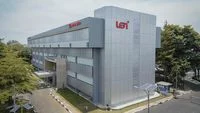
The Indonesian government has officially designated state-owned defense and electronics enterprise PT Len Industri (Persero) as the primary executor for the prestigious National Electric Motorcycle, or Motor Listrik Nasional (Molinas), development program. This strategic appointment has been formally codified through an official assignment letter bearing the reference number B-15/M/SDK/KI.00/08/2026, issued by the Minister of State Secretary to the President Director of PT Len Industri.
The move marks a decisive step in Jakarta’s long-term industrial policy aimed at accelerating the clean energy transition, reducing reliance on imported fossil-fuel vehicles, and bolstering domestic high-tech manufacturing capabilities. As global automotive markets rapidly pivot toward electrification, Indonesia has sought to position itself as a central hub for electric vehicle (EV) production in Southeast Asia, leveraging its abundant nickel reserves and strategic state-backed conglomerates.
Chronology and Background of the Molinas Initiative
The formalization of PT Len Industri’s mandate stems from high-level state directives formulated earlier in the year. According to official government documents, President Prabowo Subianto issued a direct mandate during a targeted Limited Cabinet Meeting (Rapat Terbatas) held on July 14, 2026. The presidential directive explicitly designated PT Len Industri as the central driving force behind the Molinas program, tasking the corporation with establishing a cohesive domestic EV ecosystem.
Subsequent administrative processes culminated on August 12, 2026, when Minister of State Secretary Prasetyo Hadi signed the official assignment letter. The decree outlines clear operational boundaries for PT Len Industri, emphasizing that the state-owned enterprise must execute the program through close cross-sectoral coordination with relevant ministries and state institutions. Furthermore, the directive establishes a strict accountability mechanism, requiring PT Len Industri to submit periodic implementation reports directly to the President through the Ministry of State Secretariat.
The genesis of the Molinas program itself stretches back several years, originating from earlier government ambitions to foster indigenous automotive brands. However, previous iterations faced hurdles regarding technology transfer, capital allocation, and supply chain integration. The current 2026 relaunch under PT Len Industri differs significantly by embedding the project within a broader, highly integrated state-backed financial and industrial architecture involving sovereign wealth management entities and specialized state-owned enterprises.
PT Len Industri’s Role as the Lead Integrator
Detailing the structural framework of the initiative, Setia Diarta, the Director General of Metal, Machinery, Transport Equipment, and Electronics (ILMATE) at the Ministry of Industry, provided a comprehensive briefing before the House of Representatives (DPR RI) Commission VII on Thursday, September 10, 2026. During the hearing, Diarta clarified that PT Len Industri will function primarily as the "lead integrator" for the entire Molinas program.
As the lead integrator, PT Len Industri will not operate in a vacuum but will instead orchestrate a multi-layered industrial network. According to Diarta’s presentation materials, the broader Molinas ecosystem will function in close synergy with Danantara, Indonesia’s newly empowered super-holding entity for state-owned enterprises. Within this collaborative framework, PT Len Industri takes direct ownership of core technical domains, including design, research and development (R&D), manufacturing, final assembly, and the deployment of public charging infrastructure.
The division of labor across the nascent national electric vehicle supply chain is structured to distribute responsibilities among specialized state and private stakeholders:
- Research, Design, and Assembly: Spearheaded by PT Len Industri acting as the lead integrator.
- Battery Production and Supply: Supported by the Indonesia Battery Corporation (IBC) alongside collaborative ventures such as CATIB and CATL, whose advanced manufacturing facility in Karawang, West Java, has already reached completion.
- Distribution, Retail, and Aftersales: Handled through a strategic partnership involving Koperasi Merah Putih and various state-owned distribution networks to ensure nationwide market penetration.
- Financial Backing and Funding: Facilitated by PT Sarana Multi Infrastruktur (SMI), ensuring long-term project liquidity and infrastructure investment capabilities.
"This is the comprehensive ecosystem of Molinas, and almost all aspects will involve Danantara throughout the process. While R&D and integration will be led by PT Len, the battery sector will incorporate facilities like the CATIB and CATL plant currently finished in Karawang," Diarta explained to lawmakers during the parliamentary session.
Technological Readiness: The Electrical Bike Sprint
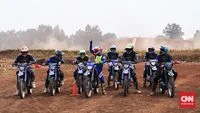
As proof of its technical capability to spearhead the national project, PT Len Industri is already actively advancing proprietary electric vehicle prototypes. Among its flagship developments is an indigenous electric trail motorcycle known as the Electrical Bike Sprint. Company specifications highlight that the vehicle has been entirely conceptualized, engineered, tested, and assembled domestically in Indonesia.
The Electrical Bike Sprint is powered by a robust 3,000-Watt electric motor. Performance metrics indicate that the trail bike is capable of achieving top speeds of up to 80 kilometers per hour, with a maximum operational range of approximately 60 kilometers on a single charge. This specialized vehicle design targets not only commercial and urban consumers but also institutional buyers, including agricultural, forestry, and security sectors that require rugged, low-maintenance off-road mobility solutions.
Industry analysts note that focusing initially on niche segments like electric trail bikes allows domestic manufacturers to refine powertrain durability, battery management systems, and thermal efficiency before scaling up mass-market commuter scooter and motorcycle lines—sectors historically dominated by Japanese combustion-engine brands.
Broader Economic and Industrial Implications
The official appointment of PT Len Industri and the mobilization of the Molinas ecosystem carry profound economic and geopolitical implications for Indonesia. For decades, the nation’s domestic automotive market has functioned primarily as a manufacturing and assembly base for foreign multinational corporations, predominantly from Japan and, more recently, China and South Korea.
By anchoring the Molinas program under state direction and utilizing local industrial champions like PT Len Industri and the Indonesia Battery Corporation, Jakarta aims to capture a significantly higher share of the economic value chain. This strategy aligns directly with the national policy of downstream industrialization (hilirisasi), which seeks to transition Indonesia from a raw material exporter—particularly of nickel, cobalt, and bauxite—into a high-value exporter of finished high-tech industrial goods.
Furthermore, the involvement of Danantara and financial institutions such as PT Sarana Multi Infrastruktur addresses a historical bottleneck in domestic technological ventures: sustained, long-term capital allocation. Access to predictable funding is expected to insulate the Molinas program from commercial volatility and accelerate the establishment of a robust domestic supply chain, ranging from semiconductor integration to advanced battery chemistry.
Challenges and the Road Ahead
Despite the optimism surrounding the launch of PT Len Industri’s mandate, industry observers point out several formidable challenges that lie ahead. Competing against established global electric vehicle manufacturers, particularly from China, who benefit from massive economies of scale and aggressive pricing strategies, will require rigorous quality control, competitive retail financing, and expansive aftersales networks.
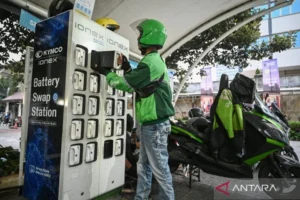
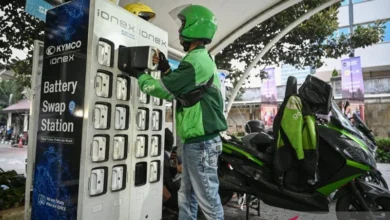
Moreover, consumer adoption of electric motorcycles in Indonesia remains sensitive to upfront vehicle acquisition costs, battery degradation concerns, and the density of charging infrastructure outside major metropolitan centers. While urban areas like Jakarta are seeing gradual EV adoption, rural and semi-urban markets will depend heavily on the rollout of accessible battery-swapping stations and reliable maintenance networks—responsibilities that fall under the collaborative purview of Koperasi Merah Putih and partner BUMNs.
As PT Len Industri assumes its role as lead integrator, the coming months will test the government’s ability to coordinate diverse state institutions, private partners, and financial backers. Success in the Molinas initiative could redefine Indonesia’s industrial landscape, transforming the archipelago from a passive consumer market into a self-reliant technological innovator in the global electric vehicle arena.