Pemerintah Respons Sorotan Pelaku Industri Otomotif dan Perkuat Kemitraan Strategis dengan Jepang di Nagoya

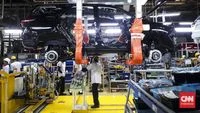
The Indonesian government has formally addressed a series of critical concerns raised by domestic automotive industry stakeholders and their Japanese business partners regarding the country’s evolving investment climate. During a high-level business engagement in Japan, senior economic officials outlined ongoing regulatory reforms, strategic supply chain integrations, and a robust roadmap for bilateral cooperation designed to secure Indonesia’s position as a premier global manufacturing hub.
The discussions, which centered on multifaceted operational hurdles such as regulatory friction, financing access for small and medium-sized enterprises (SMEs), and domestic component certification frameworks, underscore the delicate transition phase the automotive sector is currently navigating. As global markets pivot toward vehicle electrification and stringent environmental standards, foreign investors and local manufacturers alike continue to seek regulatory clarity, seamless administrative procedures, and comprehensive infrastructural support from policymakers in Jakarta.
Comprehensive Engagement in Nagoya Addresses Industry Bottlenecks
The dialogue took place during an exclusive Business Discussion Lunch held in Nagoya, Japan, a historic industrial heartland and home to some of the world’s most prominent automotive conglomerates. Susiwijono Moegiarso, Secretary of the Coordinating Ministry for Economic Affairs, led the Indonesian delegation and directly responded to the grievances voiced by industry leaders.
Among the primary issues highlighted by automotive players were bureaucratic bottlenecks in bureaucratic licensing, the scarcity of accessible capital and financing avenues for localized small and medium enterprises (SMEs) supporting the automotive supply chain, and the complex certification process mandated for Domestic Content Levels—commonly known as Tingkat Komponen Dalam Negeri (TKDN)—especially during the ongoing technological transition toward electric vehicles (EVs).
Responding to these pressing concerns, Susiwijono emphasized that the Indonesian government remains highly receptive to constructive criticism and is deeply committed to refining its regulatory framework through actionable, results-oriented measures.
"The government warmly welcomes all such feedback and reaffirms its unwavering commitment to continuously improving policies through concrete steps, including the ongoing resolution of existing investment barriers," Susiwijono stated, referencing statements coordinated via official channels following the event.
He further elaborated that the strategic series of meetings and business roundtables in Nagoya reinforced the foundational premise that the long-term competitiveness of the national industrial sector is inextricably linked to advanced technology adoption, the continuous upgrading of human resource capabilities, and the resilience of integrated supply chains.
Indonesia as a Crucial Pillar in the Global Automotive Value Chain
Rather than viewing Indonesia merely as a lucrative consumer market of over 270 million people, the government underscored its ambition to cement the archipelago’s status as an indispensable strategic partner for Japan within the broader global automotive ecosystem.
Officials outlined a vision where Indonesia functions not only as a domestic production base for internal combustion engine vehicles and emerging electric models but also as a primary export gateway reaching more than 100 countries worldwide. This export-oriented strategy relies heavily on the deep integration of Japanese manufacturing expertise with local resource abundance, particularly concerning the downstream processing of critical minerals such as nickel, which is vital for the production of electric vehicle batteries.
"Through open dialogues of this nature, the government remains optimistic that the Indonesia-Japan partnership will continue to flourish and deliver tangible economic benefits to the peoples and economies of both nations in the years ahead," Susiwijono added.
The automotive sector has historically served as a cornerstone of the bilateral economic relationship between Indonesia and Japan. Japanese automakers have poured billions of dollars into Southeast Asia’s largest economy over the past decades, establishing sprawling manufacturing complexes, particularly in West Java and surrounding industrial corridors. However, the rapid global shift toward electrification—spearheaded by aggressive market entries from alternative international competitors, particularly from China—has created a complex competitive landscape. Consequently, legacy Japanese manufacturers and their domestic suppliers are navigating a dual challenge: modernizing their production lines to meet green mobility targets while maintaining cost competitiveness in a price-sensitive domestic market.
Expanding Global Market Access Through International Trade Agreements
Beyond the micro-level concerns of licensing and component certification, the Indonesian delegation took the opportunity to brief Japanese investors on the country’s broader macroeconomic strategy and aggressive expansion of international trade networks.
To facilitate smoother cross-border operations and enhance export viability, the government highlighted that Indonesia has successfully signed and enacted a total of 25 international trade agreements, encompassing both bilateral Free Trade Agreements (FTAs) and comprehensive Comprehensive Economic Partnership Agreements (CEPAs). These treaties are designed to dismantle tariff and non-tariff barriers, ensuring that vehicles and automotive components manufactured in Indonesia enjoy preferential market access across diverse global regions.
Furthermore, the administration is actively fast-tracking the ratification process of several prominent pending trade deals to unlock new economic frontiers. Of notable significance is the Indonesia-European Union Comprehensive Economic Partnership Agreement (IEU-CEPA). According to current legislative and administrative timelines, the IEU-CEPA is scheduled to commence its formal ratification process in November 2026, with the ultimate target of achieving full implementation and enforcement by January 2027.
This landmark agreement is anticipated to significantly bolster Indonesia’s export capabilities, not only in manufactured goods like automobiles and electronic components but also in processed agricultural products and sustainable energy materials, providing European investors with a stable, predictable legal framework within the ASEAN region.
Domestic Resilience and Diversification into High-Tech Sectors
While addressing export-oriented industries and international partnerships, the Indonesian government simultaneously emphasized its proactive measures to safeguard domestic economic stability at home. Amid global economic uncertainties and inflationary pressures, fiscal authorities have maintained domestic purchasing power through targeted social assistance programs, energy and commodity subsidies, and strategic fiscal incentives designed to stimulate household consumption.
Simultaneously, Jakarta is aggressively diversifying its economic base by aggressively fostering new engines of growth, notably in advanced technology sectors such as artificial intelligence (AI) and semiconductor manufacturing. Recognizing that the future of the automotive industry is deeply intertwined with digital connectivity, autonomous driving technologies, and microchip availability, the government is forging strategic alliances with global technology giants.
Collaborative initiatives are currently underway with prominent international technology institutions and firms, including partnerships with ARM, WAICO, and exploratory discussions with PAX Silica. These high-tech ventures are intended to integrate Indonesia into the global semiconductor supply chain, ensuring that local industries—including automotive manufacturing—have reliable access to the advanced computing infrastructure required for next-generation smart vehicles and automated industrial systems.
Implications for the Future of Indonesian Industrialization
The constructive exchanges in Nagoya mark a critical juncture for Indonesia’s industrial policy. By directly addressing the operational bottlenecks raised by Japanese investors—such as TKDN compliance and SME financing—the government demonstrates a pragmatic approach to foreign direct investment.
The successful resolution of these administrative hurdles will be paramount in determining whether Indonesia can retain its status as the preferred manufacturing destination for legacy automakers while successfully capturing the nascent electric vehicle market. As global supply chains continue to realign in response to geopolitical shifts and technological disruptions, Indonesia’s ability to harmonize domestic protectionist policies like local content requirements with the operational demands of multinational corporations will heavily dictate its economic trajectory heading toward the next decade.