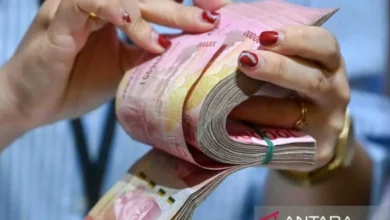
Iran’s Currency Under Scrutiny Amidst Geopolitical Tensions and Economic Realities: Rial, Toman, and the Path to Redenomination

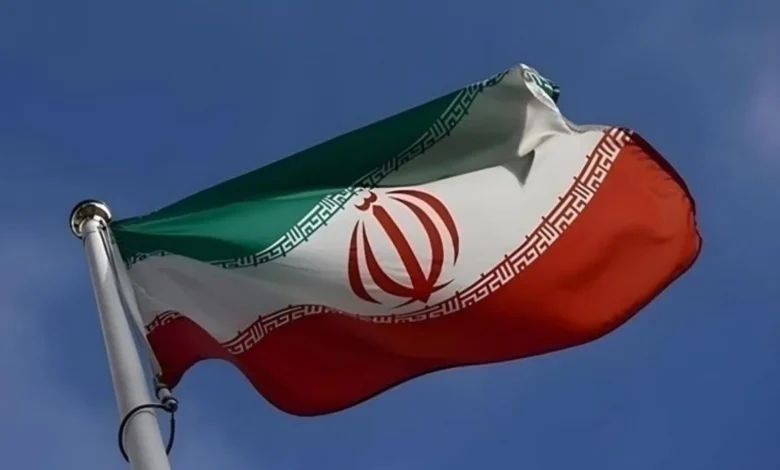
The Iranian currency has become a focal point of global attention, inextricably linked to escalating geopolitical tensions and the evolving landscape of global economic policies. The United States, under the leadership of President Donald Trump, has implemented stringent measures, including the imposition of tariffs up to 25 percent on nations continuing to engage in business collaborations with Iran. This policy has reverberated through the global economy, eliciting a spectrum of reactions, particularly concerning Iran’s economic standing and the significant depreciation of its national currency. Recent reports have indicated that the Iranian rial has reached historic lows against major international currencies, including the euro, underscoring the immense pressure on Iran’s economy stemming from prolonged sanctions and persistent inflation.
However, a fascinating dichotomy emerges when one experiences the everyday economic life within Iran. A casual visit to traditional markets or bustling shopping centers reveals a striking absence of the term "rial" in daily transaction conversations. Instead, locals predominantly employ the term "toman" when discussing prices for goods and services. This linguistic shift is not arbitrary; it is a direct consequence of hyperinflation that has eroded the rial’s purchasing power to such an extent that using it for everyday pricing has become unwieldy. The adoption of the "toman" as a de facto unit of account simplifies price communication and circumvents the need to grapple with excessively large numerical figures.
This phenomenon raises pertinent questions about the official currency of Iran and the fundamental differences between the rial and the toman, which often create confusion for tourists and international economic observers alike. This in-depth analysis aims to clarify these distinctions, providing a comprehensive overview of Iran’s monetary system, its historical context, and the ongoing efforts to streamline its currency.
The Official Currency of Iran: The Rial
Legally and administratively, the rial (IRR) is Iran’s official currency. It is the denomination used in all official banking transactions, government documents, and is the official price displayed in modern retail establishments. The international currency code for the Iranian rial is IRR. Despite its official status, the rial’s practical use in everyday transactions has been significantly diminished due to its declining value.
The Rial vs. The Toman: A Tale of Inflation and Practicality
While the rial remains the legal tender, its pervasive inflation has led to a unique linguistic and transactional adaptation within Iran. In daily commerce, the term "rial" is rarely uttered by Iranians themselves. They have organically adopted the "toman" as their preferred unit of exchange. This preference is rooted in a simplification driven by economic realities.
In practice, one toman represents a significantly more manageable numerical value than the rial. Historically, and still in common parlance, one toman is equivalent to 10 rials. This means that the "toman" effectively functions as the rial with one zero removed, or more accurately, a unit that is ten times more valuable than the rial. This system facilitates easier price quoting and reduces the cognitive burden of dealing with extremely large numbers, even though the rial remains the official currency of the land.
The historical and legal framework firmly establishes the rial as the legitimate currency, imprinted on banknotes and used in all financial documentation. However, the relentless pressure of inflation has compelled the populace to seek a more practical method of price communication. The fundamental relationship is straightforward: one toman is equal to ten units of the "old rial" (a concept that becomes clearer with the redenomination process).
To illustrate the practical difference: if a vendor quotes a price of 60,000 toman, the actual amount to be paid in rials would be 600,000 rial. This discrepancy between official currency and colloquial usage has historically been a source of significant confusion for foreign visitors arriving in Iran.
Redenomination: Iran’s Move Towards Currency Simplification
To address this long-standing confusion and to simplify its national financial system, the Iranian government, through the Central Bank of Iran (CBI), initiated a comprehensive redenominasi policy. This process began in 2020 and is being implemented more broadly and gradually through 2025 and 2026.
Through this policy, Iran is officially transitioning its primary currency unit from the rial to a new version of the toman, effectively removing four zeros from the nominal value. Under this new scheme, 10,000 old rials are now equivalent to 1 new toman. The new currency is further subdivided into smaller denominations called "qiran," with one new toman comprising 100 qiran.
During this transitional period, older banknotes will continue to be valid and circulate alongside the new currency. Newer banknotes are being issued with smaller nominal values, often featuring a ghosted representation of the removed zeros, serving as a visual cue for the system change and to aid the public in gradual adjustment.
Factors Contributing to the Weakening of the Iranian Currency
The precarious state of the Iranian currency is not an isolated phenomenon but rather a confluence of deeply entrenched economic and geopolitical factors. Understanding these drivers is crucial to appreciating the broader context of the rial’s depreciation and the rationale behind the government’s currency reforms.
1. International Sanctions: A Persistent Economic Drag
The imposition of international sanctions, particularly by the United States, has been a primary driver of economic hardship in Iran. These sanctions, often aimed at curbing Iran’s nuclear program and its regional influence, have severely restricted the country’s ability to conduct international trade and access global financial markets.
- Impact on Exports: Sanctions have significantly hampered Iran’s oil exports, a critical source of foreign currency revenue. Reductions in oil sales directly translate to a diminished inflow of dollars, weakening demand for the rial in international markets.
- Reduced Foreign Investment: The threat of secondary sanctions has deterred foreign companies from investing in Iran, stifling economic growth and job creation. This lack of foreign capital further exacerbates currency pressures.
- Financial Isolation: Restrictions on Iran’s access to international banking systems, including SWIFT, have made it exceedingly difficult for businesses to conduct transactions, increasing the cost and complexity of trade.
2. Domestic Economic Challenges: Inflation and Fiscal Mismanagement
Beyond external pressures, Iran grapples with significant internal economic vulnerabilities that contribute to currency instability.
- Chronic Inflation: Iran has historically struggled with high inflation rates. Factors contributing to this include expansionary monetary policies, structural inefficiencies in the economy, and the pass-through effect of currency depreciation on import costs. The World Bank reported Iran’s inflation rate to be around 40% in recent years, a figure that significantly erodes the purchasing power of the rial.
- Government Spending and Budget Deficits: Persistent budget deficits, often financed through printing money, can inject excess liquidity into the economy, fueling inflation. This practice further devalues the rial.
- Structural Economic Weaknesses: The Iranian economy is heavily reliant on oil revenues, making it vulnerable to global price fluctuations and sanctions. Diversification efforts have been slow, and the private sector often faces regulatory hurdles and an uneven playing field.
3. Geopolitical Uncertainty and Investor Confidence
The volatile geopolitical landscape in the Middle East, coupled with ongoing tensions between Iran and several global powers, creates an environment of uncertainty that deters investment and encourages capital flight.
- Regional Conflicts: Iran’s involvement in regional conflicts and its strained relationships with neighboring countries contribute to investor apprehension. Such instability is often reflected in the performance of the national currency.
- Unpredictability of Policy: Fluctuations in international relations and the potential for new sanctions or trade restrictions create an unpredictable economic environment, leading to cautious behavior from businesses and investors.
4. The "Toman" Phenomenon: A Symptom, Not a Cause
The widespread use of the "toman" is not a cause of the rial’s weakness but rather a direct consequence of it. The informal adoption of a more manageable unit of account is a coping mechanism by the populace to deal with the practicalities of hyperinflation. It highlights the disconnect between the official monetary system and the lived economic reality of ordinary Iranians.
Timeline of Key Developments
- Pre-2010s: The rial was the established currency, with relatively stable exchange rates.
- Early 2010s: Intensification of international sanctions began to exert pressure on the Iranian economy and currency.
- 2015: The Joint Comprehensive Plan of Action (JCPOA) was signed, leading to some sanctions relief and a temporary appreciation of the rial.
- 2018: The U.S. withdrew from the JCPOA and reimposed stringent sanctions, causing a sharp and rapid depreciation of the rial. This period saw the rial reach historic lows against major currencies.
- Late 2010s – Early 2020s: The "toman" became increasingly prevalent in everyday transactions as inflation soared.
- 2020: The Central Bank of Iran officially announced the plan for currency redenomination, proposing the removal of four zeros from the rial and its replacement with the toman.
- 2020-Present: Gradual implementation of the redenomination policy, with new banknotes and a transition period for public adaptation.
- 2025-2026: Expected full implementation of the redenomination process, officially establishing the toman as the primary currency unit.
Broader Implications and Analysis
The weakening of the Iranian rial and the subsequent currency redenomination have far-reaching implications for both Iran and the international community.
- Impact on Purchasing Power: For ordinary Iranians, the depreciation of the rial means a significant reduction in their purchasing power, both domestically and when traveling abroad. Essential goods become more expensive, impacting living standards.
- Inflationary Spiral: A devalued currency can fuel further inflation as imported goods become more costly, leading to a vicious cycle of price increases.
- Economic Uncertainty: The ongoing currency reforms, while aiming for simplification, introduce a period of transition and potential uncertainty. Businesses and individuals need to adapt to new pricing mechanisms and currency values.
- International Trade and Investment: The volatility of the rial and the complexities of the Iranian financial system can deter foreign trade and investment, further isolating Iran economically. However, the redenomination might, in the long run, facilitate clearer financial transactions.
- Geopolitical Signaling: The economic challenges faced by Iran, as reflected in its currency’s performance, are often viewed through a geopolitical lens. The strength of a nation’s currency can be seen as an indicator of its economic stability and its standing on the global stage.
The story of the Iranian rial and the emerging prominence of the toman is a complex narrative woven from the threads of international politics, economic policy, and the resilience of everyday people adapting to challenging circumstances. As Iran navigates its economic future, the success of its currency reforms will be a crucial factor in its ability to stabilize its economy and re-engage with the global financial community. The transition from rial to toman is not merely a cosmetic change but a profound attempt to grapple with the deep-seated economic challenges that have shaped Iran’s financial landscape for years.